Put the toilet loop on the real calendar
Begin with the earliest class, late shift, library close, exam, and travel day. Add the dog's toilet route, meals, short walks, brush time, and a few training minutes. The blank spaces reveal where a Pomeranian needs a different plan or a real person to step in.[1][2]
Keep the lead, carrier, food, comb, cleanup supplies, and care note together. A tiny dog can be easy to move from place to place, while the routine still needs steady items in steady places. The backup should be able to find everything without searching through a bedroom.[1]
Teach short absences before long days
Home-alone practice starts with timeframes the dog can manage. RSPCA advises gradual progress and calm departures, so begin after a toilet outing and a quiet settling period. Build up slowly before the term asks you to disappear into a long lecture or exam block.[3][1]
Return home with a calm greeting and reward the behavior you want to see again. AVSAB supports reward-based training because it makes the connection between the dog's choice and the outcome clear. Small successful repetitions serve a student schedule better than a dramatic test day.[2][3]
Make each break a specific plan
A term break needs one named person who has met the dog, tried the door routine, and seen the toilet and grooming supplies. Leave food notes, contact details, and the carrier where that person can reach them. One practice afternoon creates more confidence than a late text message.[1][2]
A move can make an alert little dog notice every new sound. Begin in a quiet room with familiar bedding, food, and a simple toilet route. Rebuild short absences in the new space before expecting the previous routine to work at full length.[3][2][1]
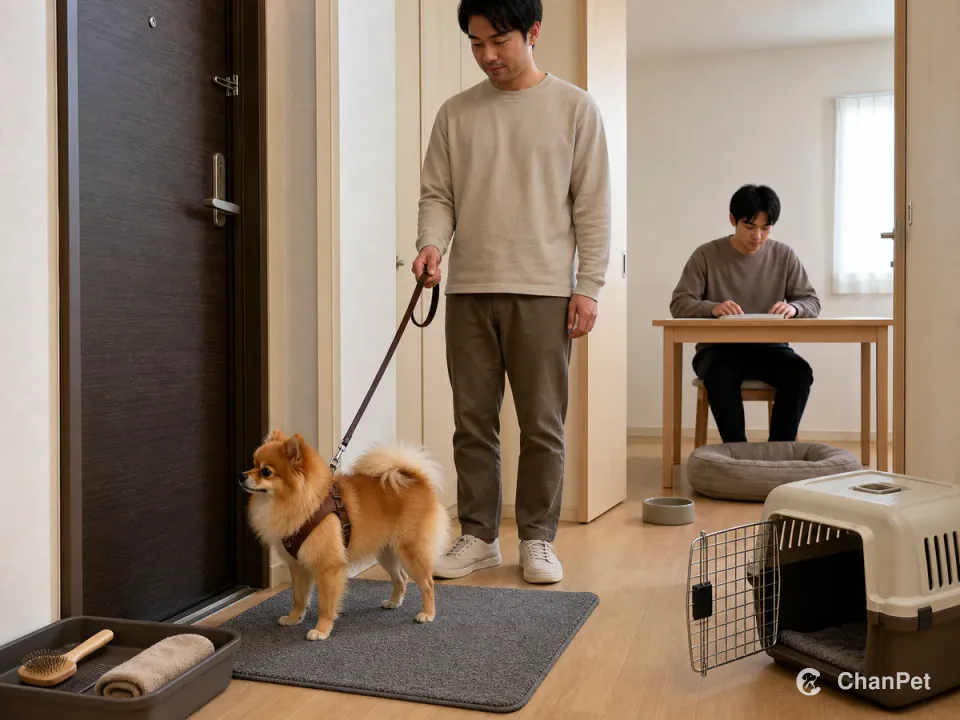
A trained backup keeps the same toilet route, doorway rule and grooming kit through exams, holidays and moves.[1][3][2]
A student fit when the backup knows the small daily details
Run the plan through your longest day before deciding
Use Start Smart Match to compare your timetable, toilet schedule, travel, and backup care with life alongside a Pomeranian.
Common questions
Can a student leave a Pomeranian alone during classes?
Sources
Sources used in this article
- [1]Pomeranian Dog Breed InformationAmerican Kennel Club
- [3]How to Train Your Dog to Stay Home AloneRSPCA
- [2]Position Statement on Humane Dog TrainingAmerican Veterinary Society of Animal Behavior