Plan for the term, not the easy weekend
An aquarium can look easy during a quiet weekend. Student life changes faster than a tank does. A lab runs late, a train home leaves early, a housemate moves out, or a new term puts you in a different building. Put those changes on the same page as feeding, water care and access to the tank.[1][2]
CDC advises observing aquarium fish and their environment every day. That is manageable when the tank is part of your room, but it needs a different plan when you spend a night elsewhere. Pick one person who can reach the aquarium and understands the ordinary routine before the first break arrives.[1]
A backup carer needs a real briefing
Give the backup carer a short written routine: where the food is, what the filter should look like when it is running, and how to reach you if anything seems wrong. Ask them to visit while you are still nearby. A practice visit turns an emergency favor into a familiar job.[1]
Keep the tank routine separate from food preparation. CDC advises handwashing after feeding fish or touching aquarium water and equipment, and it recommends cleaning equipment away from kitchens. Those details matter in dorm kitchens and shared apartments where several people use the same small space.[1]
Moves are the real test
A ranchu does not travel casually with a suitcase. A move asks you to protect the fish, its aquarium and the routine around it. Think about the destination, the route, the time the tank will be unavailable and the person who can help you reset the aquarium safely.[1][2]
Goldfish can remain in a well-kept aquarium for more than a decade, according to Oregon Sea Grant. If an upcoming move or change of program makes continued care unrealistic, make a responsible rehoming plan early. U.S. Fish and Wildlife Service advises against releasing pet goldfish and points people toward rehoming options instead.[2][3]
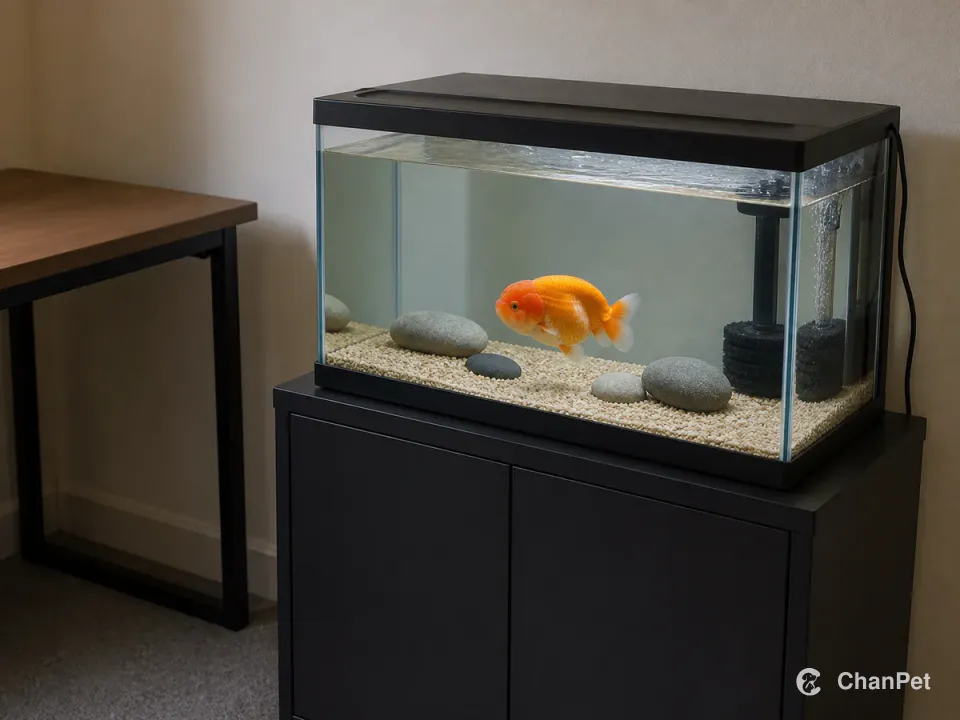
A fixed tank, stable equipment, and a clear handover plan give care a reliable place during breaks and moves.[1][2]
Choose a tank plan that survives the calendar
The right backup makes a student plan real
You do not need a perfect timetable. You do need a reliable tank routine and a person who can step in when plans change. Work those out before the ranchu arrives, while the choices are still easy.[1][2]
Common questions
What should happen if I can no longer keep the ranchu after a move?
Start looking for a responsible rehoming option early, such as a knowledgeable local fish keeper, store or rescue contact. U.S. Fish and Wildlife Service advises people to rehome pet goldfish instead of releasing them outdoors.[3]
Sources
Sources used in this article
- [1]FishCenters for Disease Control and Prevention
- [2]GoldfishOregon Sea Grant, Oregon State University
- [3]How to Break Up with Your Goldfish (The Right Way)U.S. Fish & Wildlife Service