Write the dog into the hardest week
Start with your earliest class, late shift, long lab, exam, and travel date. Add the walk, meal, beard wipe, quick coat check, and a little training that each day still needs. The open gaps show where the Miniature Schnauzer would need a different plan or another person.[1][2]
Keep the secure lead, comb, food, carrier, and care note in one consistent place. A terrier's quick interest in moving things makes a casual handoff harder than it looks. The backup person should be able to find the gear and follow the same simple walk routine.[1]
Build alone time instead of guessing
RSPCA recommends building home-alone skills gradually. Begin with a short absence after a walk and a calm settling period, then add time in steps the dog handles comfortably. An exam day feels less risky when the Schnauzer has learned the routine before the timetable becomes extreme.[3][1]
Use the return home as another training moment. Reward a calm greeting, settle the dog before a new game, and keep the next walk predictable. AVSAB supports reward-based learning because it helps dogs understand the behavior that works without adding fear to the lesson.[2][3]
Name a person for each break
A term break needs a specific carer who has met the dog, held the lead, and seen the grooming supplies. Give that person the food routine, veterinary contact details, and a short note about the dog's normal behavior. One practice outing before travel day is worth more than a vague promise to help.[1][2]
A move can make a previously settled dog more alert to noises and doors. Start with familiar bedding, food, and a smaller quiet area. Rebuild short absences and leash practice in the new place before assuming the old routine transfers by itself.[3][2][1]
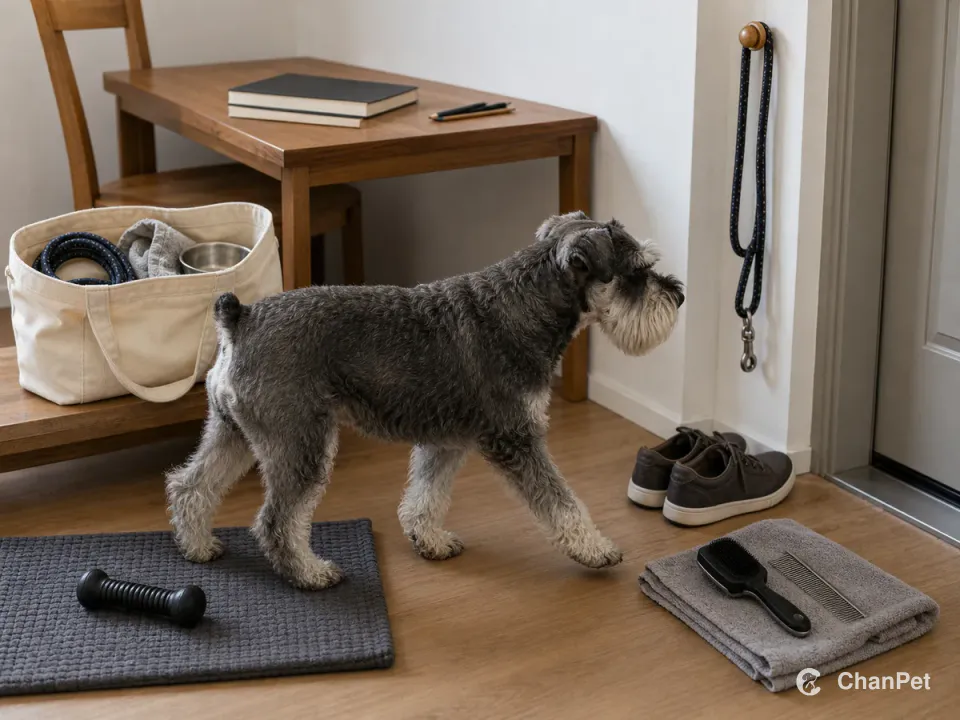
A settling mat, walk leash, grooming towel and packed backup tote keep the daily care sequence visible through a busy study week.[1][3][2]
A student fit when the backup knows the dog, not just the address
Test the plan against your actual term calendar
Use Start Smart Match to compare your timetable, travel, time at home, and backup care with a Miniature Schnauzer.
Common questions
Can a student leave a Miniature Schnauzer alone during classes?
Sources
Sources used in this article
- [1]Miniature Schnauzer Dog Breed InformationAmerican Kennel Club
- [3]How to Train Your Dog to Stay Home AloneRSPCA
- [2]Position Statement on Humane Dog TrainingAmerican Veterinary Society of Animal Behavior