Make the doorway part of the routine
A Beagle was developed as a scent hound with stamina. An apartment can still work, yet the dog needs a predictable way to get outside and use that energy. Know which lift, stairwell, patch of grass and quiet block you will use before move-in day.[1]
Keep the departure calm. Pick up the lead, pause at the door, and head out before the dog is already wound up. Repeating the same simple steps gives a busy building fewer chances to turn a routine walk into a scramble.[2]
Keep the outdoor mess at the threshold
In a small home, the lead, waste bags, towel and cleaning cloth need one obvious home. Put them beside the door so a wet walk ends there instead of on the sofa. It is a small piece of design that makes ordinary days easier.[3]
CDC advises handwashing after contact with dogs, their food, supplies and waste. In an apartment, that habit also helps when the kitchen and living space sit close together. Keep food bowls and outdoor cleanup gear separate from food-preparation areas.[3]
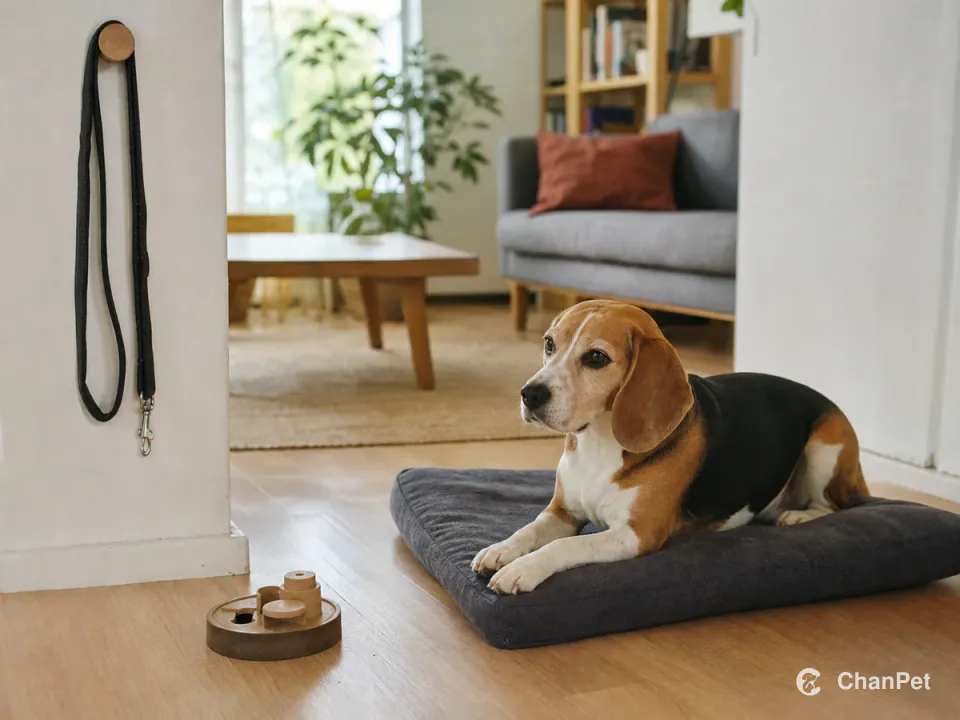
A calm apartment pause comes from a steady rhythm of outings, returns and rest, not from leaving the dog indoors and hoping for the best.[1][2]
Choose the building with the daily route in mind
Shared walls reward an early routine
Trying to picture a Beagle in your building? Add your stairs, lift, walk route and household schedule to a smart match, then compare choices that fit the way you live.
Common questions
Can I solve apartment noise by giving a Beagle more toys?
Toys can be part of a richer day, while a noise problem still needs patient training around the trigger. Start with calm repetitions at a level the dog can handle.[2]
Where should I clean bowls and outdoor gear in a small kitchen?
Keep dog supplies separate from food-preparation items, and wash hands after handling bowls, waste or other dog equipment. A designated bin and drying spot make the boundary easier to keep.[3]
Sources
Sources used in this article
- [1]FCI Standard No. 161: BeagleFédération Cynologique Internationale
- [3]Dogs | Healthy Pets, Healthy PeopleCenters for Disease Control and Prevention
- [2]How to Train Your Dog & Top Training TipsRSPCA