Draw the route before buying more furniture
Walk through the apartment at cat height. A cat needs a clear way from bed to water. It also needs a route from a perch to a scratching surface and from the hallway to the litter box. A vacuum, drying rack or row of bags can turn those short trips into a squeeze. Mark the routes first.[1]
The British Shorthair standard describes a solid, balanced cat with a dense short coat. Choose stable furniture that gives the cat a secure place to perch or rest. A slim scratcher beside the sofa can be more useful than a towering item that blocks the living room's only walkway.[2][1]
Give the litter box a calm route
A closet corner close to a noisy appliance may look tidy on a floor plan, yet it can be a poor toilet spot. Cornell lists box cleanliness, location, litter and household changes among the factors that can affect litter habits. Pick a quiet, accessible place, then keep the path to it open when guests or deliveries arrive.[3]
Put food and water on the other side of the room from the litter area. In a studio, that may mean using opposite sides of the main room and creating a visual break with a low shelf or chair. The point is not perfect symmetry. The point is that eating, resting and toileting each have a recognizable place.[1][3]
Let the small space move
A few short games change the feel of an apartment. Roll a toy down a clear hall, move a wand toy around a chair, or hide food in a simple puzzle after you have checked that it is safe for the cat. Use the same spots often enough that the cat learns where active time happens.[1]
The golden shade catches the light, but the color has no say in how much play an individual cat enjoys. Watch the cat you live with. Some games end after a few minutes, while others invite another round. That observation helps you build a routine that suits the actual cat and the actual apartment.[2][1]
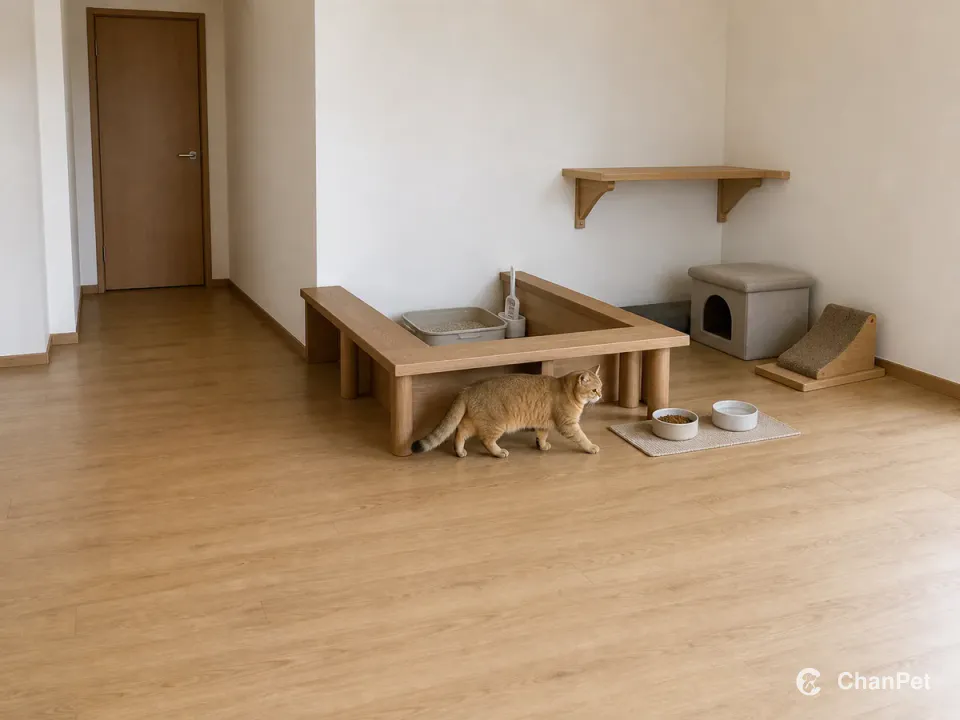
A low divider screens the litter nook from food, water, scratching and rest, while the diagonal main walkway stays clear.[2][1][3]
A small home can feel generous when every task has a route
Build a route, then add the extras
Start with clear paths to litter, food, rest and a scratching surface. Once those essentials work in the room you have, play furniture and cozy additions can support a home that already makes sense to the cat.[1][3]
Common questions
Where should a litter box go in a studio apartment?
Sources
Sources used in this article
- [2]British Shorthair Show StandardThe Cat Fanciers' Association
- [1]Your Cat's Environmental Needs: Practical Tips for Cat CaregiversFeline Veterinary Medical Association and International Cat Care
- [3]Feline Behavior Problems: House SoilingCornell University College of Veterinary Medicine, Cornell Feline Health Center