Keep coat care where the cat already rests
The British Shorthair coat is short and dense, so it can leave a surprising amount of fur on a dark chair or a pale rug. Keep a brush near the cat's favorite resting place and use a few calm strokes at a time. The golden shaded pattern looks its best after a simple brush, and the routine also helps you see what the coat feels like from week to week.[1]
Put a lint tool where you actually put on clothes, and vacuum the places the cat uses most. That is more useful than saving every cleaning job for visitors. A short reset after brushing keeps loose fur from becoming a full-room project.[1]
Make litter care easy to repeat
Place the litter box in a quiet spot away from food preparation. Scoop it every day, keep a small mat at the exit and wipe the nearby floor when needed. Cornell notes that cleanliness, location, litter and household changes can all affect a cat's litter habits, so the setup deserves attention before you blame the cat.[2][3]
Wash hands after litter and cat supplies, then keep the scoop and cleaning products close enough that the job takes two minutes instead of twenty. If a cat changes its litter behavior, look at the box, the route and the home changes. Contact a veterinarian when a health issue may be part of the change.[3][2]
Plan for the sounds you can control
A cat's daily sounds are often small: litter being covered, a toy rolling under a chair, claws on a scratcher and paws landing from a favorite perch. Put the litter box and scratcher away from the wall shared with a bedroom if you can. Soft pads under furniture can take the edge off a late-night jump.[1][2]
No coat color promises a silent cat, and every individual has its own evening rhythm. Give the cat a short play session and a stable resting area before you settle down. The house becomes quieter when the cat has a familiar way to use its awake time.[1]
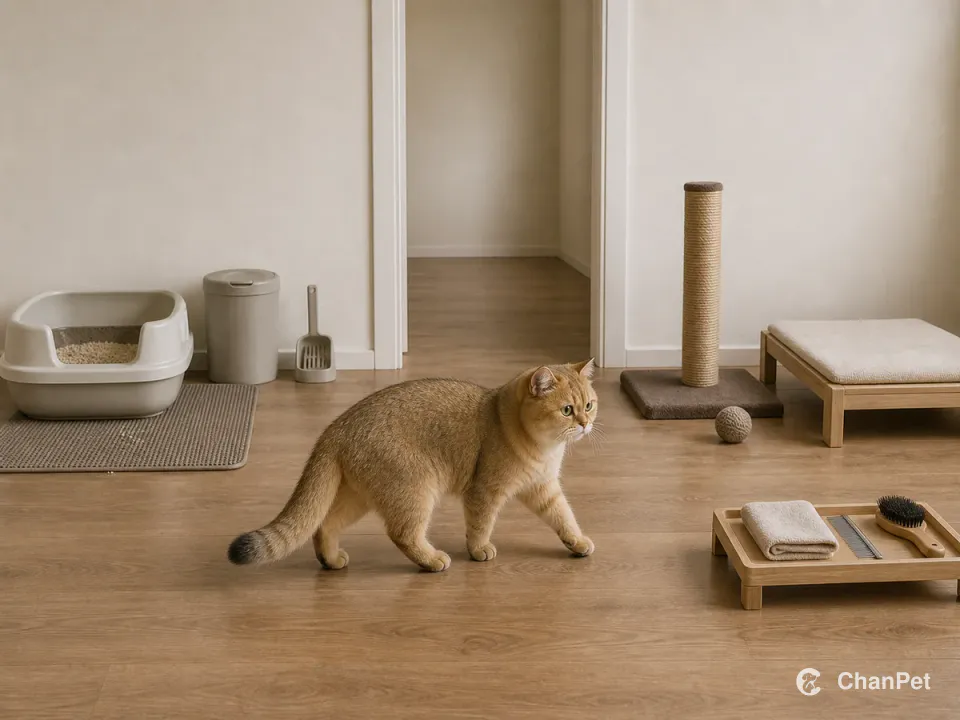
A litter exit mat, scratch post, grooming tools, and washable rest pad turn loose fur and tracked litter into a short, visible reset.[1][3][2]
A tidy home depends on a routine you can see
Let the useful supplies stay within reach
Keep the brush, lint tool, litter scoop and cleaning supplies where they save time. A golden shaded British Shorthair can bring calm company to a tidy home when those basics are part of the room rather than hidden in a closet.[1][3][2]
Common questions
How can I reduce litter odor in a small home?
Does a short British Shorthair coat still shed?
Yes. The coat is short and dense, so regular brushing and quick cleaning around favorite resting spots help keep loose fur from spreading through the home.[1]
Sources
Sources used in this article
- [1]British Shorthair Show StandardThe Cat Fanciers' Association
- [3]CatsCenters for Disease Control and Prevention
- [2]Feline Behavior Problems: House SoilingCornell University College of Veterinary Medicine, Cornell Feline Health Center