Hear the room before you add a bird
Wild budgerigars use contact calls and alarm notes to stay linked with a flock. A pet bird can call in the morning, when people come home, or when the room changes. Thin walls make those ordinary moments part of apartment life.[1][2]
Sit for ten minutes in the spot where you imagine the cage. Listen for doors, elevators, washing machines, and passing feet. A cage away from a busy path can give the bird a steadier place to rest.[2][1]
Give the cage one permanent wall
A budgie cage needs width for movement between perches, along with space for safe dishes and cleaning access. Measure the room around the cage door too. A cramped cleaning route makes small daily chores much easier to postpone.[2]
A housing study found more repetitive flight patterns in box housing than in aviaries, along with greater body-mass gain in females. The point for apartment keepers is simple: treat movement as part of the environment, not a bonus.[3]
Build activity time into the room
Safe apartment activity starts with closed windows, stopped fans, and a clear route away from heat and chemicals. The area can stay simple. The useful part is the same short safety check before each session.[2]
Talk through windows, cooking, fragrance, and activity times with housemates before the budgie moves in. A shared routine prevents the bird's safety needs from becoming an argument after the fact.[2][1]
Move the routine before the cage
A new apartment needs room for the cage, supplies, cleanup, and a safe activity zone. On move-in day, restore food, water, perches, and a familiar rest spot first. Let the bird learn the new room at an unhurried pace.[2][1]
Keep a small brush, paper towels, and a bin liner near the cage. Seed husks, feathers, and cage paper are much easier to handle when the cleanup tools are already there.[2][3]
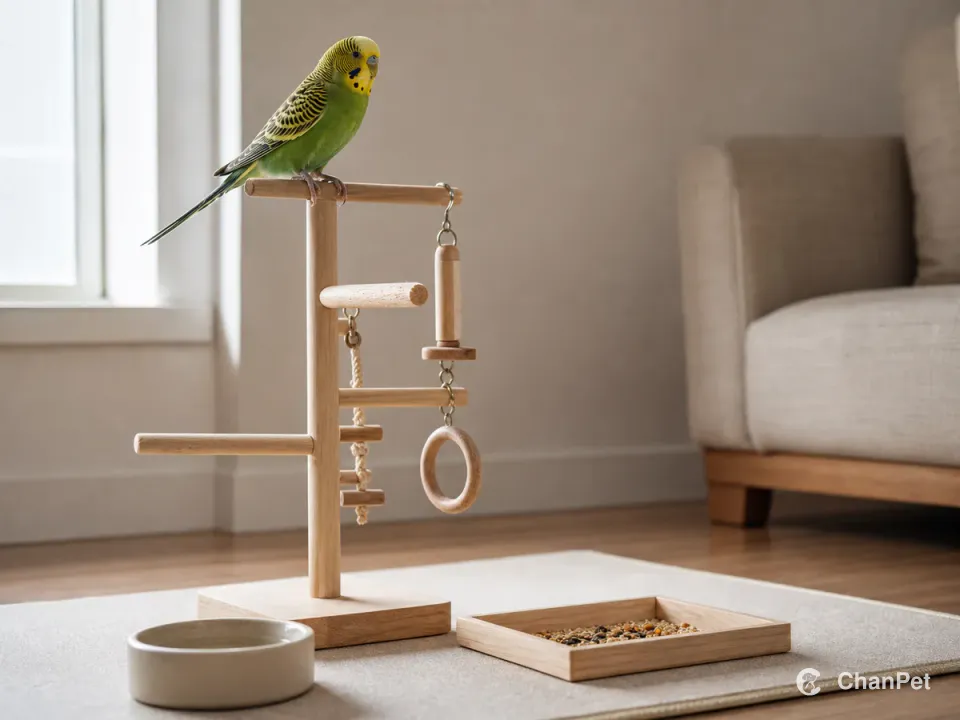
Keeping the play stand, water, and easy-clean landing area together makes daily care and reset more orderly.[2][3]
A steady corner and shared expectations make apartment life work
Does your room have a place for the cage and the activity around it?
Use the smart match to compare room size, housemates, sound, and move plans with the life a budgie needs.[2][3]
Common questions
Are budgies quiet enough for every apartment?
Sources
Sources used in this article
- [2]BudgiesAssociation of Avian Veterinarians
- [1]BudgerigarBirdLife Australia
- [3]Effects of aviary and box sizes on body mass and behaviour of domesticated budgerigars (Melopsittacus undulatus)Animal Welfare / Universities Federation for Animal Welfare