The room gets a new small sound
A budgie's contact call is part of how wild flocks stay connected. BirdLife Australia records both chatter and alarm calls. At home, a bird can answer people, doors, food, and changes in the room.[1]
Find the quietest hours in your home before you choose a cage location. Keep the cage away from bedroom doors and sudden traffic, and give the budgie a predictable rest period. Calls feel less startling when the room has a rhythm.[2][3]
Choose a cage that cleans up well
Seed husks, old greens, and feathers gather around a cage. The University of Florida recommends a pullout tray and replaceable paper lining. A small daily sweep is easier than saving everything for one large weekend cleanup.[3]
Place dishes away from the direct drop zone below perches. Change water daily, clear husks, and look at the tray and perches each week. Those habits help the room stay fresh without a dramatic cleaning day.[2][3]
Clean air helps everyone in the room
AAV lists overheated non-stick cookware fumes, smoke, sprays, plug-in scents, and scented candles among household risks for budgies. Covering a cage smell with fragrance can add a new problem for the bird.[2]
Choose a ventilated place away from kitchen fumes and direct air-conditioning. Clean soiled areas with gentle bird-safe methods, then let the room air out. That approach usually feels better than a strong scented cleaner.[3][2]
Tidy still includes activity time
Budgerigars come from a species that gathers and flies in flocks. Your activity area can stay simple: a perch stand, a few easy-to-store toys, and a person nearby. A regular activity time also makes the cleanup easier to predict.[1][2]
Keep toys, paper towels, cage paper, and a small brush in one box. After activity, guide the bird back to a safe spot and clear the floor. A fixed finish lets the room return to its usual shape quickly.[2][3]
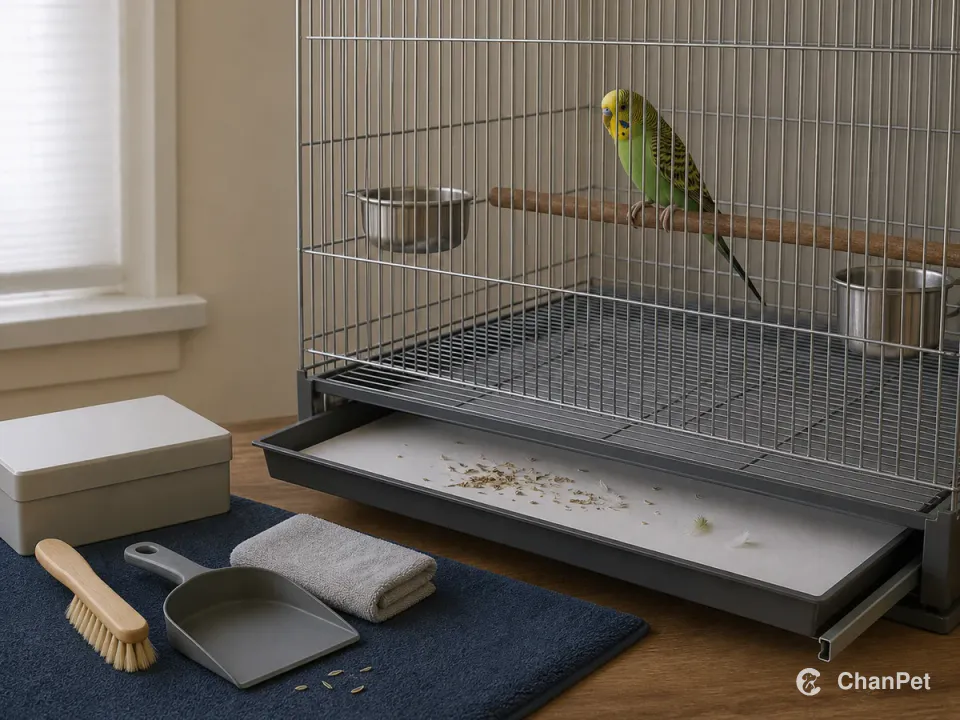
The fixed safety grate keeps the bird secure while the pullout tray, brush, and fresh paper turn husks and small feathers into a brief daily reset.[2][1][3]
A fit for people who like a routine reset and a bird's reply
Want a quiet, tidy home? Include your seed-husk habit in the choice
Use the smart match to weigh everyday calls, feathers, cage cleanup, and available space against the kind of home you want.[2][1]
Common questions
Will a budgie make my room smell?
Sources
Sources used in this article
- [2]BudgiesAssociation of Avian Veterinarians
- [1]BudgerigarBirdLife Australia
- [3]How to care for your pet birdUniversity of Florida College of Veterinary Medicine