Pick the corner before the enclosure
Measure the furniture and the space above it before you choose an enclosure. A crested gecko uses height for climbing and cover, so a tall enclosure cannot live in the last open gap beside a door or a bright window.[1][2]
Choose a corner where room heat, direct sun and traffic stay predictable. Keep power leads dry and give yourself room to open the door, replace food and reach the measuring tools. A stable setup removes many small apartment frustrations before they start.[1][2]
Plan for the evening, not for noise
A crested gecko is most active after dusk. Its light climbing makes very little sound. Place the enclosure where late misting and food changes feel easy for you.[1][2]
Keep the enclosure ventilated while you maintain the humidity the gecko needs. Condensation that lingers every day calls for a closer look at airflow and misting. A room can look calm while the habitat still needs an adjustment.[1][2]
Give cleaning and moving their own plan
CDC advises washing hands after contact with reptiles, their habitat, food or waste. Keep the cleaning kit together, and use a bathroom, laundry area or another suitable place instead of a kitchen food-prep surface for enclosure tasks.[3]
Apartment moves turn a stable habitat into a transport job. Decide how you will carry the gecko, secure the enclosure and restart the usual temperature and humidity checks at the new address. Put that plan in writing before a lease change becomes urgent.[1][2][3]
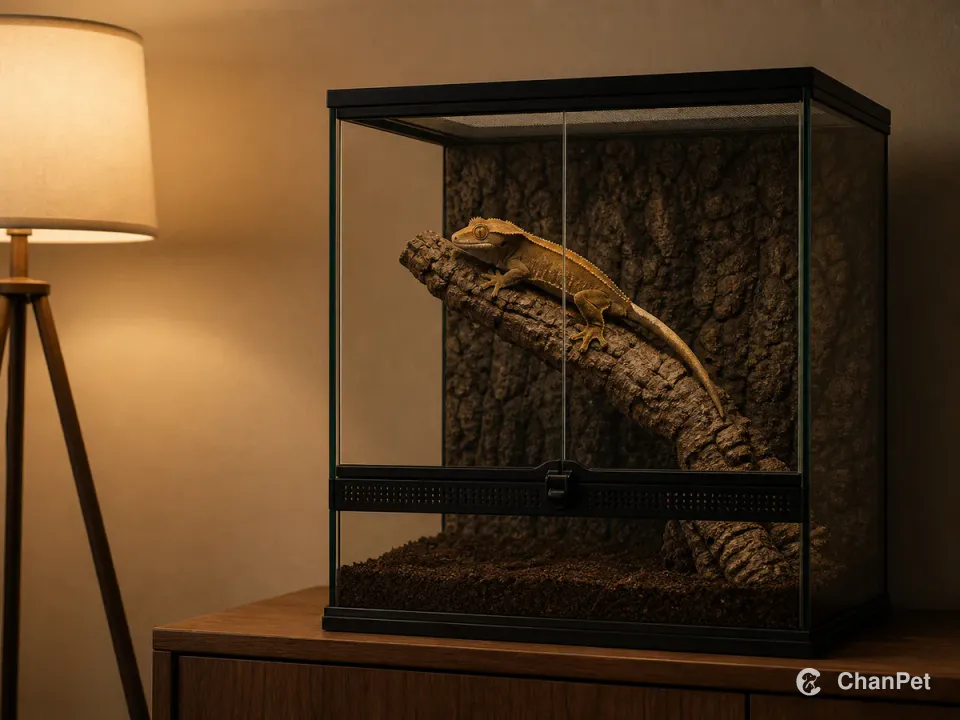
A stable tall enclosure leaves room for opening the doors, checking the habitat, and moving it safely.[1][2]
The enclosure needs more than a spare shelf
A quiet apartment can hold a lively little night world
Set the enclosure where it can stay put, clean it through a clear hygiene routine, and allow the gecko to keep its evening schedule. That creates a contained companion without turning the room into a project.[1][3]
Common questions
Sources
Sources used in this article
- [1]Crested geckoWorld Wildlife Fund
- [2]All About Crested Geckos | Pet TalkTexas A&M College of Veterinary Medicine & Biomedical Sciences
- [3]Reptiles and AmphibiansCenters for Disease Control and Prevention