Build a route, not a maze
A cat uses an apartment in layers. A perch, a chair back, a shelf-level bed and a protected hiding spot can turn one room into several choices. Place those resources so the cat can move between them without being trapped by a doorway, a noisy appliance or a person walking past.[1]
Look for the places your cat already watches from and rests in. Those spots tell you more than a furniture catalog. A window perch may work in one home; a covered bed away from the front door may work better in another. Keep food, water, resting space and litter separate.[1]
Put scratching where it solves a problem
A scratcher at the far end of the room cannot help when the cat reaches for the sofa by the door. Put a stable vertical post or horizontal board near the place the cat already chooses. Cornell advises offering an acceptable scratching surface and making it more appealing than the item you want to protect.[2]
Give the cat a short play session before the time when the household usually settles down. Hunting-style play, a chance to scratch, and a quiet place to rest give the apartment a clearer rhythm. Avoid turning hands, feet or a dangling cable into the toy that starts the game.[1][2]
Make the litter routine simple on a busy day
A litter box tucked behind a washing machine or beside a loud entry door can become an unpleasant choice for a cat. Cornell recommends a clean box in a quiet, accessible location, away from food and water. Give the setup room to work before you blame the cat for avoiding it.[3]
In a studio or shared apartment, odor and mess become a household issue quickly. Scoop on a steady schedule, use a mat that catches tracked litter, and keep cleaning supplies nearby. Sudden changes in where or how a cat uses the box deserve a closer look and veterinary advice when needed.[3][1]
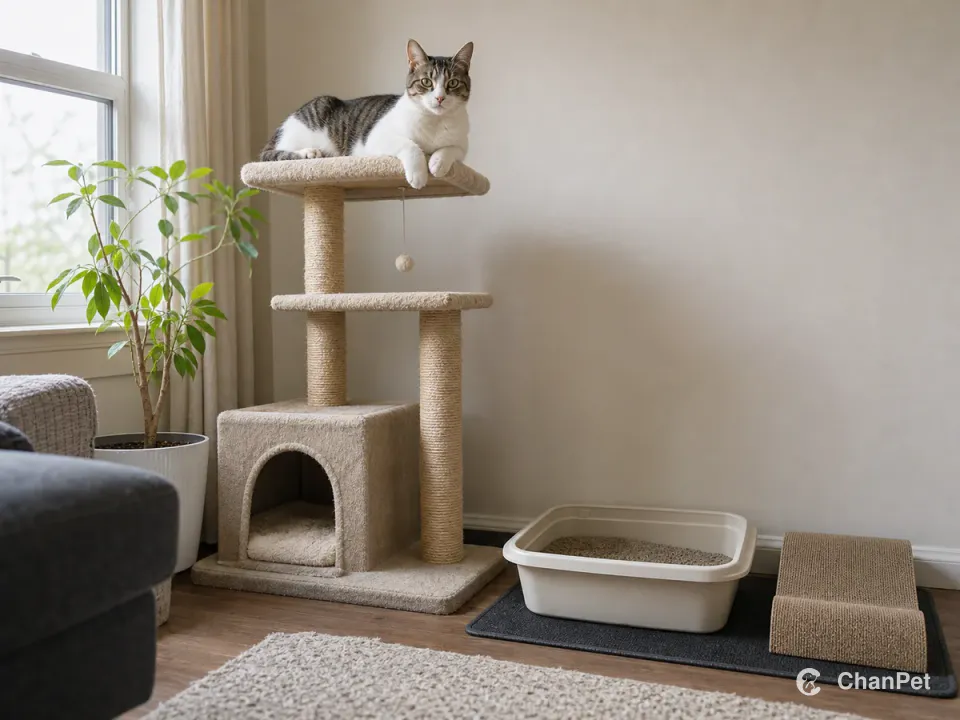
A cat tree adds a vertical route, while a fixed litter area and scratcher stay easy to reach.[1][2][3]
A good apartment cat when the room makes sense to the cat
Make the small home legible
Give the cat places to climb, retreat, stretch and use the litter box without interruption. Once those basics are in place, an apartment feels much less like a small box and more like a workable cat home.[1][3]
Common questions
Where should I put a scratching post in a small apartment?
Sources
Sources used in this article
- [1]Your Cat's Environmental Needs: Practical Tips for Cat CaregiversFeline Veterinary Medical Association and International Cat Care
- [2]Feline Behavior Problems: Destructive BehaviorCornell University College of Veterinary Medicine, Cornell Feline Health Center
- [3]Feline Behavior Problems: House SoilingCornell University College of Veterinary Medicine, Cornell Feline Health Center