Make the litter setup easy to keep clean
The litter box is the main cleanliness job in a cat home. Put it somewhere quiet and easy for the cat to reach, then keep the scoop and waste bags close by. Cornell explains that box cleanliness, location, litter and health can all influence whether a cat uses the box well.[1]
Scoop every day and wash hands after handling litter, waste or cat supplies. CDC also advises keeping the box away from areas where food is prepared. A small mat at the exit can catch tracked litter before it spreads across the room.[2]
Give scratching and resting a place
A clean-looking room still needs to work for a cat. Provide a sturdy scratching surface, a quiet place to sleep, a place to hide and a perch or viewpoint when possible. Feline veterinary guidance treats those choices as part of meeting a cat's normal environmental needs.[3]
Short hair still comes off on blankets, chairs and sunlight patches on the floor. A quick brush and a regular pass with the vacuum keep hair from becoming a surprise when visitors arrive. The useful aim is a routine you can repeat, not a showroom that stays untouched.[3][2]
Use the evening routine to settle the home
Set aside a short play session when you are home, then leave the cat with a place to scratch, rest and watch the room. That gives indoor activity a clearer outlet and helps you notice whether the cat has enough useful choices in its environment.[3]
Watch for a change in litter behavior instead of masking it with a stronger fragrance or a new air freshener. A cat that begins urinating outside the box may need a setup review or veterinary attention. The smell is information before it becomes a decorating problem.[1]
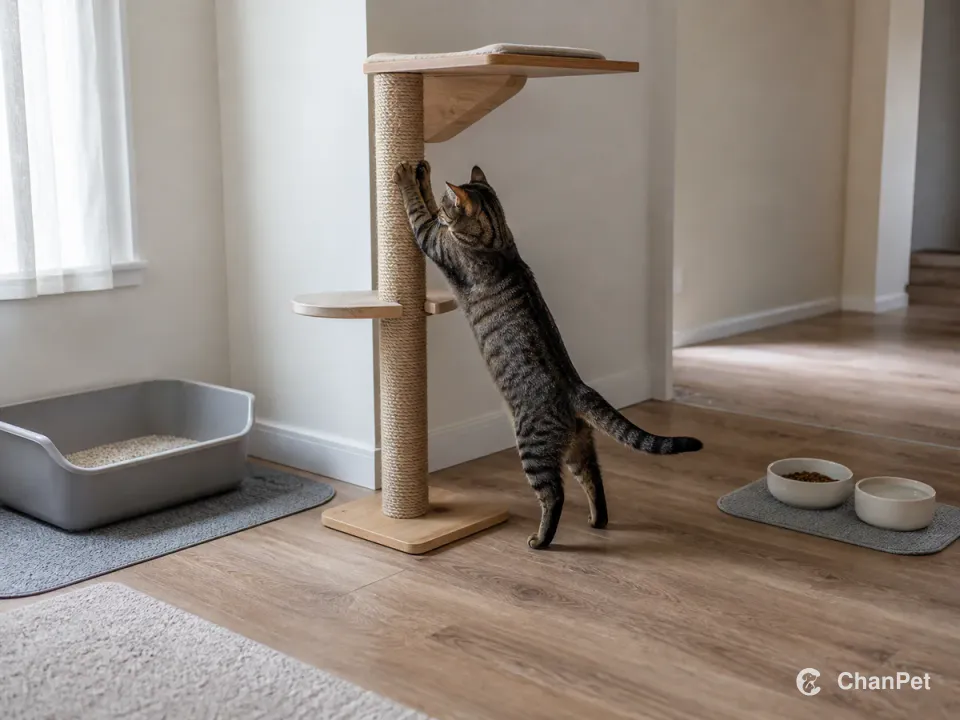
Separate litter, food and scratching spaces, then keep them clean as part of the day.[1][3]
A clean home is a care routine, not a promise from the cat
Keep the small jobs in sight
Place the litter setup where it can be maintained, give the cat a proper scratching option and treat a new odor or litter change as a reason to look closer. A domestic shorthair can fit a quiet home very well with that steady approach.[1][3]
Common questions
How can I reduce litter odor without making the box unpleasant for the cat?
Will a domestic shorthair damage furniture?
Cats need a suitable place to scratch. Give your cat a stable surface in a useful spot and provide other resting and play choices. A home with clear cat resources is easier to keep tidy than one that asks the furniture to do every job.[3]
Sources
Sources used in this article
- [1]Feline Behavior Problems: House SoilingCornell University College of Veterinary Medicine, Cornell Feline Health Center
- [2]CatsCenters for Disease Control and Prevention
- [3]Your Cat's Environmental Needs: Practical Tips for Cat CaregiversFeline Veterinary Medical Association and International Cat Care