The space is a connected landscape
Asian small-clawed otters use streams, riverbanks, wetlands, dens and vegetation in the wild. Care manuals likewise treat land, water, shelter and exploration structures as one environment. A pool is one feature in that environment, not the whole answer.[1][2]
An apartment room can contain equipment, yet it cannot give a group places to use water, rest apart and move through a varied habitat. Otters dig, climb and search for food. Secure boundaries and room layout need to account for all of that.[2][3]
Sound and scent do not stop at a closed door
Otters call to keep contact and communicate within a group. They also use scent and shared latrine areas. Those behaviours belong to their social world. In closely shared housing, they turn into continuing noise and cleaning pressure.[1][2]
Closing windows does not remove the practical work. A water area needs maintenance, and activity carries moisture, food remains and waste onto land. Ventilation, flooring, storage and everyday movement through a flat all become part of the care problem.[2][3]
Moving is not a small change for an otter
Apartment life often brings repairs, visitors and moves. For an otter, open doors, unfamiliar noise and altered routes can disrupt rest and group routines. Specialist guidance treats separation and reintroduction as work that needs careful management.[2]
If you want a quiet home that is easy to maintain and easy to share with neighbours, leave otters out of the shortlist. You can keep the interest and choose an animal that truly belongs in indoor life.[3][1]
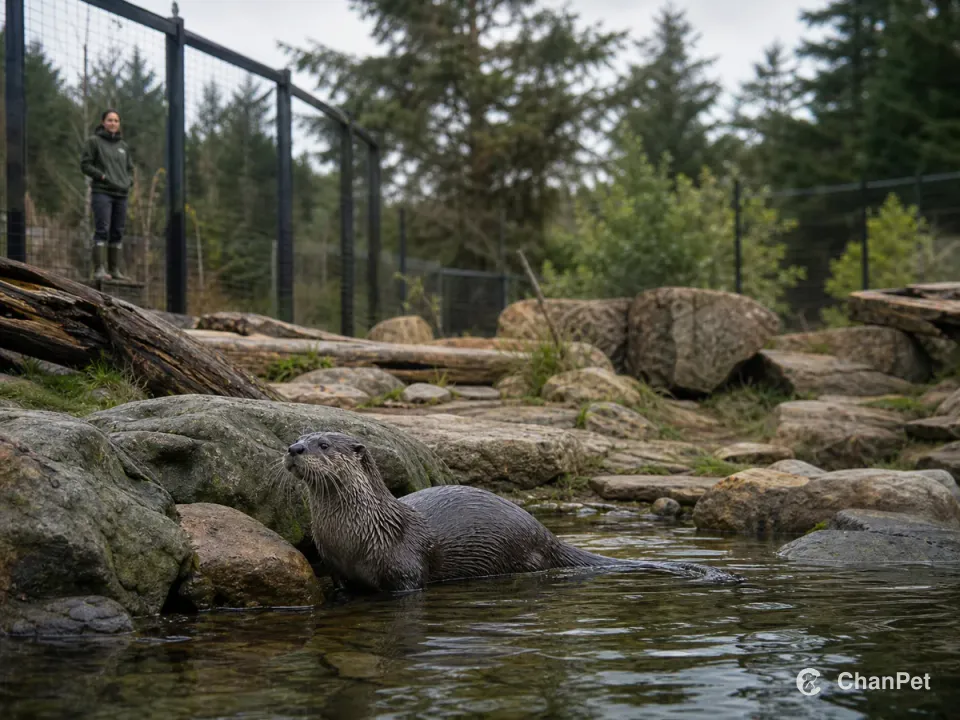
A connected water, land, and secure enclosure is the kind of setting an apartment cannot replace.[3][2]
Let the home shape the answer
For indoor companionship, choose an indoor-ready animal
Common questions
Sources
Sources used in this article
- [3]Caring for Asian small-clawed, Cape clawless, Nearctic, and spotted-necked ottersIUCN SSC Otter Specialist Group
- [2]Caring for Selected Otter SpeciesIUCN SSC Otter Specialist Group
- [1]Asian Small-Clawed OtterSmithsonian's National Zoo and Conservation Biology Institute