The calls have a purpose
Asian small-clawed otters use squeaks, chirps, barks and growls for contact, food finds, greetings and alarms. Frequent calling is part of group life. It is not a bad habit that should disappear because someone has a meeting or needs quiet at night.[1][2]
That has a direct impact on a quiet home. You cannot ask an animal to stop communicating only when guests arrive or a work call begins. Specialist care aims to understand those signals and support the group, not make the group conform to a household schedule.[2][3]
Scent and moisture belong to the animal's life
Otters use scent glands and shared latrine areas to exchange information. Moving between water and land also spreads moisture, sediment, food remains and waste through the areas they use. Those are normal otter behaviours, but they clash with a dry, tidy living room.[1][2]
Fragrance, closed rooms and repeated shooing do not improve welfare. The fairer choice is to recognise that an otter habitat does not belong in a normal home, then choose an animal whose natural routine fits your hygiene expectations.[3][2]
Cleaning has to protect the animal too
Water, drinking containers, food areas, dens and land sections all need regular cleaning. Care manuals also ask keepers to observe the group and the environment as they work. This is management connected to behaviour and health, not a quick sweep and mop.[2][3]
Wanting a quiet, dry and easy-to-tidy home does not mean you care less about animals. It simply points you toward a pet whose ordinary life will not collide with those goals.[3][1]
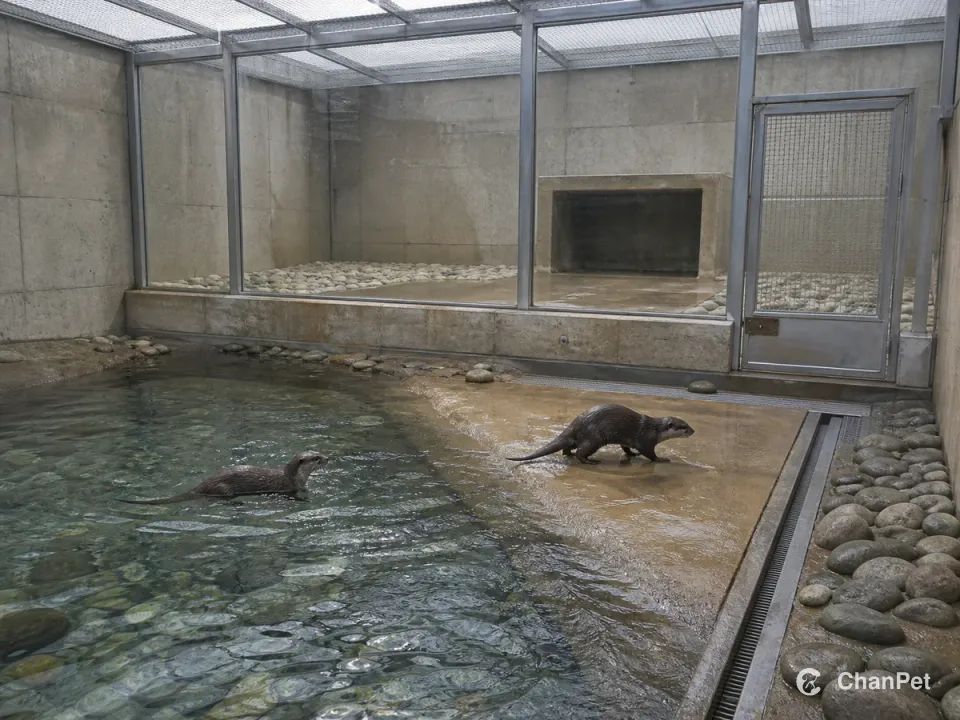
Pool, wet bank and separate management bay form one system, so cleaning has to follow the otters' lives.[3][2]
Home comfort and animal needs should not compete
Choose another companion for a quiet home
Common questions
Sources
Sources used in this article
- [3]Caring for Asian small-clawed, Cape clawless, Nearctic, and spotted-necked ottersIUCN SSC Otter Specialist Group
- [2]Caring for Selected Otter SpeciesIUCN SSC Otter Specialist Group