Make the exit quiet and predictable
A Toy Poodle fits easily through an apartment doorway. That does not make the doorway unimportant. Pause before opening it, put the lead on calmly and make the walk a predictable part of the day. The same steady exit can reduce the excitement that becomes barking in a shared hallway.[1]
Offer a real chance to sniff and move on each outing. A little dog gets to use its senses too. A short morning walk, a later play break and a quieter evening toilet trip can be easier to keep than saving everything for one rushed outing.[1]
Practice the closed door early
Apartment walls make a dog's distress everyone's business. RSPCA advises teaching time alone in gradual steps and watching how the dog responds. Start with short departures that you can repeat, rather than discovering the problem on the first day you are gone for hours.[2]
Use a camera or recording to see whether the dog settles after you leave. If the Toy Poodle keeps pacing or barking, shorten the next absence and go back to an easier step. The dog needs a chance to succeed before you ask for more.[2]
Keep the small cleanup kit by the door
A towel, waste bags, a brush and a small mat by the door save a lot of apartment clutter. Wipe feet after wet walks, put the lead in one place and empty the pockets before you come farther inside. A simple landing zone makes the home easier to share.[1]
CDC advises handwashing after handling dogs, their food, waste or supplies. Pick up waste promptly, wash food bowls regularly and keep grooming tools away from food preparation areas. These habits protect a compact home from turning into a pile of dog gear.[3]
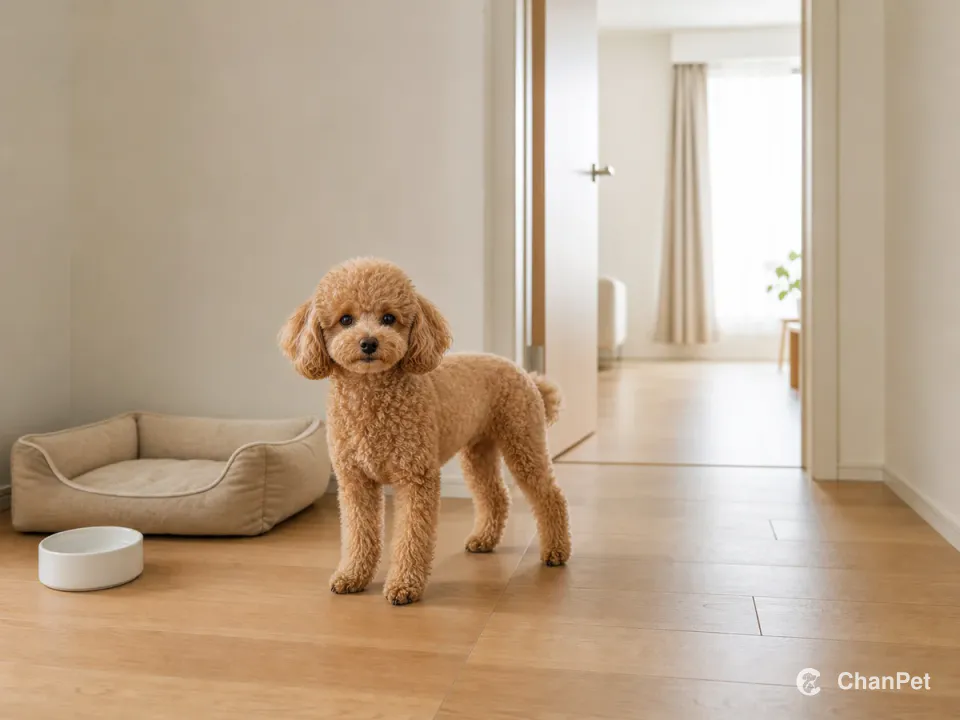
A clear doorway route and a fixed resting spot make arrivals and departures calmer.[1][2]
Small space works when the day feels full
Test the shared-wall routine before you decide
Want to know whether your apartment, commute and time at home fit a Toy Poodle? Start a smart match and compare the real daily routine.[1][2]
Common questions
Can a Toy Poodle be left alone in an apartment?
A dog can learn time alone through gradual practice. Start with short, successful absences and watch how the dog reacts before making the next one longer.[2]
Sources
Sources used in this article
- [1]Poodle (FCI Standard No. 172)Fédération Cynologique Internationale
- [2]Training Your Dog to Be Left AloneRSPCA
- [3]DogsCenters for Disease Control and Prevention