Choose a place that stays put
A hognose uses the ground, cover and loose substrate inside its enclosure. Pick a level surface away from doors that slam, strong sun and the daily scramble of an entryway.[1]
The enclosure needs warm and cooler areas, so its location also needs a safe power route. UC Davis recommends monitoring those areas with a digital thermometer rather than trusting how the room feels.[2]
Make escape prevention boring
A secure lid should become part of the leaving-the-house routine. Check it after water changes, feeding and any time a guest has opened the enclosure to look inside.[2]
Texas A&M advises future snake keepers to think through the commitment before they acquire an animal. In a small home, that includes deciding who can access the enclosure and who leaves it alone.[3]
Give cleaning its own corner
Keep the substrate scoop, wipeable mat and spare water bowl together near the enclosure. A small, repeatable kit makes spot cleaning easier when apartment storage is tight.[2]
Frozen prey also needs a planned place and a thawing routine. Texas A&M describes feeding and habitat care as part of the responsibility of keeping a snake, even in a home where the animal stays quiet.[3]
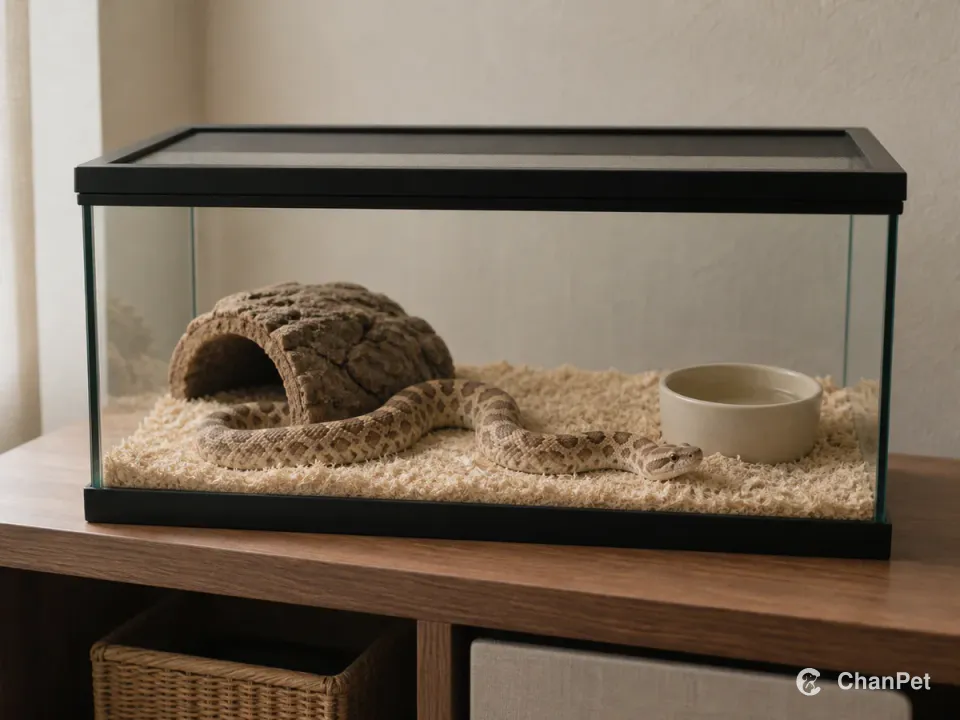
A permanent enclosure station keeps heat checks, water changes and lid checks in one simple routine.[1][2]
Make room for the whole routine
A quiet pet still needs a dependable station
The best apartment setup looks calm because the work has a home: secure lid, measured heat, fresh water, substrate supplies and a feeding plan. That kind of order gives the snake useful space and gives you fewer surprises.[2][3]
Common questions
Sources
Sources used in this article
- [1]Heterodon nasicus (nasicus)Animal Diversity Web, University of Michigan
- [2]Avian, Small Mammal, and Exotics Animal Care and Feeding Guide: Snake Care and Feeding GuidanceUniversity of California Davis California Veterinary Emergency Team
- [3]Snakes as PetsTexas A&M College of Veterinary Medicine & Biomedical Sciences