Set the home up for quiet observation
A western hognose spends time under loose substrate and cover, so it works best as an animal you watch at its own pace. Keep the enclosure in a calm location where its lid and equipment stay easy to check.[1][2]
The preference study found that young hognose snakes used an enriched area with a larger water dish, objects and loose substrate. A tidy setup still needs those choices; bare convenience removes part of the animal's usable space.[1]
Make cleaning small and often
Keep a dedicated scoop, waste bag and clean water bowl near the enclosure. That makes a quick response to soiled substrate simpler than waiting until a full clean feels overwhelming.[2]
When you refresh the habitat, restore the hides, water and loose material that let the snake choose where to settle. Consistent care can be clean without turning the enclosure into an empty display box.[1][2]
Keep the hygiene line clear
After you touch the snake, its enclosure or its supplies, wash your hands with soap and water as CDC recommends. Treat enclosure tools and prey containers as care equipment, then clean your hands before returning to food, phones or shared surfaces.[3]
Use a simple feeding and cleanup sequence: prepare, feed, put away supplies, then wash up. UC Davis recommends thawed whole prey, which gives the routine a clear start and finish.[2][3]
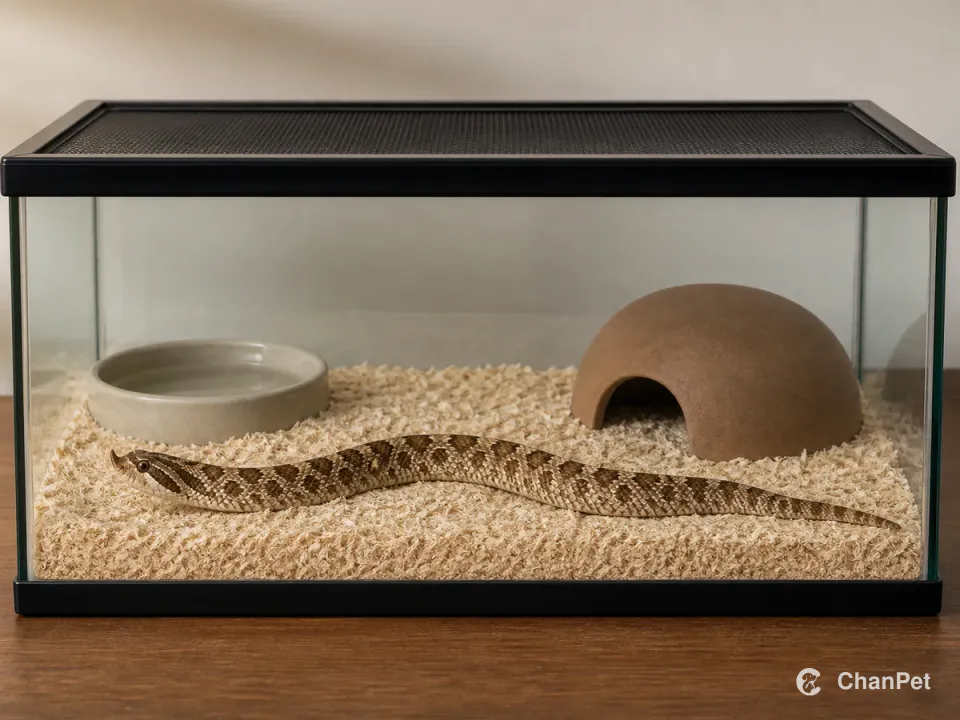
When substrate, water, and cover each have a fixed place, routine checks and small cleanups stay simple.[1][2]
Choose calm when you enjoy the routine behind it
Good enclosure habits keep the home calmer
A hognose's quiet appeal comes with practical tasks: checking the habitat, managing substrate and washing hands. Set those habits up neatly and the care stays easy to live with.[2][3]
Common questions
Sources
Sources used in this article
- [1]Western Hognose Snakes (Heterodon nasicus) Prefer Environmental EnrichmentAnimals
- [2]Avian, Small Mammal, and Exotics Animal Care and Feeding Guide: Snake Care and Feeding GuidanceUniversity of California Davis California Veterinary Emergency Team
- [3]Reptiles and AmphibiansCenters for Disease Control and Prevention