Make the doorway a controlled place
An Alaskan Malamute's strength matters at gates, car doors, and sidewalks. Keep the harness, leash, treats, and a clear adult handler ready before opening any door.[1]
Reward a pause, a check-in, and a loose leash before moving forward. Rehearse those actions in quiet moments so they are familiar when the environment becomes exciting.[2][1]
Give daily work a real place on the calendar
Malamutes come from serious working-dog history. Schedule movement, sniffing, simple training, and shared tasks across ordinary weekdays instead of relying on one long weekend outing.[1]
Write down who handles mornings, evenings, and sudden schedule changes. The plan needs a named backup person who can safely use the leash and follow the exit routine.[1][2]
Start coat care before the shed arrives
Keep a brush and towel near the place where outdoor gear comes off. Running hands through the coat and checking paws after a walk prevents small jobs from becoming an overwhelming weekend task.[1]
A dense double coat changes the household during shedding. Use short handling sessions early so the dog learns that brushing is a normal part of time together.[1][2]
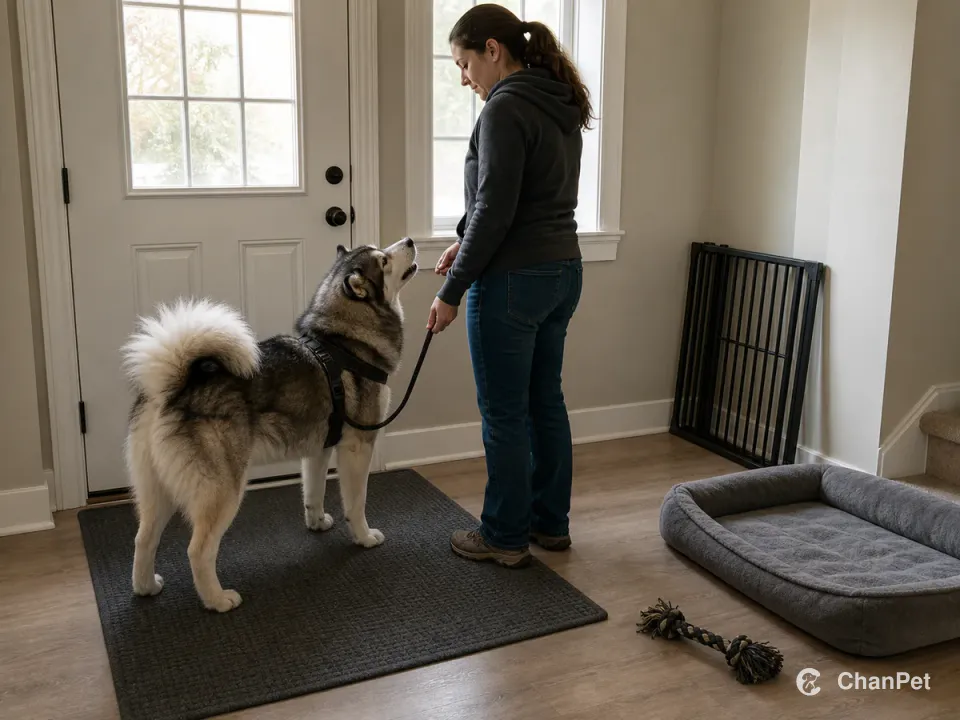
Practice waiting, a loose lead, and one quiet reward at the closed door before taking the same routine onto the street.[1][2][3]
A first owner needs a real strength-and-routine plan
Practice the hardest doorway before bringing the dog home
Map the gate, car, sidewalk, leash, and adult handler. Clear routines make the first weeks safer and more useful for learning.[1][2]
Common questions
Can a first owner handle an Alaskan Malamute?
What is useful puppy socialization for a Malamute?
Offer brief, safe exposure to people, surfaces, sounds, and calm dogs. Let the puppy observe and move at a pace that keeps it comfortable.[3]
Sources
Sources used in this article
- [1]Alaskan Malamute Dog Breed InformationAmerican Kennel Club
- [2]Position Statement on Humane Dog TrainingAmerican Veterinary Society of Animal Behavior
Let a puppy observe before asking for more
Introduce surfaces, sounds, calm people, and well-managed dogs in short sessions. A puppy can watch from a comfortable distance and still gain useful experience.[3]
Reward looking back to you, standing calmly, or choosing to create space. Those choices help build the handling and recovery skills a large adult dog will need.[2][3]