Start with your tightest week
Map early classes, late labs, commuting, and deadlines before adding the dog. Then place secure walks, movement, simple training, and settling time into spaces you can truly protect.[1]
A Malamute's size means the person holding the leash matters. Decide who handles morning departures, evening returns, and any change that leaves you unavailable.[1]
Keep exam weeks predictable
During exams, reduce optional variety before reducing the essential routine. Keep secure activity, food, coat checks, and a calm rest period on the schedule.[1]
Use short reward-based practice for waiting, checking in, and settling. A few clear repetitions can preserve handling cooperation without consuming a study evening.[2]
Train alone time before the longest days
Start with brief separations when the dog is settled. Return calmly and lengthen only from intervals the dog can complete without distress.[3]
If a camera shows pacing, barking, chewing, or scratching, make the next step shorter. Note the setup and build forward from a successful duration.[3]
Name a capable caregiver for breaks
The backup person must be able to handle this dog's strength, not merely enjoy dogs. Meet beforehand and walk through exits, routes, tools, food, and the daily coat routine.[1][3]
Leave a one-page guide with activity, handling, veterinary, and reward details. Specific instructions give a capable person more support than a vague request to watch the dog.[1][2]
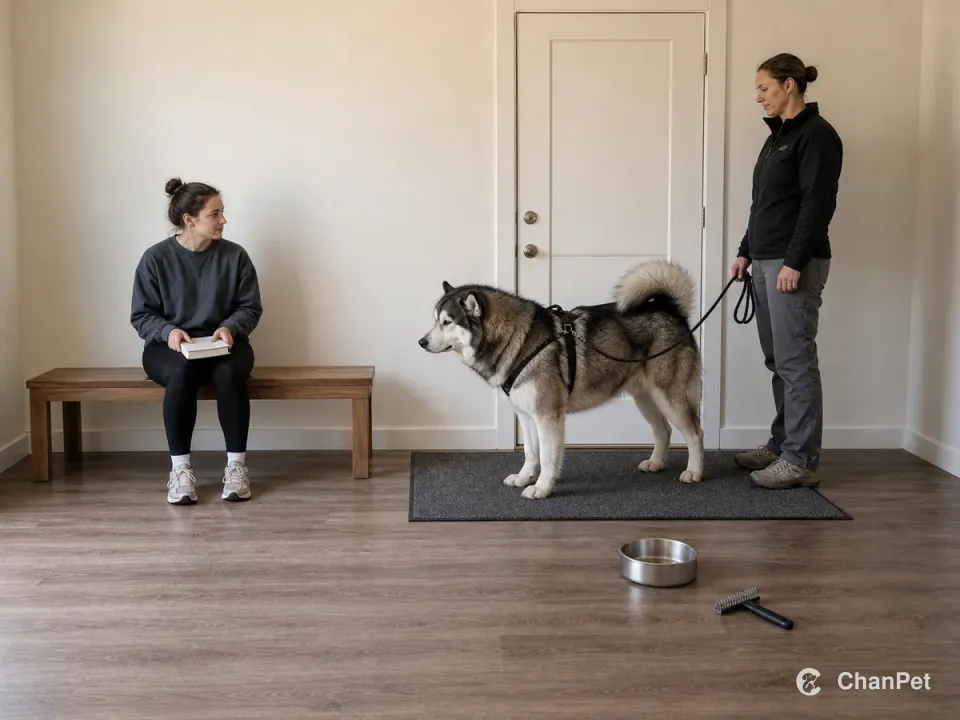
During the busiest week, a capable backup caregiver covers substantial activity while the dog's settling and undercoat-care route stays consistent.[1][3][2]
The term must hold the work on its hardest days
Write down the two most difficult weeks
If both weeks have a safe handler, adequate activity, and an agreed backup plan, you have a more credible term-long arrangement.[1][3]
Common questions
Can a student leave an Alaskan Malamute alone for a full class day?
Build alone time gradually from short successful steps, and arrange capable support when your schedule runs longer. Do not make a full day the first practice session.[3]
Sources
Sources used in this article
- [1]Alaskan Malamute Dog Breed InformationAmerican Kennel Club
- [3]How to Train Your Dog to Stay Home AloneRSPCA
- [2]Position Statement on Humane Dog TrainingAmerican Veterinary Society of Animal Behavior