Meet the cat behind the breed name
British Shorthairs are often described as patient, relaxed cats that enjoy being near their people. That is a useful starting point, not a guarantee about the cat in front of you. Sit quietly with the cat. Notice whether it comes over, plays, watches from a distance, or needs a little more time before it trusts a stranger.[1][2]
Ask for the cat's medical history, current food, vaccination details and any notes about its usual litter habits. An adult cat can be especially straightforward for a first-time owner because its personality is already easier to see. Take those records to the first veterinary appointment, rather than trying to rebuild the story after the cat is home.[2]
Make one room feel readable
Start with a quiet room that has water, food, a litter box, a scratching surface, a bed and somewhere to hide. Spread those things around the room instead of putting every bowl and box in one corner. A new cat can then eat, rest, scratch and use the litter without feeling exposed.[3]
Open the carrier and let the British Shorthair choose the pace. A cat that stays under a chair is taking in a new place. Keep the first evening simple: low voices, no parade of visitors, and a predictable meal. The room becomes useful when the cat learns where each part of its day happens.[3][2]
Start the small routines early
The British coat is short and dense. A gentle brush during moulting is useful, and a few calm strokes with a brush also teach a new cat that handling can stay uneventful. Stop before the cat becomes annoyed. Short, pleasant sessions are easier to repeat than one long grooming session after fur covers the sofa.[1]
Add a few minutes of play to the same part of the day. A toy moved along the floor, a cardboard box to investigate, or food placed in a simple puzzle gives a calm cat a reason to stretch and explore. Play is also a quick way to learn what gets this particular cat interested.[3][1]
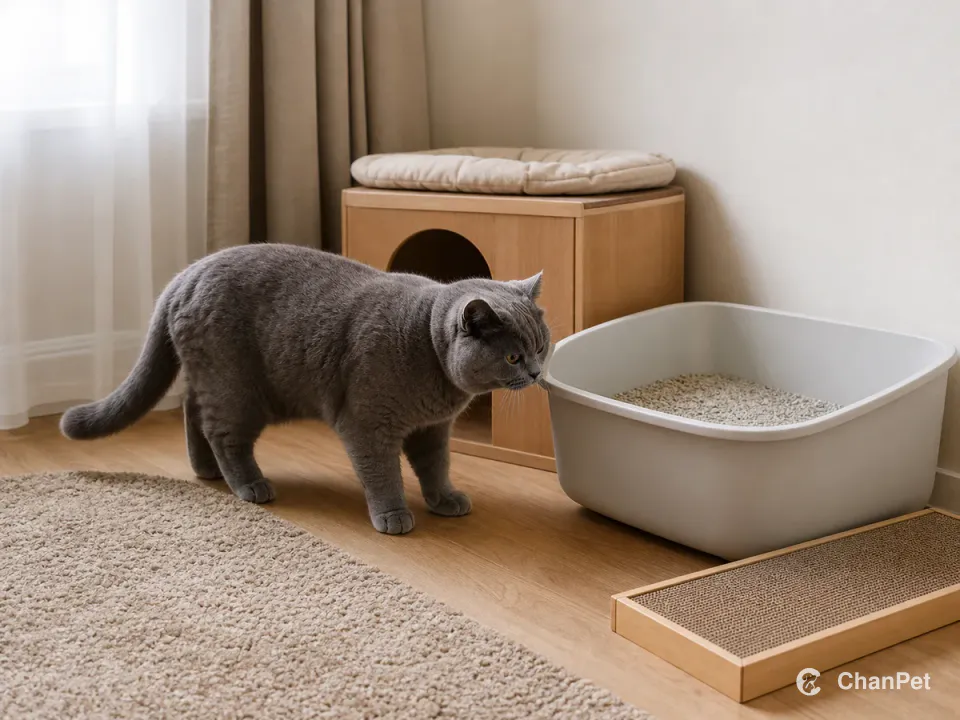
Putting the litter box, scratcher, and a place to retreat within easy reach gives a new cat a clearer first week.[2][3]
A strong first choice when you like calm, regular care
Begin with the cat's ordinary day
Prepare one usable room, read the records, and watch how the cat chooses contact and rest. That gives a first-time owner a much clearer start than trying to create a perfect welcome overnight.[2][3]
Common questions
Should I choose a kitten or an adult British Shorthair as my first cat?
Sources
Sources used in this article
- [1]BritishThe Governing Council of the Cat Fancy
- [2]Choosing and Caring for Your New CatCornell University College of Veterinary Medicine, Cornell Feline Health Center
- [3]Your Cat's Environmental Needs: Practical Tips for Cat CaregiversFeline Veterinary Medical Association and International Cat Care