Use the room in layers
British Shorthairs are often relaxed companions, which can make a compact home feel peaceful. They still need choices about where to sit, sleep and watch the room. A window bed, a chair by a bookcase and a covered resting spot can give one apartment several calm destinations.[1][2]
Look at the route from the front door to the kitchen at your busiest time. If the cat has to squeeze past feet, vacuum cleaners and a noisy appliance to reach its bed, move a resource rather than expecting the cat to adapt. Food, water, litter and sleeping spots work better when they are separated.[2]
Give the coat and claws a routine
The British coat is short but thick, so loose hair will still collect on a favorite cushion or sunny patch of floor. A brief brush during moulting, followed by a quick pass with the vacuum, is easier than treating shed fur as a surprise. Put the brush where you can reach it after a quiet cuddle.[1]
Offer a stable scratching post or board close to the area where the cat wakes, stretches or turns a corner. Cats need places to scratch as part of an indoor environment. A scratching surface that stays put feels more useful than one hidden behind furniture.[2]
Make the litter plan boring
The best litter location is usually quiet, easy to reach and away from food and water. Cornell notes that box cleanliness, location, litter and medical issues can all influence house-soiling. In a small apartment, that makes the box a layout decision, not an afterthought.[3]
Scoop on a steady schedule and keep a mat, bags and cleaner nearby. If the cat changes how often it uses the box, strains, or begins avoiding it, write down what changed in the home before you change every product at once. A clear record helps a veterinarian or behavior professional work from real information.[3][2]
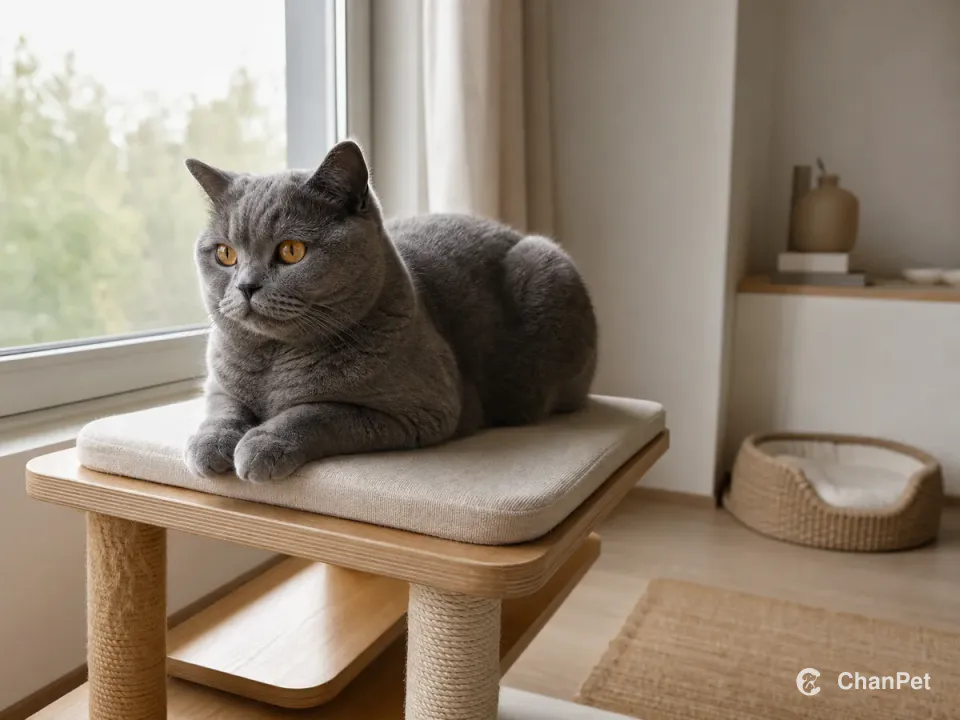
A low stable tower and a separate quiet nook give a British Shorthair two clear places to settle in an apartment.[1][2]
A good apartment cat when the setup does some work
Lay out the ordinary route first
Walk through the apartment as the cat will use it: rest, food, litter, scratch, watch and retreat. A few well-placed resources can make a modest home feel settled and practical.[2][3]
Common questions
Does a British Shorthair need a tall cat tree in an apartment?
What should I do if the cat starts avoiding the litter box?
Check whether the box is clean, accessible and quiet, and think about recent changes to litter or household traffic. A sudden change in litter habits deserves veterinary advice, especially when discomfort or frequent small trips are present.[3]
Sources
Sources used in this article
- [1]BritishThe Governing Council of the Cat Fancy
- [2]Your Cat's Environmental Needs: Practical Tips for Cat CaregiversFeline Veterinary Medical Association and International Cat Care
- [3]Feline Behavior Problems: House SoilingCornell University College of Veterinary Medicine, Cornell Feline Health Center