Before the carrier comes through the door
Set the hide, water, food dish, and wheel in their permanent spots before the hedgehog arrives. The first evening is for sniffing, finding water, and learning a new route through the enclosure. Keep the room low-key and watch from a little distance after dusk.[1][2]
Put a thermometer close to the sleeping and activity areas. Merck lists 75–85°F, or 24–29°C, as the preferred range for pet hedgehogs. The reading inside the enclosure matters more than the thermostat across the room.[1][3]
Build a real home before adding cute extras
African pygmy hedgehogs are usually kept one to an enclosure. Choose a secure, ventilated home with a lid, soft absorbent bedding, a dark hide, and enough clear floor space for the wheel and food. Hedgehogs climb, so every latch and gap deserves a check.[1]
Skip scented bedding and loose fabric threads. Both can complicate a small animal's day. Start with a straightforward setup that is easy to check and clean. You can add safe enrichment after the hedgehog has settled into its normal eating and sleeping rhythm.[1][3]
A solid wheel is an early essential
Hedgehogs cover a lot of ground after dark, and a solid-surface wheel gives them a safe outlet. Wire wheels can trap a leg. Put the wheel on a stable surface and listen for wobbling before bedtime; a small vibration can sound much bigger in a quiet apartment.[1][3]
Clean the wheel as part of the evening routine. It is easier to notice a change in urine, droppings, or gait when yesterday's mess is gone. The wheel is a useful health clue as well as a piece of exercise equipment.[2][3]
Food and water tell you how the day went
Offer a balanced main diet in a measured amount and keep fresh water available. Check that the water bottle flows or that the bowl stays clean. A damp patch under a bottle or a full dish that stays full can give you an early reason to look closer.[1][2]
Add new foods gradually. Keep a short note of what was offered, what was eaten, and what the droppings looked like. That tiny record becomes very useful if you need to call a veterinary practice.[1][3]
Trust happens after dark
A startled hedgehog curls up, huffs, or hisses. That response deserves space. Sit low, move slowly, and let the hedgehog smell your hands after it has woken. Brief sessions end on a better note than a long session with a tight little ball in your palms.[1][2]
Some hedgehogs grow curious about a familiar person. Others prefer a quiet person nearby while they explore. Both are normal. Your job is to make each evening feel predictable, rather than turn every visit into a handling lesson.[2][3]
Save the vet number before you need it
Find a veterinarian who sees exotic mammals while the hedgehog is healthy. Appetite loss, diarrhea, breathing effort, unusual quill loss, skin crusting, weakness, or a major change in movement all deserve an early call.[2][3]
For a first appointment, bring the current food, an enclosure photo, and a few evening notes. Those details give the veterinary team a real picture of daily life and make husbandry questions easier to answer.[2][3]
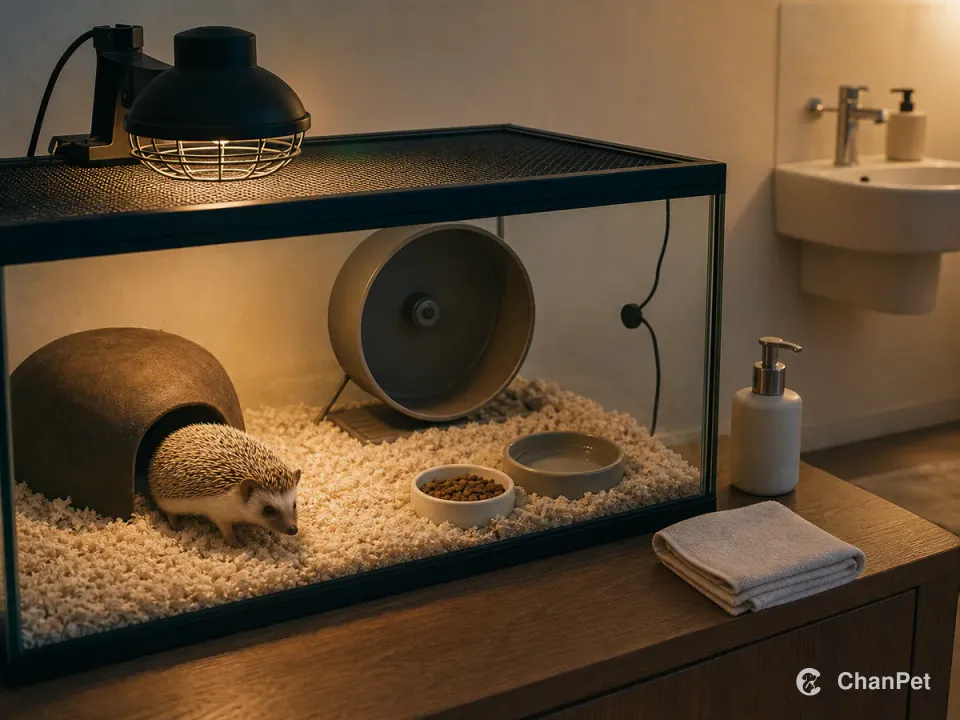
Stable warmth, a solid wheel, food, water, and a nearby handwashing point turn the first week into a repeatable evening check.[1][3]
The beginner win is a small routine that holds together
Could your evenings support that first routine?
Use the smart match to compare your time, home, and care preferences with pets that make sense for your everyday life.[1][3]
Common questions
How soon can I handle a new hedgehog?
Does a hedgehog need a wheel right away?
Sources
Sources used in this article
- [1]Management of HedgehogsMerck Veterinary Manual
- [2]Common Disorders of HedgehogsAssociation of Exotic Mammal Veterinarians
- [3]How to care for your pet hedgehogUniversity of Florida College of Veterinary Medicine