An easy week tells you very little about a semester
The first few days of term can look wonderfully open. Then labs run late, a group project eats an evening, and a deadline turns dinner into a desk snack. A hedgehog still wakes after dusk and still needs water, food, a temperature check, and a person who notices it.[1][2]
Use the busiest night on your timetable as the test. Who handles care after a late class? Who checks the enclosure if you are ill? A named person with a key and a practiced routine is much stronger than hoping a housemate will be around.[1][2]
Protect the daytime nap in a shared home
A hedgehog is usually asleep while the house is awake. Choose a spot away from direct sun, a loud speaker, and a door that bangs all day. Tell housemates that the hide is a bedroom, not an invitation to check whether the hedgehog is cute today.[1][2]
A room can be quiet at noon and bright and social at midnight. Talk through lighting, enclosure placement, and cleanup space before move-in day. It is much easier to agree on the boundaries while everyone still has an empty corner to offer.[1][2]
Make exam-week cover real before exams arrive
Teach one backup person the basics before the busy stretch begins. They should know how to test the water, offer food, look at the temperature, remove wet bedding, and recognize an unusual change in evening activity.[2][1]
Walk through the routine together once. Let them find the food, clean the wheel, and see which area of the enclosure runs warm. A ten-minute practice run is far more useful than a frantic message at midnight before an exam.[2]
A break needs a handoff, not a hopeful text
Write a short care card before you leave for a break, internship, or family visit. Include food, water, temperature, bedding, cleanup, and how to reach you. The card turns a vague favor into a clear routine.[2][1]
Add handwashing to the card. Anyone who touches the hedgehog, food, bedding, wheel, water dish, or enclosure should wash with soap and running water afterward.[3]
When you move, move the routine first
On moving day, pack familiar bedding, the hide, food, water, and a secure temporary carrier. Set up a stable warm room in the new place before sorting boxes. That gives the hedgehog one recognizable place while the rest of your life is in motion.[2][1]
The first few nights in a new room are a good time for ordinary checks. Watch for drinking, eating, droppings, and wheel use after dark. Familiar food and a familiar hide give the hedgehog an easier way into the new routine.[1][2]
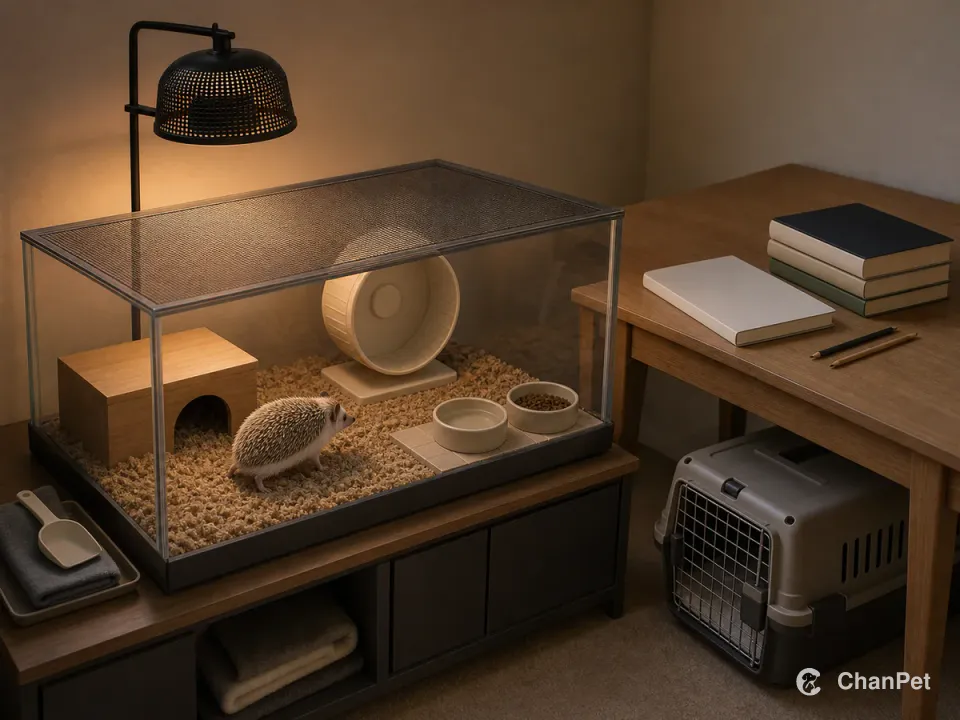
The wheel, bowls, and hide make the evening routine repeatable, while the external heater keeps one warm zone. Put-away books and a ready carrier support busy weeks and holiday handoffs.[1][2]
A hedgehog needs a fixed evening slot in a changing semester
Try your plan against the busiest week first
Use the smart match to compare your housing, study schedule, breaks, and backup care with pets that fit the shape of your life.[1][2]
Common questions
Can I just leave food and water during exam week?
Can a roommate help with care?
Sources
Sources used in this article
- [1]Overview of HedgehogsMerck Veterinary Manual
- [2]How to Care for Your HedgehogUniversity of Illinois College of Veterinary Medicine
- [3]Hygiene Practices Around AnimalsCenters for Disease Control and Prevention