Teach the door before the dog can pull
A young Labrador can feel light and bouncy. That changes quickly. Start at the front door: pause, wait for a loose lead, then step out together. Repeat the same quiet pattern at the car, curb and park gate. These tiny rehearsals matter more than one ambitious training session on the weekend.[1][2]
Keep rewards easy to deliver and easy to understand. AVSAB supports reward-based training. Mark the calm moment, reward it, then carry on. A Labrador often enjoys having something to do, and clear choices give that enthusiasm a useful direction.[2][1]
Make socialisation specific and safe
Socialisation is more than meeting a crowd of strangers. Let the puppy experience ordinary things in small, safe pieces: a bus passing, a person with an umbrella, a different floor surface, a calm adult dog at a distance. AVSAB recommends early, safe socialisation during the puppy period.[3]
Watch the puppy's response. A loose body and interest mean you can stay for another minute. A puppy that freezes, pulls away or cannot take food needs space. Turn down the difficulty, then try again on another day. The dog learns best when it can stay comfortable enough to take information in.[3][2]
Give everyday exercise a job
AKC describes Labradors as active, outgoing dogs that need daily exercise. A walk can do more than cover distance. Let the dog sniff, practise a turn with you and carry a soft toy for a few steps. That keeps the outing connected to the skills you want at home.[1]
Do not rush every walk into a lesson. A few predictable rules and time to investigate can sit in the same outing. The important part is repetition. A Labrador learns the pattern that happens every day, including the one you create when life is busy.[1][2]
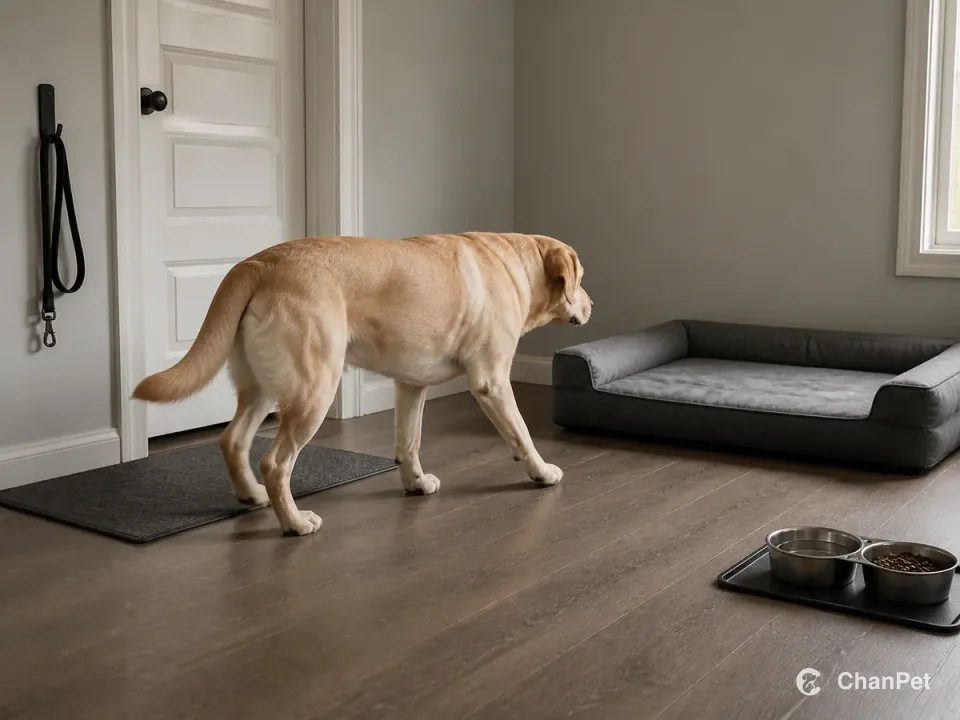
A waiting mat, stored lead, clear activity route, durable bed, and separate food-and-water station each have a fixed place before the dog is fully grown. A few minutes of practice before each walk builds a habit that matches an adult Labrador’s strength.[1][2]
A first dog for people who enjoy practising together
Picture the daily practice before the first walk
Want to know whether your time, space and experience suit a Labrador? Start a smart match and compare the real first-year routine before you choose a dog.[1][2]
Common questions
When should I start lead training with a Labrador puppy?
Does puppy socialisation mean taking a Labrador everywhere?
No. Choose short, safe experiences and watch how the puppy feels. AVSAB advises gradual socialisation that keeps the puppy comfortable enough to learn.[3]
Sources
Sources used in this article
- [1]Labrador Retriever Dog Breed InformationAmerican Kennel Club
- [2]Humane Dog Training Position StatementAmerican Veterinary Society of Animal Behavior