Trade the myth for a real introduction
People often attach a big personality story to a tortoiseshell coat. The color pattern has a genetic explanation, but it cannot forecast how one cat responds to guests, toys or a quiet lap. Sit with the cat. See how it recovers from a sound and whether it chooses to come closer.[1][2]
Ask about food, litter, sleep, handling and any recent changes. Look through the health records before you make a decision. The routine you inherit matters much more to the first week than a nickname built from the coat.[2]
Give the arrival room separate stops
Pick a room away from the front door and the loudest household traffic. Place meals well away from the litter box. Include a covered resting place, a scratcher and a clear path between each resource. The room should give the cat several calm choices from the first hour.[3]
Set the carrier down, open it and wait. A cat that stays inside is gathering information. A cat that walks out is gathering information too. Let either choice happen without a crowd around the doorway.[2][3]
Learn the cat's yes and no signals
Offer a short toy session, then put the toy down before the cat loses interest. Try a few gentle strokes only when it stays close. Those tiny exchanges show you what the cat enjoys and give it a chance to choose the next interaction.[3]
Book an early checkup and take the prior records along. Write down meals, water, litter use and resting spots during the first days. That note gives the veterinary team a concrete picture of the cat's transition.[2]
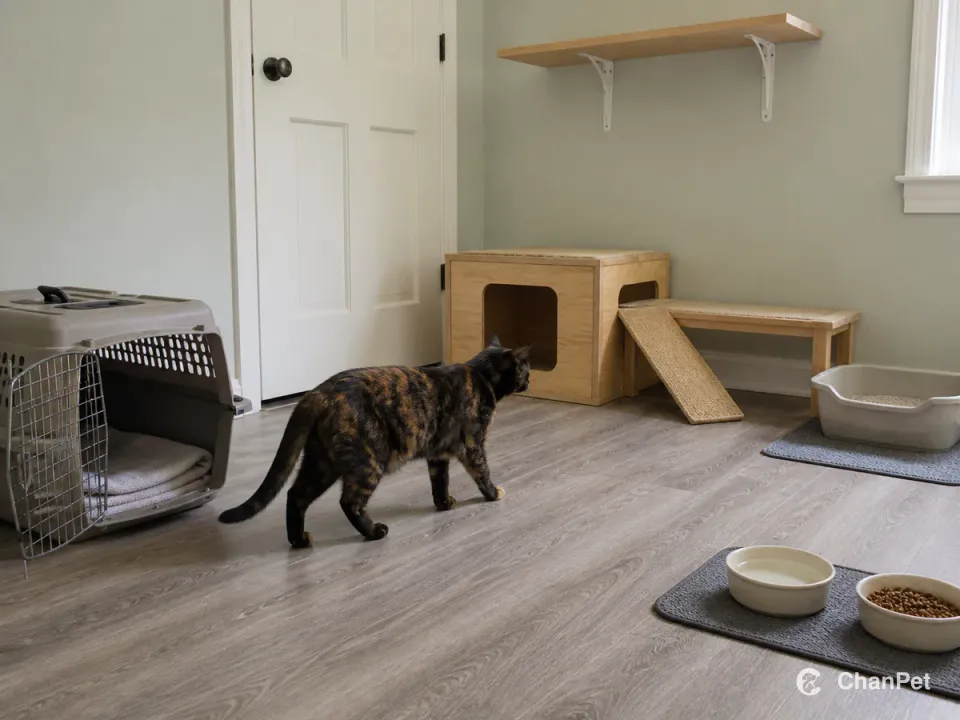
Tortoiseshell describes the coat. Prepare the carrier, familiar food, water, litter, a two-exit hide, scratcher, and supported perch in one quiet room before exploration begins.[1][2][3]
Start with the individual cat, not the folklore
A quiet beginning tells you more than a label
Give the cat a usable room, watch its first habits and keep the first few days low-key. You will learn who this tortoiseshell cat is through those small moments.[2][3]
Common questions
Does a tortoiseshell coat predict a cat's personality?
Sources
Sources used in this article
- [1]Molecular and genetic characterization of sex-linked orange coat color in the domestic catCurrent Biology / PubMed
- [2]Choosing and Caring for Your New CatCornell University College of Veterinary Medicine, Cornell Feline Health Center
- [3]Your Cat's Environmental Needs: Practical Tips for Cat CaregiversFeline Veterinary Medical Association and International Cat Care