Build for digging and cover
Western hognose snakes spend much of their time at ground level and dig into loose soil. Give the enclosure a substrate the snake can move through, plus hides that stay available after you clean.[1]
A welfare study found that young western hognose snakes chose an enriched area with loose substrate, a larger water dish and objects. Keep the layout useful rather than filling every inch with decor.[2]
Give the system a practice run
Run the enclosure before the snake comes home. Check the warm and cooler areas with a digital thermometer, look for gaps around the lid, and make sure the water dish stays clean and upright.[3]
UC Davis advises a temperature gradient and warns that direct-contact heat can burn a snake. Put heating where the animal cannot reach it, then test the setup while a mistake is still easy to fix.[3]
Learn when to step back
A western hognose may hiss, flatten its head and neck, or roll over when it feels threatened. These displays create distance. Close the enclosure gently and let the snake return to cover.[1]
Feed thawed whole prey and leave the snake alone while it digests. A beginner gains far more by learning that routine well than by trying to make every visit a handling session.[3]
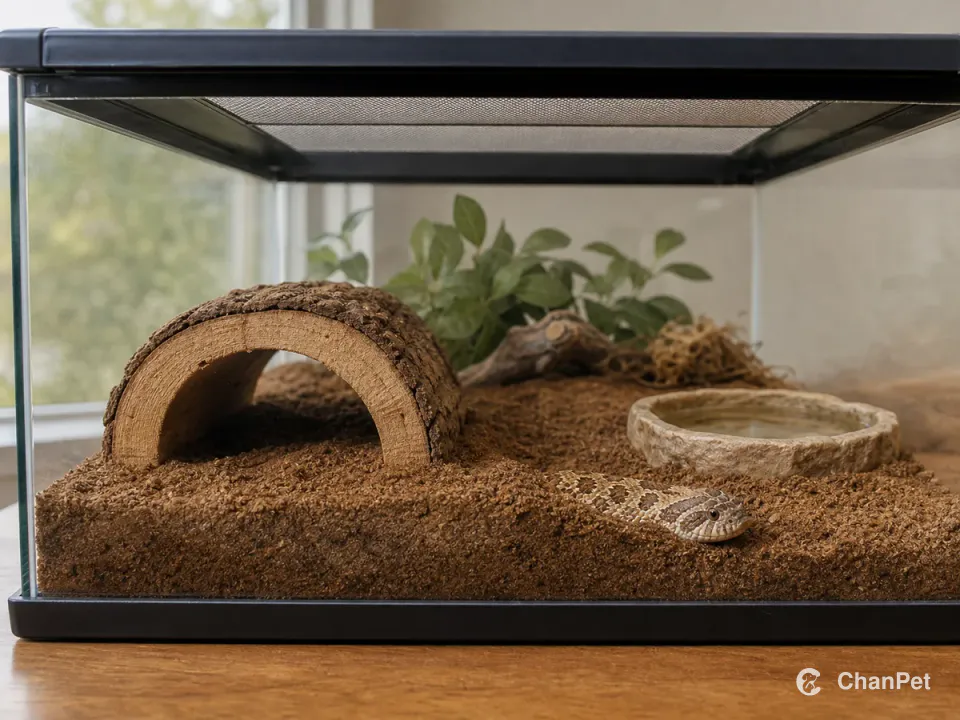
Set up a secure home first, then give the snake time to settle in.[1][3]
A first snake benefits from a quiet start
Learn the home before you learn the snake
A settled hognose has cover, loose substrate, safe heat and a keeper who reads its signals. Put that foundation in place first, then let calm observation do the rest.[2][3]
Common questions
Sources
Sources used in this article
- [1]Heterodon nasicus (nasicus)Animal Diversity Web, University of Michigan
- [2]Western Hognose Snakes (Heterodon nasicus) Prefer Environmental EnrichmentAnimals
- [3]Avian, Small Mammal, and Exotics Animal Care and Feeding Guide: Snake Care and Feeding GuidanceUniversity of California Davis California Veterinary Emergency Team