Give the cat a place to say no
Set up a bed, perch or quiet room where children do not follow the cat. A child can learn that walking away is a normal cat answer. That one rule prevents many hard moments before they start.[1]
TICA describes American Shorthairs as people-oriented and good-natured, which can make them pleasant company in a busy home. Let that temperament show in a way the cat chooses. A cat who comes over for a toy or sits beside the family has already joined in.[2]
Teach hands before hugs
Show children how to offer a still hand, stroke the shoulder or back when the cat stays close, and stop when it moves away. Carrying a cat around the room or chasing it under furniture can turn a friendly day into a scary one.[1]
Put the playful energy into a toy, not fingers. An American Shorthair may enjoy tracking and pouncing on moving objects. An adult can run a short wand-toy game while children take turns moving the toy gently and leaving the final catch to the cat.[2]
Adults own the hygiene routine
Adults should handle litter duty, food storage, veterinary arrangements and the morning rush. CDC advises handwashing after contact with cats, their food, waste or supplies. Make handwashing the last step of the game and the first step before snacks.[3]
Keep the carrier easy to find and put veterinary information where the adults can reach it. Children can help fill a water bowl or choose a toy, but they should not become the emergency plan. A cat needs one accountable grown-up even in a very caring family.[3][1]
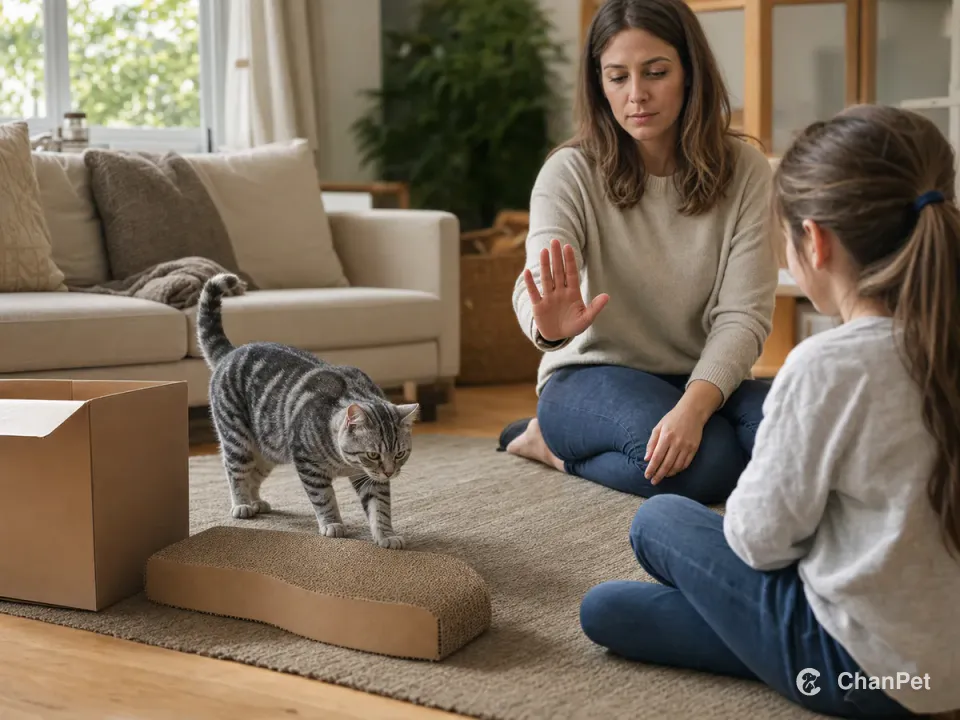
When adults slow the moment down, children can see the cat choose whether to join in.[2][1]
A family companion when the rules protect both sides
Choose a cat for the family you have today
Want to compare an American Shorthair with your children's ages, home rhythm and care responsibilities? Use a smart match to make the choice around your real household.
Common questions
Can children help care for an American Shorthair?
How do I tell a child the cat wants space?
Use a simple family rule: when the cat walks away, hides or rests on its perch, everyone lets it be. Point out the moments when the cat later chooses to return.[1]
Sources
Sources used in this article
- [2]American ShorthairThe International Cat Association
- [3]CatsCenters for Disease Control and Prevention
- [1]Choosing and Caring for Your New CatCornell University College of Veterinary Medicine, Cornell Feline Health Center