Make observation the children's job
Give children a small set of things to watch: where the betta rests, whether he comes to food, and whether the filter sounds familiar. A child can draw the aquarium, record a feeding, or describe a new plant. Those activities create attention without asking the fish to perform for the room.[1][2]
The adult decides what a real change means. Water-quality checks, feeding amounts, treatments, and equipment changes need one consistent person. Fish welfare depends on the whole environment, and a family aquarium stays calmer when the instructions stay clear.[1][2]
Keep the tank quiet and predictable
Set a simple rule before the fish arrives: people watch through the glass, and adults handle the lid, net, filter, heater, and cleaning equipment. That boundary protects the aquarium from sudden hands in the water and gives the betta a more predictable day.[1][2]
Use a calm corner as the observation spot. Plants and structure can make the aquarium more interesting for a betta, while a steady room helps the family see the fish's normal behavior. Save tapping, chasing, and quick decoration swaps for a different kind of pet activity.[2][1]
Put handwashing next to the aquarium routine
Wash hands after touching aquarium water, fish equipment, food containers, or cleaning tools. Keep these supplies away from kitchen counters and other places where people prepare food. A handwashing cue near the tank makes the habit much easier for children to remember.[3]
Give the adult a lidded box for the test kit, water treatment, nets, towels, and spare parts. Children can help put the box away after a supervised task. Clear storage separates a family activity from the equipment that needs careful handling.[3][1]
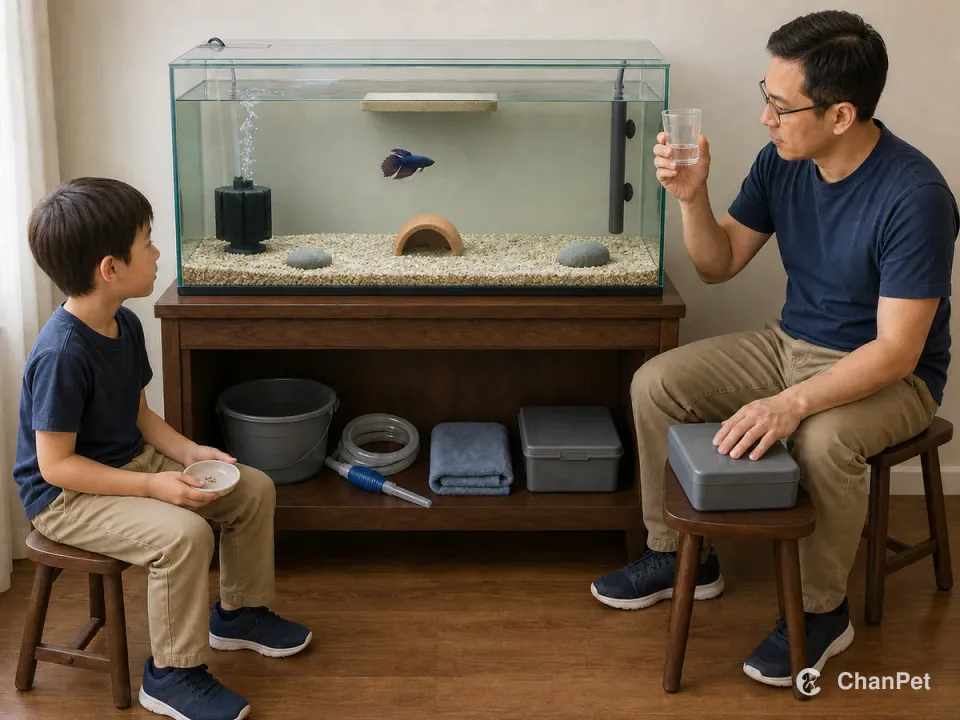
The child prepares a small meal and observes under supervision while the adult owns water quality, equipment, cleaning and care decisions. Every task stays outside the closed aquarium.[2][3][1]
A family pet for slow looking and real responsibility
Give children a role that helps the fish
Invite children to watch, draw, and learn the feeding routine. Keep water tests, equipment, cleaning, and every care decision with an adult. That split gives the family more to share and the betta more peace.[1][3]
Common questions
Can children feed a betta?
Which hygiene habit matters around an aquarium?
Wash hands after aquarium contact and keep fish supplies away from food-preparation areas. Store test kits, nets, towels, and water-care products together where adults can manage them.[3]
Sources
Sources used in this article
- [2]Timing of isolation from an enriched environment determines the level of aggressive behavior and sexual maturity in Siamese fighting fish (Betta splendens)BMC Zoology
- [3]Hygiene Practices Around AnimalsCenters for Disease Control and Prevention
- [1]Fish Welfare in Public Aquariums and Zoological CollectionsAnimals