Beginner fit · 🐠 Fish

Is a Betta Fish a sensible first pet?

Short answer: Betta Fish is a good fit for a first-time owner — 4.5/5. It needs little training, which really helps here. Below, the per-metric score, monthly cost and a checklist help you decide.

This page breaks “easy pet?” into minimum setup, first-week execution and risk handling. Betta Fish scores 4.5/5 for beginners.

Beginner fit4.5/5Higher is easier for a first pet
Care difficulty2/5Highest of training, grooming and cleaning
Main riskExecutionBetta are not cup fish; tiny volumes swing temperature and water quality quickly.
First-week load6–14min/dayTrack diet, waste, environment and warning signs
Get My Report100% Free • No sign-up
Open full profile
Category🐠 Fish
Lifespan3–5 yrs
Monthly cost$10–$25/month (China reference ¥20–¥80/month)
Care focusWater quality & filtration

You are not only asking whether Betta Fish is easy. You are asking whether inexperience could lead you to fail a living animal.

You may want companionship, but worry about buying the wrong setup, overreacting in week one, or trusting casual “easy pet” advice that does not fit your home.

So this page breaks Betta Fish into minimum setup, stable routines and risk handling.

For Betta Fish, confirm this before deciding: Betta are not cup fish; tiny volumes swing temperature and water quality quickly.

1 · Direct verdict

Is it actually right for a first-time owner?

Verdict: Betta Fish is a strong fit for first-time ownership, but the real question is not abstract ease; it is whether you can handle Cleaning load 2/5, Budget pressure 1/5, Grooming 1/5.

Why it can work

  • Quiet and does not need walking.
  • Single-fish housing is manageable for beginners willing to learn water quality.
  • Highly visual, with interaction mainly through feeding and observation.

Where it can fail

  • Needs heating, filtration, cycling and water testing.
  • Tiny volumes swing temperature and ammonia quickly.
  • Not suitable for most community-tank setups.

The decision hinge

If you can sustain this setup: Prefer a heated, filtered, stable tank; target at least 20 L and monitor ammonia, nitrite and temperature, keep reading; if not, pause first.

2 · Minimum setup

Buy what keeps the pet safe before what looks nice

This separates must-haves from later upgrades so budget and attention do not get swallowed by cosmetic purchases.

Must have

  • Learn normal eating, waste, activity and warning signs for Betta Fish.
  • Confirm veterinary, emergency or specialist access before arrival.
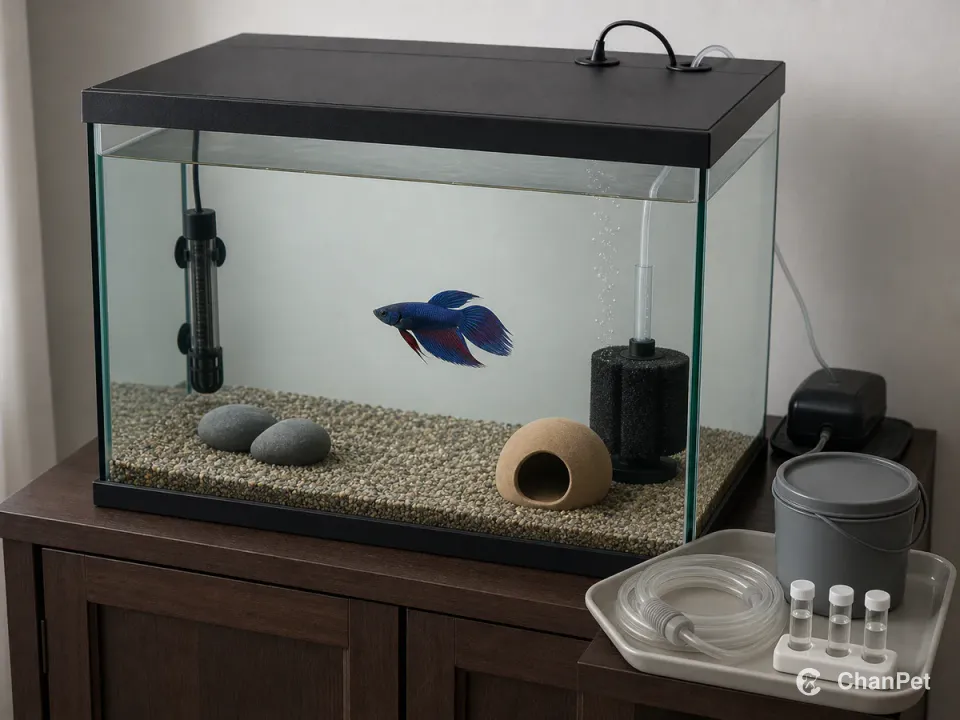
  • A cycled filtered tank, temperature control or heater, test kits and water-change tools.
  • Quarantine new fish or livestock; avoid untested mixing.
  • Prefer a heated, filtered, stable tank; target at least 20 L and monitor ammonia, nitrite and temperature.
  • Prefer a heated, filtered tank of at least 20 L.

Can wait

  • Extra toys, décor, photo props and nonessential automation can wait.
  • Learn normal diet, elimination, posture and warning signs for this betta first.
  • Confirm veterinary, emergency or specialist access for Betta Fish before problems occur.

3 · Correct order

In week one, aim for stability before closeness

Many failures are not from lack of love; they come from doing things in the wrong order.

  1. 01

    Before arrival

    Prepare the minimum setup, vet contact, food and an observation/quarantine space.

  2. 02

    Arrival day

    Keep handling low and let the environment settle first.

  3. 03

    First week

    Track water temperature, ammonia/nitrite, appetite and abnormal swimming.

  4. 04

    First month

    Build a repeatable routine before buying upgrades or adding complexity.

4 · Common failure points

The outcome usually turns on these underlying factors

These failures are usually not a lack of care; one link in setup, budget, rhythm or judgment was not made stable early enough.

“Easy” becomes careless

Owner pattern
Buy the pet without learning normal signs and warning signs.
Consequence
You cannot tell adjustment from illness when something changes.
Better move
Record food, waste, activity and environment every day in week one.

Too much change in week one

Owner pattern
Change food, enclosure, handling, bathing or layout repeatedly.
Consequence
Stress can hide illness and trigger refusal, hiding or defensive behavior.
Better move
Stabilize first; make necessary changes in one deliberate pass.

Overfeeding or random mixing

Owner pattern
Assume more food or more companions is kinder.
Consequence
Obesity, poor water quality, fighting or cross-infection can follow.
Better move
Control quantity, density and feeding by species.

Species-specific needs get ignored

Owner pattern
Betta are not cup fish; tiny volumes swing temperature and water quality quickly.
Consequence
The problem often grows during the first week or first maintenance cycle.
Better move
Prefer a heated, filtered, stable tank; target at least 20 L and monitor ammonia, nitrite and temperature.

More options for the same scenario

How Betta Fish compares with nearby options

Betta Fish stands out because it needs little training; the trade-off is that it means regular cleanup. These are the most useful next comparisons, not random links.

Cost and time visuals

Cost and time: first-month pressure, then routine rhythm

This page breaks “easy pet?” into minimum setup, first-week execution and risk handling. Betta Fish scores 4.5/5 for beginners.

Key takeaway$10–$25/month (China reference ¥20–¥80/month)

The first-pet pressure is usually not the purchase price; it is week-one workload and hidden cost.

Cost split

Rhythm or risk

Daily6–14 min/day

Feed lightly, observe swimming and check temperature/equipment.

Weekly40–90 min/week

Clean the main setup, refill supplies and review odor, water or bedding.

Monthlyone review

Check budget, equipment wear, body condition and emergency plan.

Next: if the monthly cost, daily time and highest risk are acceptable, move to the checklist.

Pre-arrival checklist

Check first, then decide

The first three are hard requirements. Do not start with “I’ll fix it later.”

Check items to get a live next-step suggestion.

Authority summary

Fish authority summary

For Betta Fish, this means environment, hygiene, veterinary access and legal boundaries come before looks, price or interaction.

  • Merck Veterinary Manual centers fish health management on water quality, nutrition, sanitation and quarantine, so quiet and low-touch does not mean low responsibility.
  • Cycling, filtration, water changes, ammonia/nitrite checks and quarantine for new fish often matter more than interaction training.
  • CDC notes that fish and aquarium water can carry germs that make people sick; tank cleaning requires hand hygiene and extra caution for higher-risk people.

Safety boundaries

Accept the boundary before the preference

Low interaction does not mean low responsibility for fish: cycling, filtration, water changes, ammonia/nitrite monitoring and outage planning matter.

Educational pre-adoption screening only; not a substitute for veterinary, trainer, medical or local legal advice. Consult a professional for allergies, immunocompromise or child-safety risks.

FAQ

Questions readers search for

Is Betta Fish easy to keep for beginners?

Betta need stable heated, filtered water and should not be kept long-term in cups or tiny volumes. For this page, the verdict is “Strong fit” (4.5/5), not a blanket recommendation; the main trade-off is Needs heating, filtration, cycling and water testing.

How strict are Betta Fish's temperature, water or lighting needs?

The needs are strict enough to measure. Prefer a heated, filtered, stable tank; target at least 20 L and monitor ammonia, nitrite and temperature. Keep measurements and backup equipment ready rather than guessing Use thermometers, test kits or humidity readings instead of guessing from appearance.

How long does Betta Fish live?

Typical lifespan is about 3-5 years. Plan budget, travel care, moves and senior care across the full life, not just the purchase stage.

How much does Betta Fish cost per month?

Site reference: $10–$25/month (China reference ¥20–¥80/month). Real cost changes with location, food, supplies, equipment replacement, boarding and emergency reserve, so purchase price is not enough.

What does Betta Fish eat, and how should I feed it?

Betta Fish needs species-appropriate aquatic food in small amounts. Overfeeding is a water-quality problem, so remove uneaten food and watch ammonia/nitrite risk.

How much space and setup does Betta Fish need?

Prefer a heated, filtered, stable tank; target at least 20 L and monitor ammonia, nitrite and temperature. Start with: A cycled filtered tank, temperature control or heater, test kits and water-change tools; Quarantine new fish or livestock; avoid untested mixing.

Does Betta Fish smell, make noise, shed or create mess?

Betta Fish is quiet, but the tank will smell if filtration, stocking, feeding or water changes are wrong. Use testing and partial water changes; do not solve water problems by constant full tear-downs.

Is Betta Fish affectionate or handleable?

Betta need stable heated, filtered water and should not be kept long-term in cups or tiny volumes. Betta Fish is mainly an observation pet; “interaction” means stable water, careful feeding and watching for abnormal swimming or conflict.

Can Betta Fish live with others, kids, cats or dogs?

Mixing Betta Fish requires matching temperature, water parameters, adult size, aggression level, swimming speed and quarantine. Fry or smaller tankmates may be eaten or bullied.

What health problems or warning signs matter for Betta Fish?

Betta Fish's main watch items are: Needs heating, filtration, cycling and water testing, Tiny volumes swing temperature and ammonia quickly, Not suitable for most community-tank setups and Prefer a heated, filtered tank of at least 20 L. Water quality is the first health check; poor water can look like many different diseases.

What should I do in the first week with Betta Fish?

In week one, track ammonia, nitrite, temperature, appetite, breathing and tank conflict. Do not overfeed or repeatedly rearrange the tank.