Choose for the house you have
Bring the whole family into the decision in a calm way. Meet the actual cat, ask about its routine and review its records. A silver shaded British Shorthair is defined by a coat pattern and British Shorthair type; those features do not tell you how one cat reacts to a fast-moving room.[1][2]
If children are old enough, give them a short job before the cat comes home: fill a toy basket, read the house rules aloud, or help prepare a quiet bed. Adults still make the decisions about food, litter, health care and when the cat needs a break.[2][3]
Teach the pause before the pat
Show children how to sit down, let the cat approach, and touch gently only while it stays interested. Keep the first interactions short. A quiet exit route matters: the cat should be able to reach a bed, shelf or separate room without being followed.[2]
Watch the cat together rather than asking children to win its attention. A cat that walks away is giving useful information. Pause the game, let it rest, and try again later if it returns. That simple habit makes the household easier for a cat to trust.[2]
Make hygiene part of the routine
Keep the litter area away from places where people prepare or eat food. Adults should handle the box and keep supplies close by. Everyone can wash hands after pet care and before meals, which makes the habit part of normal family life rather than a special warning.[3]
Put the cat's carrier, clinic details and records in a known place. When one adult owns that information, a family can act calmly if a veterinary visit becomes necessary. Clear ownership also prevents children from carrying a responsibility that belongs to an adult.[2][3]
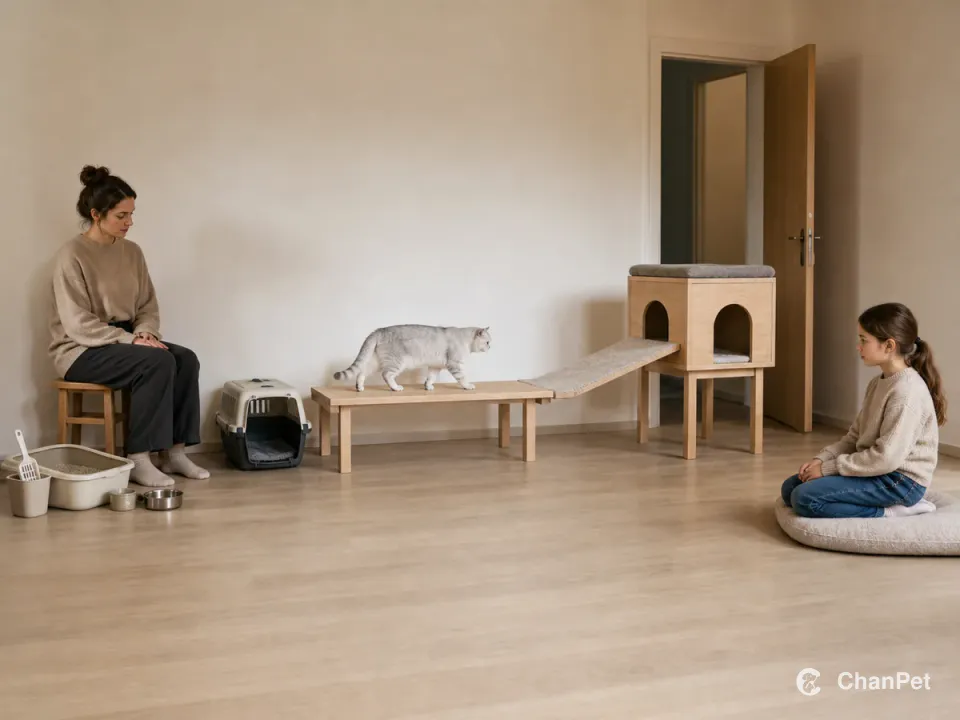
The adult owns the care zone, the child waits at a respectful distance, and the cat keeps an open ramp and doorway to leave.[1][3][2]
The best family setup gives the cat a choice
Let the cat choose the distance
A family home feels safer when every person knows how to pause, give space and return to the routine. That gives a silver shaded British Shorthair room to join the activity and room to step away from it.[2][3]
Common questions
Who should clean the litter box in a family home?
An adult should take responsibility for litter care and keep the area separate from food preparation. Handwashing after pet care and before meals keeps the routine simple for everyone.[3]
How can children greet a new cat?
Ask them to sit quietly, let the cat approach and use gentle touches while the cat remains comfortable. Give the cat a route to a resting spot, and stop the interaction when it walks away.[2]
Sources
Sources used in this article
- [1]British Shorthair Show StandardThe Cat Fanciers' Association
- [3]CatsCenters for Disease Control and Prevention
- [2]Choosing and Caring for Your New CatCornell University College of Veterinary Medicine, Cornell Feline Health Center