Meet the cat behind the silver tipping
Silver shaded is a coat pattern within the British Shorthair. The CFA standard describes a dense, short coat and a substantial, rounded cat. It does not predict whether one cat will follow you around, accept a lap, or prefer a perch across the room.[1]
Sit with the cat before you commit. Notice how it uses a toy, what it does after a household sound, and whether it comes back for another calm interaction. Ask for its usual food, litter routine, health records and any behavior notes. Those details give a new owner a real starting point.[2]
Make the first room easy to read
Before the carrier crosses the threshold, choose one low-traffic room. Put food and water away from the litter box. Add a scratcher, a place to hide, a bed and a clear path between them. Separate resources give a newcomer useful choices while the home still feels unfamiliar.[3]
Open the carrier, sit on the floor nearby, and let the cat decide when to leave. Keep visitors out of the room for the first stretch. A quiet evening tells you more about appetite, litter use and confidence than a welcome party ever could.[2][3]
Let care start in small moments
Use the first few days to learn the cat's pace. Offer a short wand-toy session, then let it walk away. Try a few gentle brush strokes when it is relaxed. The British Shorthair's dense coat benefits from regular attention, and brief sessions help the cat learn that handling ends well.[1]
Book an early veterinary visit and take the records along. Bring a short note about meals, water, litter and anything that surprised you. A first visit works best when it connects the cat's previous routine with the home you are building now.[2]
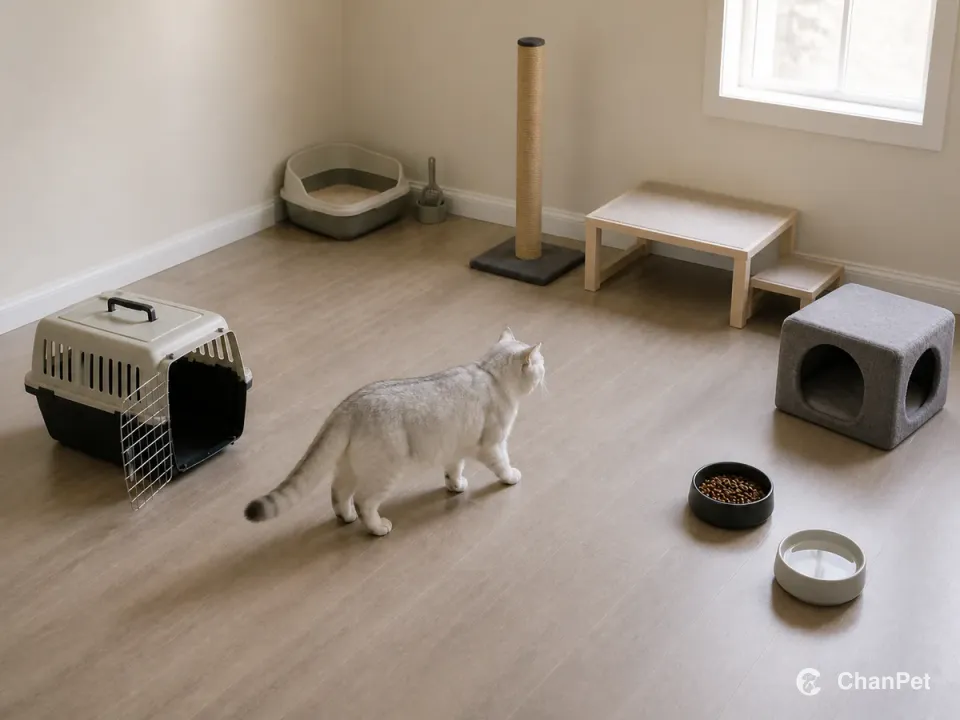
Prepare the quiet room first, then let the individual cat leave the carrier and choose its own route through the new home.[1][2][3]
A first cat deserves a prepared landing
Keep the beginning small and useful
One ready room makes feeding, litter use, rest and play easier to understand. From there, you can introduce the home at the cat's pace and build a routine that belongs to this particular British Shorthair.[2][3]
Common questions
Does a silver shaded coat tell me what a cat will be like?
Sources
Sources used in this article
- [1]British Shorthair Show StandardThe Cat Fanciers' Association
- [2]Choosing and Caring for Your New CatCornell University College of Veterinary Medicine, Cornell Feline Health Center
- [3]Your Cat's Environmental Needs: Practical Tips for Cat CaregiversFeline Veterinary Medical Association and International Cat Care