Give children the observation role
A corn snake can be a thoughtful family animal when children share the observation, not the high-stakes care. They can help notice water, the snake's position, a shed, feeding response, or a change that an adult should record.[1][2]
Use a simple family log for temperature readings, meals, sheds, water, cleaning, and unusual observations. The log turns watching into a calm task and helps adults decide whether the habitat needs attention.[2][1]
Keep adults responsible for the care boundary
Adults take responsibility for the secure enclosure, heat, water, cleaning, frozen-thawed rodent preparation, feeding, and reptile-veterinary decisions. Those jobs control the safety of the snake and the household routine.[1][2][3]
Make handwashing the final step after touching the snake, its food, water, waste, enclosure, or supplies. Keep feeding and cleaning tools away from food-preparation areas, then return them to their dedicated storage.[3]
Make handling a calm choice
The family relationship comes mainly from watching the snake use its hides, drink, explore, and feed. Adults can choose short, calm handling when appropriate, while the habitat remains the animal's secure base.[1][2]
Teach children to report a change in feeding, sheds, skin, breathing, movement, or waste rather than making a diagnosis. Adults can review the record and seek reptile-veterinary advice when a change persists.[2][1]
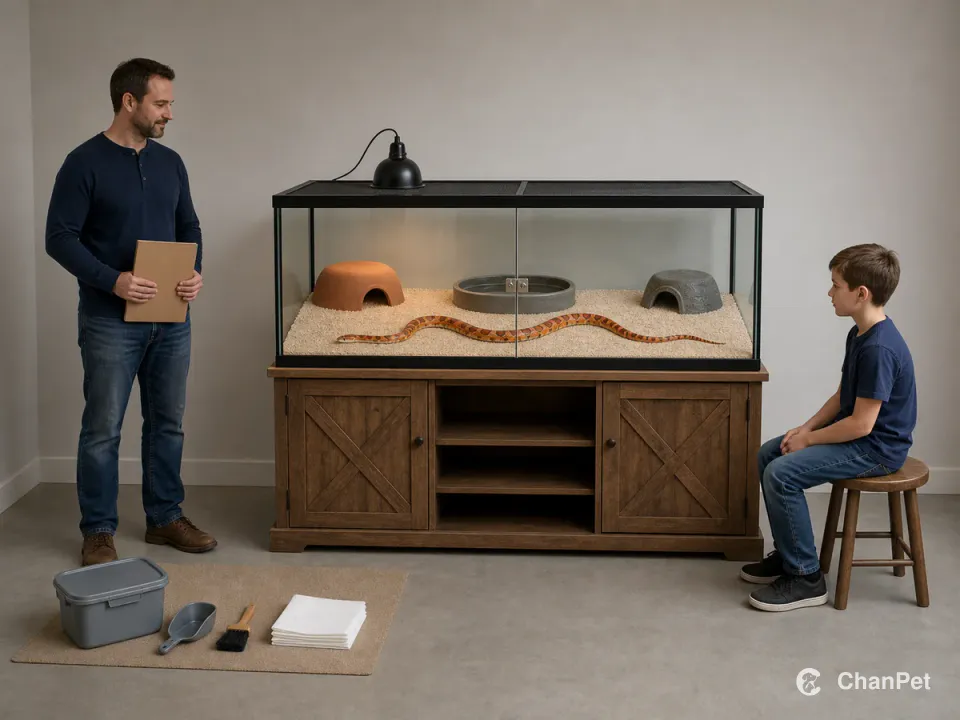
The child observes outside the locked habitat while the adult owns records, cleaning, access, heat, and health decisions.[3][2]
Choose a shared observation routine with adult ownership
Let children watch closely while adults keep care steady
When every family member has a clear role, a corn snake can make observation meaningful while the adults protect the habitat and hygiene routine.[3][1][2]
Common questions
What can children do in corn snake care?
Why is handwashing part of the family corn snake routine?
Reptiles and their environments can carry germs. Wash hands after the snake, rodent food, water, waste, habitat, or tools, and keep those supplies away from food preparation.[3]
Sources
Sources used in this article
- [3]Reptiles and AmphibiansU.S. Centers for Disease Control and Prevention
- [1]Corn Snake (Red Rat Snake)Bowling Green State University Herpetarium
- [2]Management and Husbandry of ReptilesMerck Veterinary Manual