Make observation the family activity
A crested gecko offers the best family moments after dusk, when it moves through branches and visits its food. Give children a small job such as helping an adult note whether the food changed or choosing a quiet spot for the evening check.[1][2]
Watching teaches more than passing the gecko from hand to hand. Children can learn how a climbing animal uses cover, when it chooses to rest and why its enclosure needs both height and a calm routine.[1][2]
Adults set the handling boundary
A crested gecko can jump, and stress can lead to tail loss. Adults should decide when it is settled enough for a brief interaction, then keep the gecko low over a bed or a padded floor area. Young children can sit nearby and watch that careful process.[1][2]
The enclosure stays the gecko's main home. Let it return there when it seeks cover or starts trying to move away. A family earns calmer interactions by respecting those early signals rather than stretching a handling session for one more photo.[1][2]
Give hygiene a visible place
CDC advises handwashing after touching reptiles, their food, waste or habitat. Put soap and a reminder where the family already washes hands. Adults should clean the enclosure and supervise the routine rather than asking a child to manage it alone.[3]
Households with young children or people who have weakened immune systems need extra care around reptiles and their habitats. CDC explains who faces higher infection risks, so bring that guidance into the family conversation before the gecko arrives.[3]
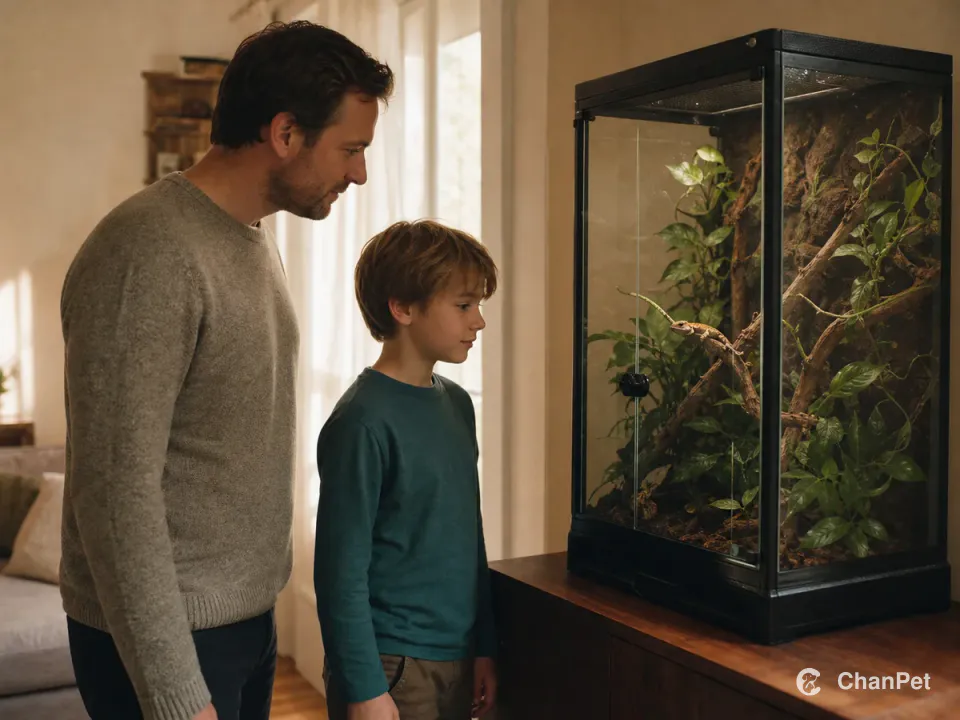
Quiet observation outside the terrarium helps children see more without changing the gecko's rhythm.[1][2]
Choose a shared care project, not a passing toy
A family can make its routine feel special
A quiet evening observation, a clean enclosure and one careful adult-led interaction give children a grounded way to know this gecko. Keep the care clear and the animal gets room to be itself.[1][3]
Common questions
Sources
Sources used in this article
- [1]Crested geckoWorld Wildlife Fund
- [2]Reptiles and HusbandryFaculty of Veterinary Medicine, University of Calgary
- [3]Reptiles and AmphibiansCenters for Disease Control and Prevention