Quiet happens after the lights go down
A crested gecko has no bark, bird call or fur to spread through the room. Its activity comes after dusk, mostly as soft movement through branches. That makes it easier to share a quiet home than many animals that need loud daytime attention.[1][2]
Place the enclosure where your own evening check feels natural. You may open a door, offer food and watch a few minutes while the gecko wakes up. Keeping that short routine away from a sleeping person's bedside makes a calm room feel calmer still.[1][2]
Fresh air starts with a drying rhythm
Crested geckos need humidity, and their enclosure also needs ventilation. Follow a misting routine that gives the habitat moisture and then time to dry through its normal cycle. A hygrometer helps you manage the habitat from a reading instead of from a guess.[1]
Remove leftover food and wet or soiled material during your regular check. Keeping dishes, surfaces and substrate in good order makes the enclosure easier to live beside. A small routine is much easier to keep than a rescue clean after a neglected week.[1][2]
Keep the hygiene zone contained
CDC advises washing hands after touching reptiles, their habitat, food or waste. Keep dedicated dishes and cleaning tools with the enclosure, then wash up before you return to cooking, eating or working at your desk.[3]
Use a clear cleaning route outside food-prep areas. CDC recommends keeping reptile supplies away from kitchen surfaces. A brush, bag and towel kept in one small bin make that boundary easy for everyone in the home to follow.[3]
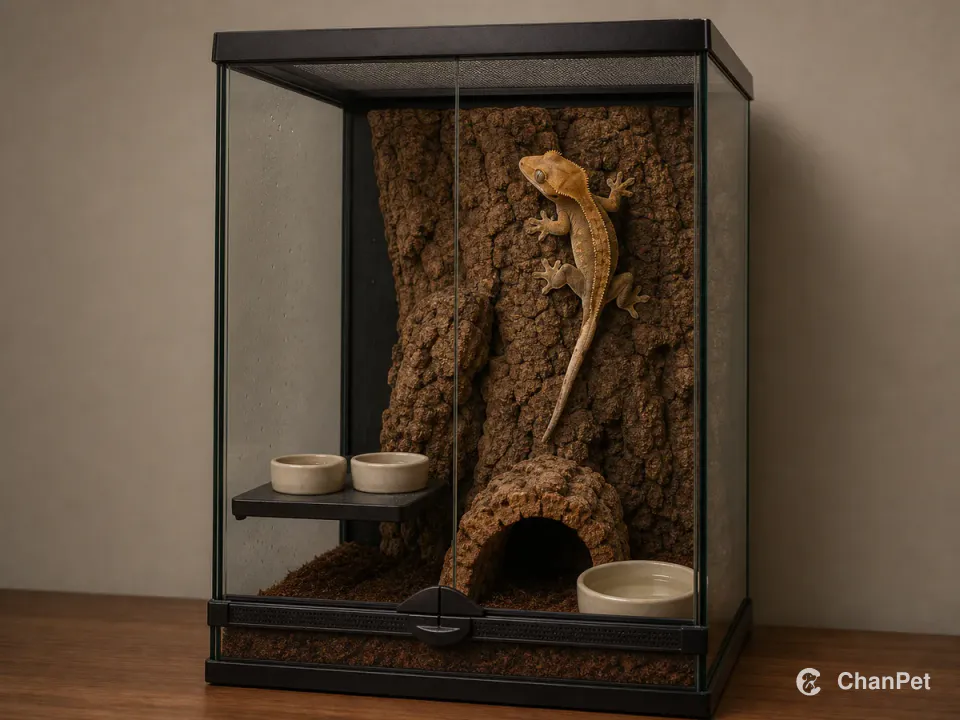
Top ventilation, interior moisture, water, feeding cups and substrate stay inside one tall enclosure, giving cleaning a clear boundary.[1][2]
Contained care suits a quiet home
Clean habits make the enclosure disappear into the room
A well-placed habitat can bring a little evening movement to a quiet home without changing how the whole house feels. Give moisture, cleanup and handwashing their proper place and the routine stays contained.[1][3]
Common questions
Sources
Sources used in this article
- [1]Crested geckoWorld Wildlife Fund
- [3]Reptiles and AmphibiansCenters for Disease Control and Prevention
- [2]Reptiles 101: Adopting with CareCummings School of Veterinary Medicine at Tufts University