A cute animal still needs an exit
Children will naturally want to approach a small fox with huge ears. Fennecs need retreat spaces they can choose for themselves, and they need to live on a nighttime schedule. Zoo keepers use voluntary training so the animal can participate in care instead of being made to cooperate.[1]
That matters at home. Interaction should follow the animal's choice, not a child's excitement. The busier a house becomes, the more important a fully undisturbed space becomes. A fennec needs much more than a quiet corner.[1][2]
Family life cannot become its den
Fennec care environments use sand, underground-feeling spaces and hiding places. The fox digs and retreats during the day. Play, visitors and shifting household routines are hard to organize around those needs for years at a time.[1]
Research on fennec environments has examined conditions alongside repetitive behaviour. Whether children enjoy an animal is never the deciding question. Whether the environment suits it comes first.[3]
Teach respect without bringing one home
A fennec can teach children how ears help find prey at night and why sand and dens matter. Those are vivid lessons in adaptation and animal behaviour.[1]
Welfare work on exotic-animal interaction settings warns that human desire for close contact can crowd out rest and choice. Choosing not to own an animal can teach respect in a very practical way.[2]
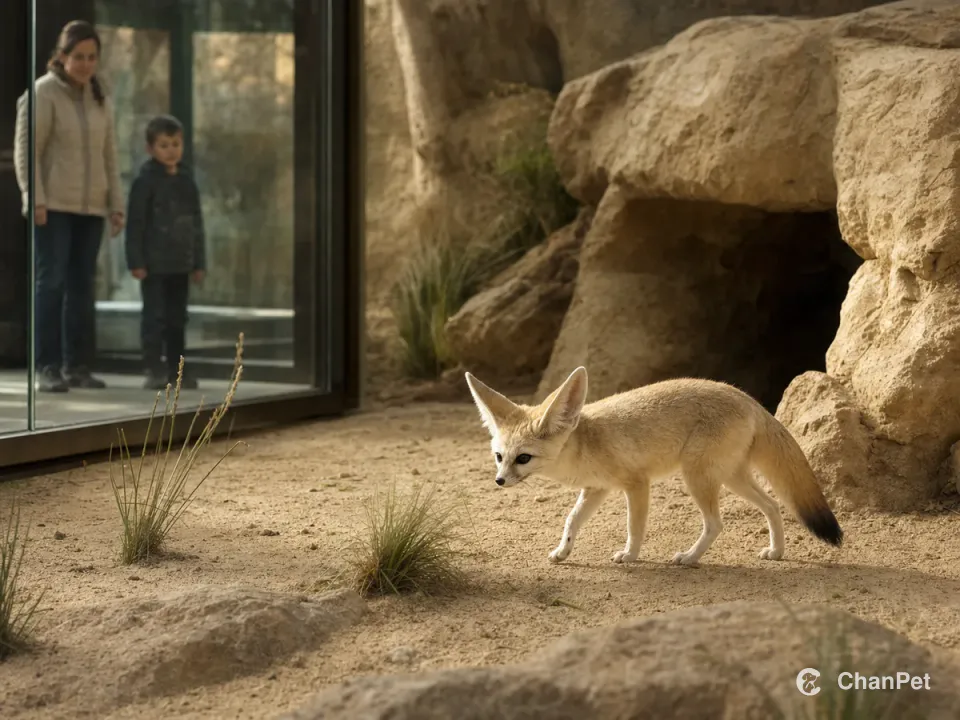
Watching from a respectful distance can teach children how a fennec fox lives.[1][3]
A family pet should fit family life safely
Keep the closeness for the right animal
Common questions
Sources
Sources used in this article
- [1]How to Care for Fennec FoxesSmithsonian's National Zoo and Conservation Biology Institute
- [3]Husbandry of the Fennec fox: environmental conditions influencing stereotypic behaviourInternational Zoo Yearbook / Smithsonian Institution Research Online
- [2]Unveiling welfare concerns in Japanese exotic animal cafesFrontiers in Veterinary Science