Adults own the outdoor plan
A child can help fill a water bowl or choose a toy, while adults manage the secure lead, harness, gates, and outdoor route. AKC describes the Husky's strong desire to run, so leaving the house needs a grown-up who can handle the dog and the situation in front of them.[1]
Put the lead, treats, towel, and cleanup bags in one place by the door. Family departures become calmer when everyone knows who opens the door, who holds the dog, and where the gear goes afterward. Repetition makes safety less dependent on a shouted reminder.[1][2]
Teach children to read the pause
Give children a simple rule: invite the dog, then wait. They can sit nearby, throw a toy with an adult, or offer a gentle hand for the dog to investigate. RSPCA advises adults to supervise children and dogs closely and to teach respectful interaction.[2]
A bed or quiet corner can be the Husky's no-follow zone. The dog may need a break after a walk, a game, or a noisy afternoon. When children see adults protect that space, they learn that good play includes letting the dog leave.[2][1]
Make dog hygiene a family habit
Put handwashing after walks, poop pickup, or dog-supply handling into the home routine, as CDC recommends. Keep a towel and paw-cleaning supplies at the entry, then make washing hands the next stop before snacks or homework.[3]
Adults set the cleanup jobs and choose which small tasks fit each child. A Husky's double coat and active outdoor life create more opportunities for muddy paws and loose fur. Clear roles help the family keep care steady without turning every return home into a debate.[3][1][2]
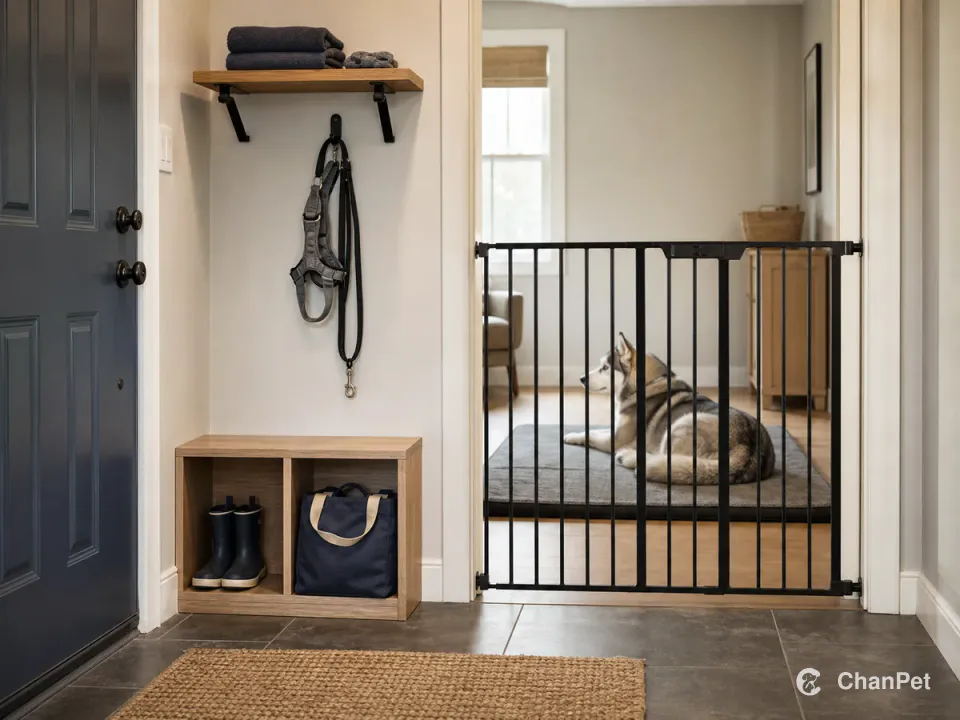
Child items at low level, walking gear at adult height, two closed exit boundaries, and a quiet mat make the family roles clear.[1][2][3]
A family fit when active care stays in adult hands
Picture the dog in your busiest family hour
Use Start Smart Match to compare your children's ages, adult availability, outdoor routine, and home rhythm with a Siberian Husky.
Common questions
Can children help care for a Husky?
What should children do after touching a dog or dog supplies?
Make handwashing an ordinary step after handling the dog, its waste, or related supplies. Keep cleanup equipment close to the entry and away from food preparation spaces.[3]
Sources
Sources used in this article
- [1]Siberian Husky Dog Breed InformationAmerican Kennel Club
- [2]Children & Dogs - How They Can Live TogetherRSPCA
- [3]DogsCenters for Disease Control and Prevention