Put the dog on the real calendar
Mark your earliest class, late lab, job shift, exam, and travel day before you bring a Husky home. Then add secure outings, meals, training, and a rest period after activity. The blank spaces show whether the dog needs a backup person or a different daily arrangement.[1][2]
The dog needs the same safe handling when your schedule changes. Keep walking gear, the carrier, a key plan, and a short care note in one visible place. A Husky's urge to run gives each handoff more importance than a casual promise to take the dog out later.[1]
Train alone time in small steps
A full day on campus should never be the first alone-time lesson. RSPCA advises gradual practice, beginning with manageable absences and calm departures. Pair that work with enough movement and a quiet settling period, so the dog learns that a brief absence is ordinary.[3][1]
Reward the behavior you want when you return: a calm greeting, a pause at the door, and a safe change back to the leash. AVSAB supports reward-based training rather than methods built around fear or intimidation. The small repetitions matter more than a dramatic first test.[2][3]
Make breaks a named commitment
A term break needs one person who has practiced the dog routine, not a vague group chat. Choose someone who can handle the secure lead, understands the dog's activity plan, and knows where supplies and veterinary contact details are kept. Let them take a supervised practice outing before travel day.[1][2]
A move can reset both alone-time skills and door safety. Start the new place with a quiet area, the familiar bed, and the same departure ritual. Return to short, rewarded absences as the Husky learns the new sounds and routes.[3][2][1]
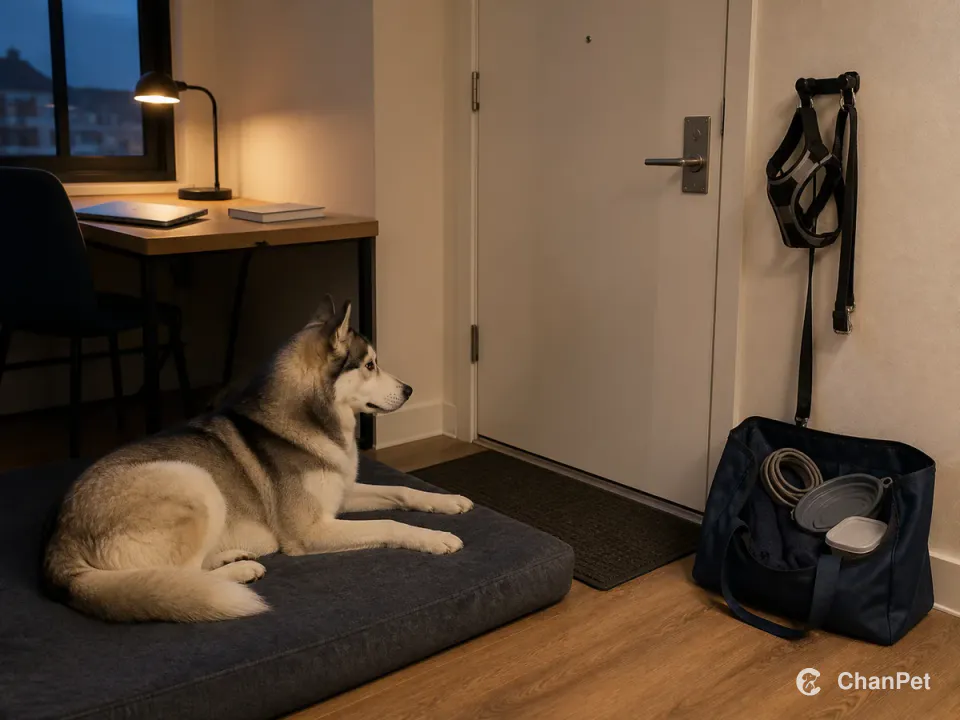
A fixed rest mat, secure walking gear, and a ready handover tote help the student and backup carer follow the same routine during exam week.[1][3][2]
A student fit when the backup has practiced the routine
Run the plan against the hardest week of the term
Use Start Smart Match to compare your timetable, travel, exercise time, and backup support with life alongside a Siberian Husky.
Common questions
Can a student leave a Husky alone during classes?
Sources
Sources used in this article
- [1]Siberian Husky Dog Breed InformationAmerican Kennel Club
- [3]How to Train Your Dog to Stay Home AloneRSPCA
- [2]Position Statement on Humane Dog TrainingAmerican Veterinary Society of Animal Behavior