Make looking the game
Isopods prefer damp, shaded cover. Ask children to look for activity near a moist refuge or a chewed leaf instead of lifting every hide. They learn that quiet observation is a real way to interact with an animal.[1][2]
A child can draw the colours, sizes and locations they see today, then compare the notes a few weeks later. That shifts attention away from catching animals and toward changes in the habitat.[2][1]
Adults own the system; children take a small part
Adults should decide the container location, lid, substrate and feeding routine. Children can place a leaf, write the date or point out food remains. They do not need to handle damp substrate or cleaning alone.[1][2]
Public-health guidance recommends handwashing after animal and habitat contact. Make it the final step of every observation session. It feels much easier to keep than turning every interaction into a warning about dirt.[3]
Teach a kind boundary
A hidden isopod is choosing a better humidity level and shelter, not playing a game of hide-and-seek with people. Once children understand that, they can accept that seeing nothing for a moment is fine.[2][1]
That is the quiet strength of a family isopod colony. It asks children to slow down, touch less and notice more. Those are useful habits far beyond one small enclosure.[1][2]
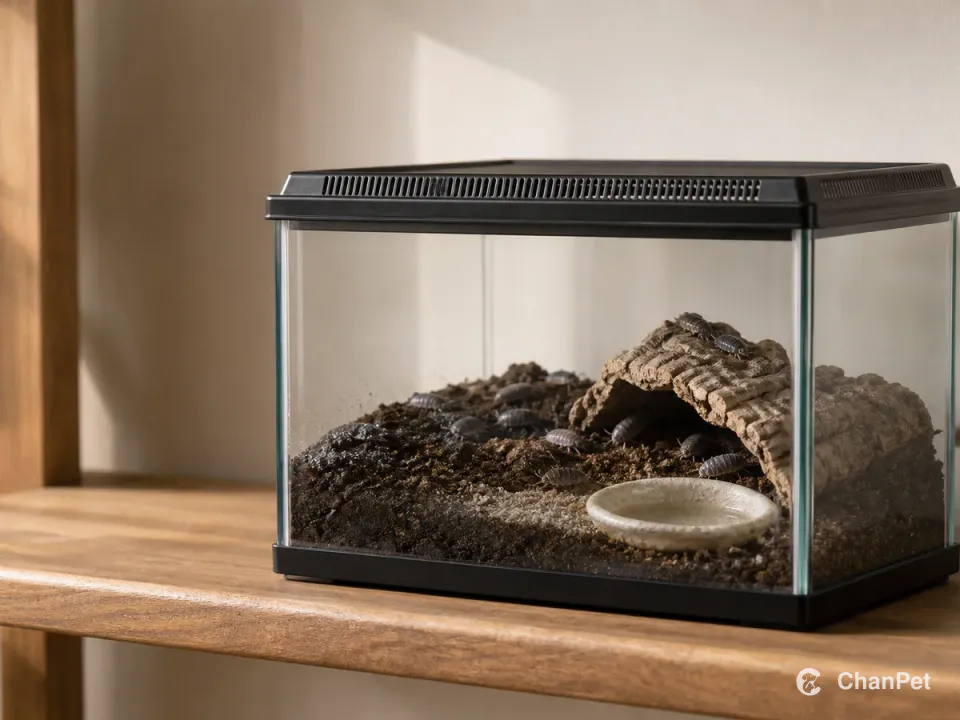
A closed terrarium on a stable shelf keeps the moisture zones, shelter, and a modest food portion inside while children learn by watching.[1][2][3]
A small natural-history lesson can live at home
Give children a routine full of small discoveries
Isopods turn curiosity into a habit of observation. Handle little, watch closely and wash hands afterward. The children and the colony will both be more comfortable.[3][2]
Common questions
Sources
Sources used in this article
- [1]Introduction to Invasive Terrestrial IsopodsPenn State Extension
- [3]Hygiene Practices Around AnimalsCenters for Disease Control and Prevention
- [2]Some Relative Humidity Reactions of the Wood-Louse, Cylisticus convexusThe Great Lakes Entomologist