Get the name before you get the decor
The easy mistake is to treat every isopod as if it needed the same setup. Start with the actual species, its source and its general environmental preference. That information tells you more about substrate, cover and moisture than a shopping list of attractive terrarium pieces.[1][2]
Terrestrial isopods lose water easily and seek damp, sheltered places. Different species also respond differently to microclimates. Give the enclosure useful variation, then watch where the animals choose to sit instead of copying one universal humidity number.[3][2]
Change one thing at a time
When a colony hides more or seems less active, resist the urge to replace the substrate, food and container in one afternoon. You lose the evidence you need. Check shelter and moisture first, then make one small change and give the animals time to respond.[1][2]
Many isopods are more active in dimmer, moister periods. A short note at dusk or before the room lights come on tells you more than lifting every leaf to count animals. You learn to read the habitat without constantly breaking it apart.[3][2]
Handling is not the point of the hobby
It is tempting to check that every animal is still there by lifting every piece of cover. For a colony that relies on shelter, stable cover is more useful than being found. Leave one easy viewing area and keep the rest of the habitat calm.[1][3]
Once you notice which side stays busy, which food disappears first and when tiny young appear, the hobby becomes much more interesting. Isopods make a good first observer pet because they reward patience and small records.[2][1]
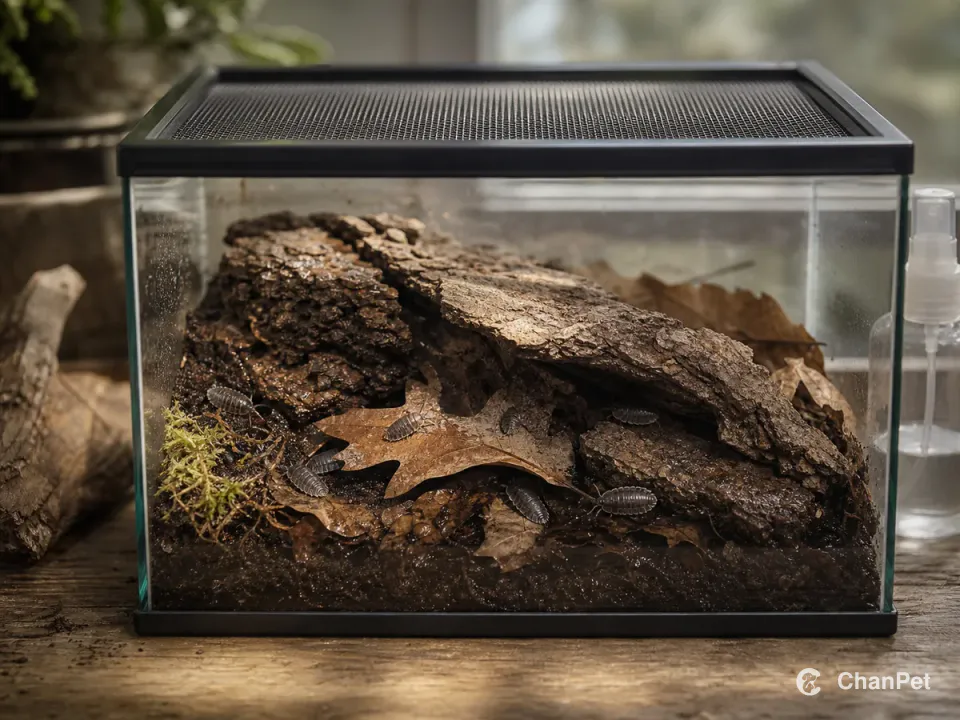
Keep the substrate, leaf litter, and damp zone stable first, then adjust daily care from what the enclosure shows you.[3][2]
Settle the habitat before chasing a prettier display
Start by learning one small colony
Isopods offer a quiet, real reward for beginners. Identify the species, leave a moisture gradient, disturb less and write down what you see. A tiny colony will show you plenty.[2][3]
Common questions
Sources
Sources used in this article
- [3]Management Considerations for Millipedes and Isopods: Do Insecticides Work?Iowa State University Extension and Outreach
- [1]A practical guide for the husbandry of cave and surface invertebratesCommunications Biology
- [2]Interspecific variation in responses to microclimate by terrestrial isopodsZooKeys