Adults shape the big moments
A Jack Russell Terrier can fit a family when adults decide how active games begin, where they happen, and how they end. The breed's lively terrier character makes clear boundaries useful when children and motion fill the room.[1][2]
Adults stay responsible for supervision, high-energy play, visitors, and door routines. Children can join through small familiar tasks such as helping prepare a food puzzle or using a practiced cue with an adult nearby.[2][3]
Make rest a household rule
After a walk or game, guide the dog to a familiar rest area and let that space stay quiet. A family that plans recovery is less likely to turn every busy moment into another invitation to chase or play.[1][2]
Teach children to notice a dog that has moved away, settled on its bed, or asked for space. Respecting those signals makes the rest area a real part of the dog's routine, not a decorative corner.[2]
Let rewards build the rules
Agree on a few reward-based behaviors before the dog arrives: wait at the door, come to an adult, leave an item, and settle near the family. One set of cues gives a lively dog clearer answers across the household.[3][1]
Keep training calm and short, especially around children. The American Veterinary Society of Animal Behavior supports reward-based methods and advises against aversive techniques.[3]
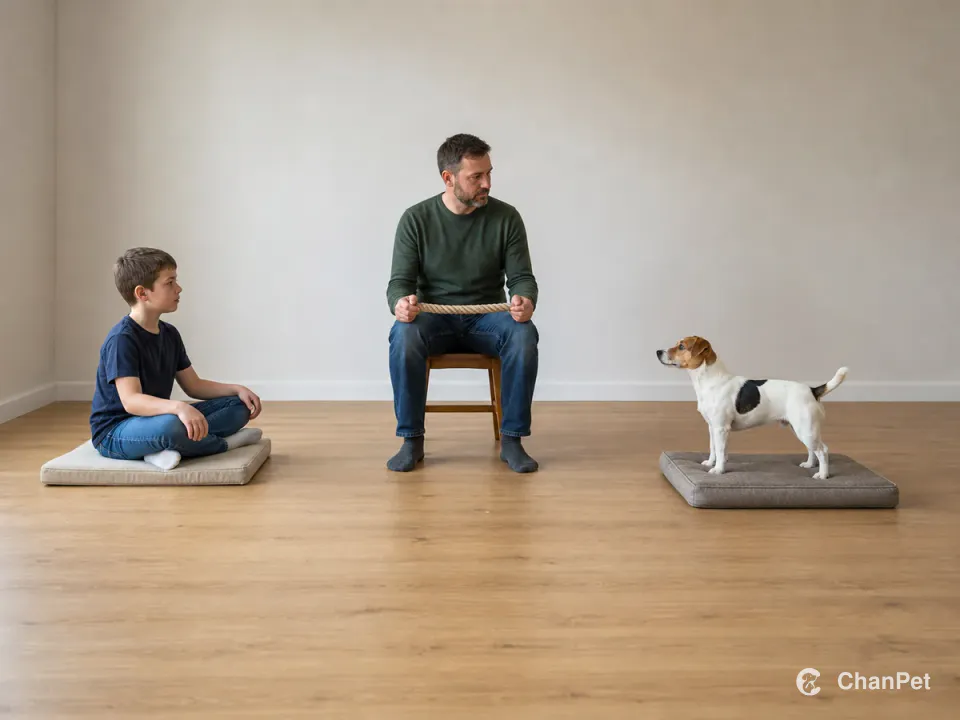
At the end of play, the adult keeps the toy and the middle position while the child pauses and the terrier returns to its own bed.[1][2][3]
The family fit gives energy an adult leader
Test the after-school hour before choosing the dog
Picture the doorbell, backpacks, play, the dog’s rest area, and adult roles at the same time. A clear household rhythm tells you whether the family can support this terrier.[1][2][3]
Common questions
What can children do with a Jack Russell Terrier?
Sources
Sources used in this article
- [1]Jack Russell Terrier, FCI Standard No. 345Fédération Cynologique Internationale
- [2]Children and Dogs: How They Can Live TogetherRSPCA
- [3]Humane Dog Training Position StatementAmerican Veterinary Society of Animal Behavior