Adults manage lifts and exits
A Pomeranian can look like a stuffed toy in a busy room, and it needs to be treated like a living dog. Adults should handle lifts, doors, stairs, and the lead. Support calm handling, use a clear surface for putting the dog down, and keep the front-door routine consistent.[1][2]
Keep the leash, harness, carrier, and a small towel together near the exit. The dog may hear the visitor before the family does, so an adult needs an easy way to create a pause. A repeatable sequence protects the dog from being missed between feet, bags, and doors.[1][2]
Put hygiene into the return-home routine
Keep a towel and paw cloth by the entry, then make handwashing the next family step after dog contact, waste pickup, or supply handling. CDC recommends handwashing in these moments. A clear order protects the couch, snack table, and small hands at the same time.[3]
Adults can choose small jobs that match each child's age, while adults keep responsibility for grooming and the full cleanup. The Pomeranian's coat needs regular brushing, and the dog benefits from calm hands. Clear roles keep care close without making it chaotic.[3][2][1]
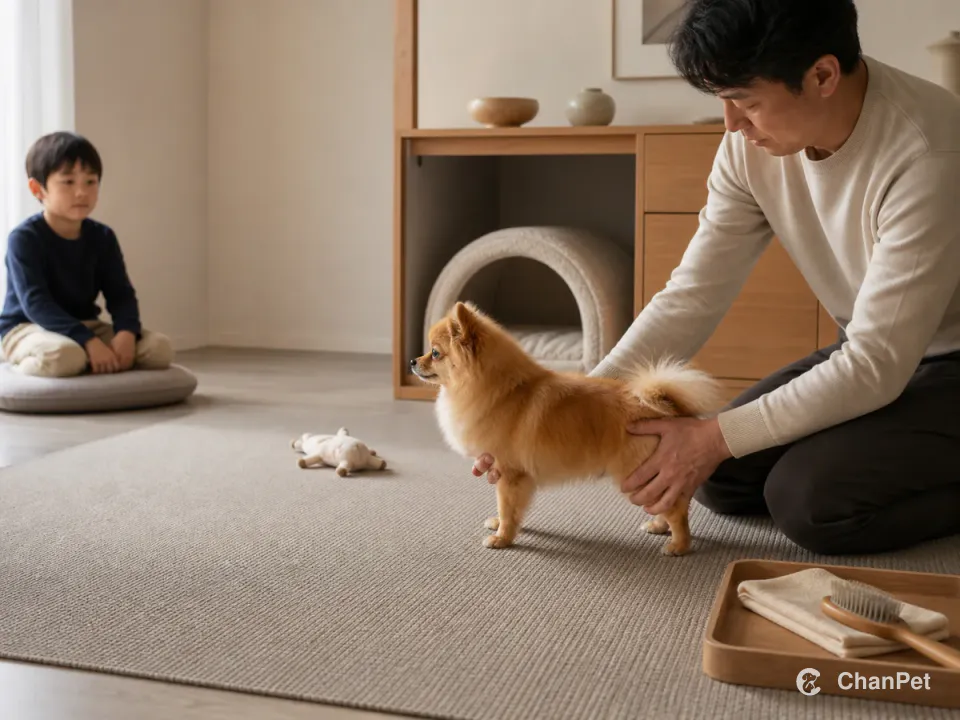
Before lifting, the adult sets one support point at the chest and one at the pelvis; the child waits on a cushion while the Pomeranian keeps a floor route to its retreat.[1][2][3]
A family fit when the tiny dog has adult-sized protection
Picture the dog at floor level during your busiest hour
Use Start Smart Match to compare your children's ages, adult availability, home setup, and care rhythm with a Pomeranian.
Common questions
Can children hold a Pomeranian?
What should children do after touching the dog?
Make handwashing a familiar step after touching the dog, its waste, or related supplies. Keep towels and cleanup tools near the entry, away from food preparation areas.[3]
Sources
Sources used in this article
- [1]Pomeranian Dog Breed InformationAmerican Kennel Club
- [2]Children & Dogs - How They Can Live TogetherRSPCA
- [3]DogsCenters for Disease Control and Prevention