Give children an observer's role
A mantis can turn a few quiet minutes into a nature lesson. Children can sketch its resting pose, note where it waits or watch the way it tracks prey. Those small observations show much more of the animal's real behavior than a forced handling session.[1][2]
Mantids can defend themselves with their spined forelegs when they feel threatened. Reported injuries to people are uncommon, but teasing and persistent pressure create an avoidable conflict. Make the household rule clear: eyes close, hands gentle and mostly out.[2]
Adults own the technical parts
Choosing prey, opening the enclosure and deciding whether a molt needs quiet space require calm judgment. Let an adult do those jobs. A child can help by bringing a notebook, checking a simple chart or standing by to watch.[1][2]
Do not turn a container of nymphs into a family spectacle. University material notes that crowded hatchlings may eat one another. Individual space is welfare, not an optional upgrade for a display.[1][2]
Finish every observation with clean hands
After touching the enclosure, live food or anything left inside it, wash hands before heading back to a snack or another activity. CDC guidance makes that a straightforward part of being around animals.[3]
Keep the enclosure out of food-preparation areas. Children quickly learn that watching an animal and eating are two separate activities when the place and routine make that boundary visible.[3][1]
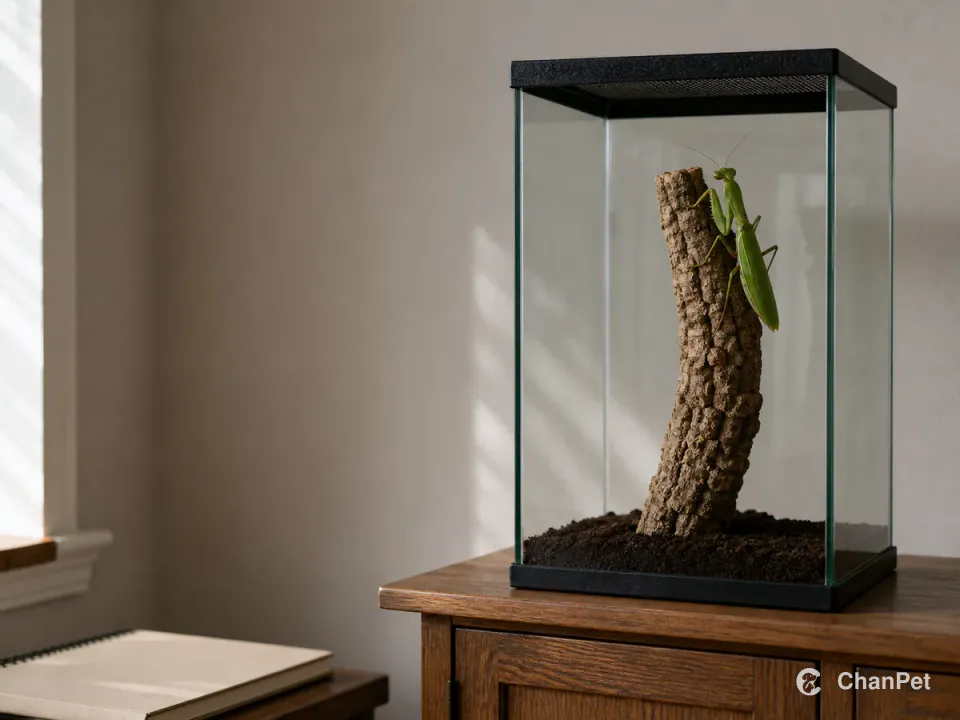
The lidded tall enclosure gives a family a clear view of the mantis while adults remain responsible for the habitat and feeding routine.[2][1][3]
A moving field notebook for the right family
The best interaction is a calm one
Watch a hunt, draw the perch and leave the mantis enough peace to behave normally. Pair that with handwashing and adult-led care, and the project becomes genuinely family-friendly.[3][2]
Common questions
Sources
Sources used in this article
- [2]Praying Mantis MantidaeConnecticut Agricultural Experiment Station
- [3]Hygiene Practices Around AnimalsCenters for Disease Control and Prevention
- [1]Praying MantidsUniversity of Kentucky Entomology