Adults run the first greeting
A Samoyed can arrive with enthusiasm, especially when children come home or friends visit. Let an adult greet the dog first, then invite children in one at a time. That simple order gives everyone space to settle.[1][2]
Teach children to stand still, use quiet hands, and wait for an adult to say hello is a good time. RSPCA advises adults to supervise children and dogs, especially during close contact and play.[2]
Give the dog a resting place children leave alone
Set up a bed or pen that belongs to the dog. Adults can explain one easy rule: when the Samoyed is resting there, people walk around it. A protected rest spot reduces pressure during loud family moments.[2]
Save games for an adult-led time and place. Put away chews and food before children rush through the room, then call the dog to a calm activity instead of asking it to cope with a scramble.[2]
Outdoor rules need an adult too
Samoyeds enjoy moving and can roam when loose. An adult should check the leash or fenced area, hold the lead during busy moments, and decide when children can join the walk. Secure outings protect the dog and the family routine.[1]
Give a child a useful, safe job. They can carry a small towel, help choose a treat, or count a few calm steps beside the adult. The adult keeps control of the lead and the route.[1][2]
Make hygiene ordinary, not scary
Handwashing belongs after handling food bowls, dog waste, muddy paws, or the dog's belongings. CDC recommends basic hygiene when people share a home with dogs, especially before meals and after care tasks.[3]
Keep the dog supplies together: towel, waste bags, brush, and a washable mat. Children learn more from a simple return-home routine than from a long warning after the floor is already muddy.[3][1]
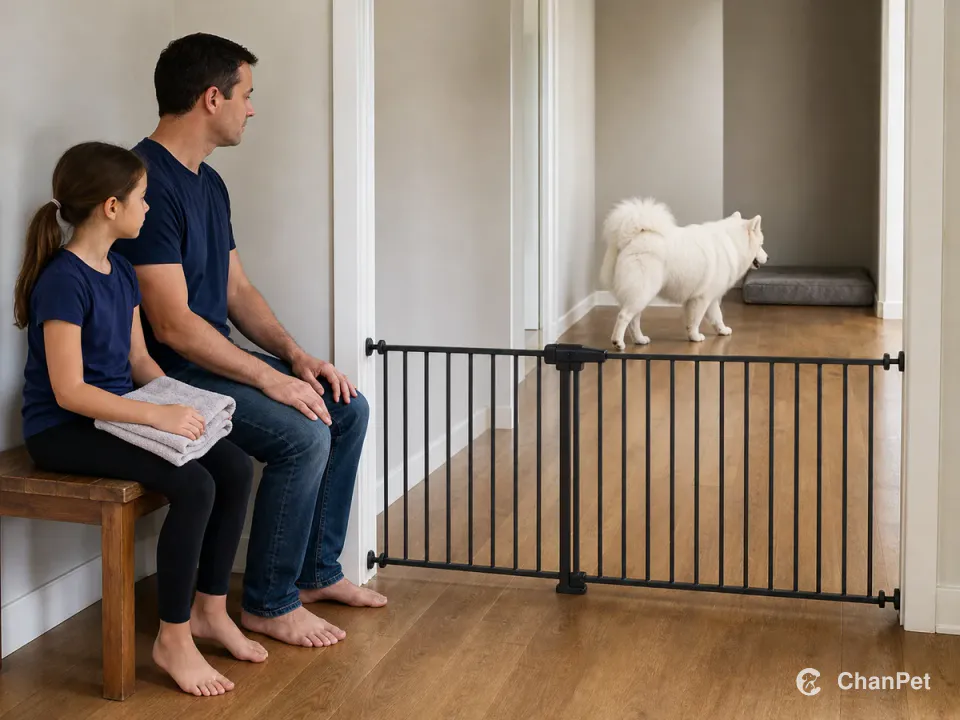
The adult remains responsible, the child keeps a safe distance behind the gate, and the Samoyed can use an open route to its quiet rest area.[1][2]
A family Samoyed works best with clear adult leadership
Make the rules before the dog arrives
Pick the rest space, the greeting routine, the walking adult, and the handwashing spot. When everyone knows their part, a Samoyed can join family life with much less confusion.[2][3]
Common questions
Can children walk a Samoyed by themselves?
What hygiene habits should children follow around a dog?
Wash hands after care tasks and before eating. Adults should also keep food bowls, waste supplies, and muddy paw cleanup in a regular, easy-to-find place.[3]
Sources
Sources used in this article
- [1]Samoyed Dog Breed InformationAmerican Kennel Club
- [2]Children & Dogs - How They Can Live TogetherRSPCA
- [3]DogsCenters for Disease Control and Prevention