Start with a real weekday, not a free Saturday
Picture the Tuesday when the alarm rings early, rain is coming down, and dinner runs late. A Samoyed still needs an outing, a little shared activity, and a calm return home. Put those moments on the calendar before you bring the dog home.[1]
Name the person who handles the morning walk, the person who covers a late shift, and the person who can help during illness. A spare key and a one-page care note make that help much easier to use.[1]
Make the doorway boring in the best way
Samoyeds enjoy activity and may wander far when loose. Set up a simple leaving routine: find the harness, check the clip, ask for a pause, then go out together. Repeat it until every adult can do it without rushing.[1][2]
Reward the choices that make walks easier, such as turning toward you, waiting by the door, and moving with a loose leash. AVSAB supports reward-based teaching because it gives the dog clear information about what earns something good.[2]
Put the brush where daily life happens
The Samoyed's white double coat brings loose hair and dirt indoors. Keep a brush near the entryway or sofa and use short, calm sessions. Those small sessions are easier to keep than a grooming job that takes over every weekend.[1]
Practice a touch, a brush stroke, and a small reward while the dog is relaxed. A puppy learns that grooming is part of ordinary contact, rather than a surprise that appears only when the coat is tangled.[1][2]
Keep early introductions short and kind
A young Samoyed can meet everyday people, surfaces, sounds, and friendly dogs through brief, pleasant sessions. AVSAB advises gradual socialization that lets a puppy stay comfortable enough to explore and learn.[3]
Choose one new thing at a time. A quiet porch visit can teach more than a crowded outing when the puppy is still learning how the world feels and sounds.[3]
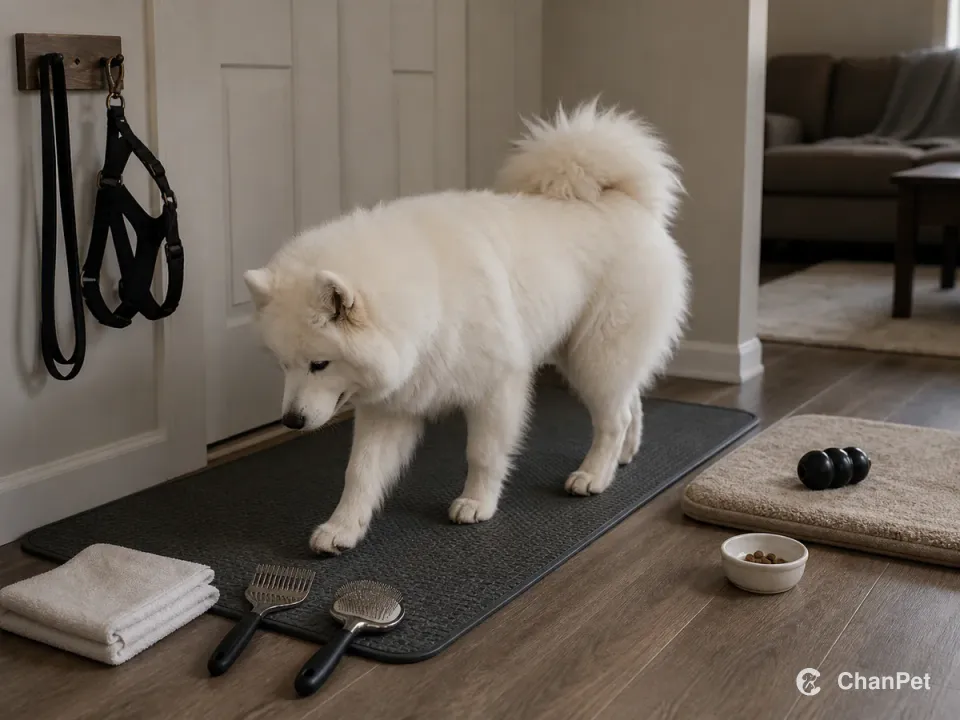
The walk home, paw and coat check, calm reward and quiet settling period form one repeatable first-owner routine.[1][2]
A Samoyed suits a first owner who likes showing up every day
Try the routine before you commit
For one week, take the morning and evening route at the times you would use with a dog. If the household can keep those promises together, a Samoyed has a stronger foundation.[1][2]
Common questions
Can a first-time owner train a Samoyed?
Yes. Start with reward-based lessons that fit into walks, meals, and doorway pauses. Keep the household cues and rewards consistent, so the dog gets the same message from everyone.[2]
How should I introduce a Samoyed puppy to new places?
Use short visits with room to pause and explore. Build up slowly from quiet places to busier ones, and make the next outing easier if the puppy seems worried.[3]
Sources
Sources used in this article
- [1]Samoyed Dog Breed InformationAmerican Kennel Club
- [2]Position Statement on Humane Dog TrainingAmerican Veterinary Society of Animal Behavior