Teach an invitation rather than a grab
A child can offer a hand, sit nearby and let the Siamese choose whether to come closer. That makes affection easier for both sides. Teach children to leave a cat alone when it is eating, using the litter box, sleeping or heading for a high perch. The cat needs a clear way to say it has had enough.[1]
GCCF describes the Siamese as intelligent and talkative. A cat who follows family activity may still prefer one person's lap or a few quiet minutes after school. Watch the cat's choices instead of asking it to perform as the family's entertainer. That keeps contact more pleasant and gives children a good model for animal care.[2][1]
Give the cat a place outside the game
Set up a high resting place and a low hiding spot that adults protect. These are places for the Siamese to rest, not shelves for toys or a place to follow a cat when it walks away. FelineVMA emphasizes that cats need safe places, choice and ways to use the home on their own terms.[1]
Keep chase games out of the routine. Use a toy that keeps hands away from teeth and claws, then end the game before everybody becomes overexcited. A short play session with an adult nearby gives the Siamese a better outlet than asking children to keep the cat busy until it finally leaves.[1][2]
Put the care jobs in adult hands
Children can help fill a food puzzle or pick a toy for play. An adult needs to remain responsible for food, litter, grooming, veterinary visits and changes in the cat's health. A simple chart on the fridge can show who did what today without making the cat's care depend on a child's memory.[2][1]
Make handwashing part of the routine after litter care and before meals. Cornell explains that cats can carry organisms that affect people, while practical hygiene reduces that risk. Keep the litter tools away from food preparation and teach children to ask an adult before handling a sick cat or cleaning an accident.[3]
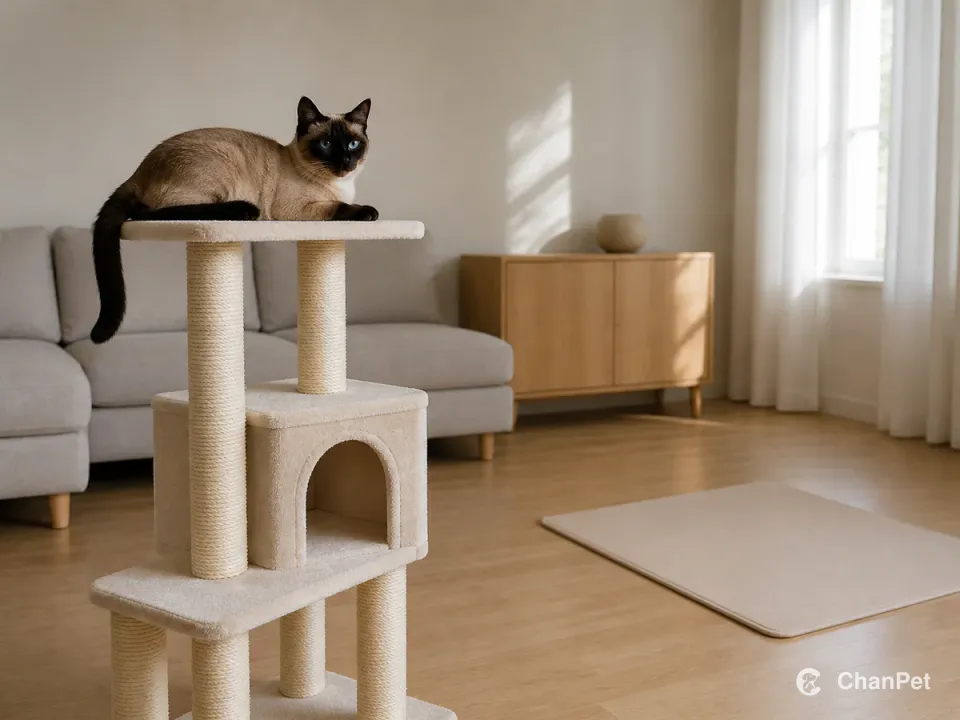
When the room gets busy, a raised retreat lets the cat decide whether to join in or settle quietly apart.[2][1]
A family cat when the family can make room for the cat
Make the home feel safe on both sides
A Siamese can love being around family life. The relationship stays enjoyable when children can invite contact, adults manage the care and the cat always has a quiet place to retreat.[2][1]
Common questions
Can children help care for a Siamese?
What is the most useful hygiene rule for families?
Wash hands after litter care and before eating. Keep litter supplies away from food preparation, and ask an adult to handle cleaning when a cat is sick or has an accident.[3]
Sources
Sources used in this article
- [2]SiameseThe Governing Council of the Cat Fancy
- [3]Zoonotic Disease: What Can I Catch from My Cat?Cornell University College of Veterinary Medicine, Cornell Feline Health Center
- [1]Your Cat's Environmental Needs: Practical Tips for Cat CaregiversFeline Veterinary Medical Association and International Cat Care