Make watching the main event
Western hognose snakes use loose ground and cover as part of their normal behavior. A family can watch the snake dig, rest and emerge without lifting it out for every visitor.[1]
Put one adult in charge of the lid, feeding, water and cleaning. Give children a viewing place outside the enclosure and a simple rule: calm voices, slow hands and hands off the glass.[1]
Make handwashing automatic
CDC advises washing hands after touching reptiles or their supplies. Put soap and a handwashing reminder near the care area, then make it part of finishing a viewing or cleanup task.[2]
Adults should handle enclosure cleaning and frozen-prey preparation, then keep reptile-care tools away from food preparation areas. CDC gives extra caution for young children and people with weakened immune systems.[2]
Teach the difference between curiosity and contact
Hissing, a flattened neck and playing dead are ways a western hognose creates space. Adults can model the right response: stop, close the enclosure carefully and let the snake settle under cover.[1]
Every snake can bite when it feels threatened. A clinical case review records local reactions after some western hognose bites, so supervised distance and calm handling matter more than proving a snake is harmless.[3]
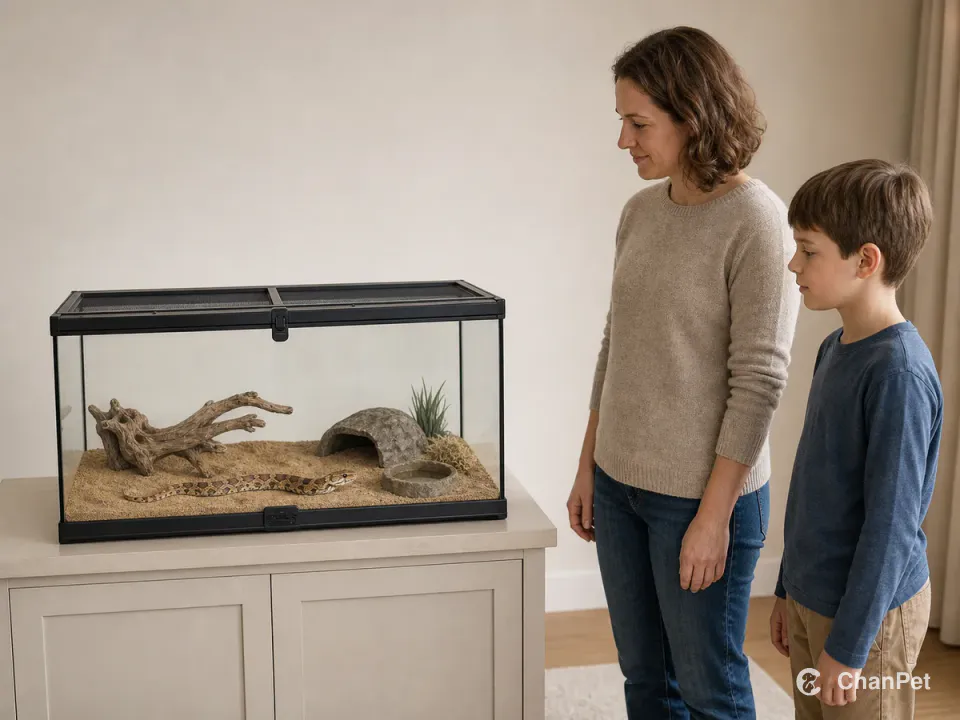
Observation from outside the terrarium gives children and the snake clear boundaries.[1][2]
Choose a shared project with clear adult ownership
Respect makes the family experience calmer
A good family setup gives the snake cover and gives people clear roles. Watch, learn, wash hands and leave contact to an adult who reads the snake's behavior.[1][2]
Common questions
Sources
Sources used in this article
- [1]Heterodon nasicus (nasicus)Animal Diversity Web, University of Michigan
- [2]Reptiles and AmphibiansCenters for Disease Control and Prevention
- [3]Local envenoming by the Western hognose snake (Heterodon nasicus): a case report and review of medically significant Heterodon bitesToxicon / PubMed