Buy the safe base before the pretty extras
Put the cage, secure doors, suitable bar spacing, food and water dishes, and usable perches at the top of the list. AAV says cockatiel housing should be as large as possible, clean, safe and made from nontoxic materials. Those choices shape every day the bird lives there.[1]
A fancy cage display can wait. A cage that is hard to clean, has unsafe materials or gives the bird no safe perch cannot. Start simple and leave room in the budget to replace worn perches and damaged toys.[1]
Food is an ongoing bill, not a starter-kit item
Cockatiels benefit from more than a seed mix. AAV includes formulated food, quality seed, fruit and vegetables in its feeding guidance. Illinois veterinary guidance also warns that seed-heavy diets can lack important nutrients and carry health consequences for pet birds.[1][2]
Build the food budget around what you can provide steadily. A cheap supply that runs out or a sudden diet swap creates more work for the bird and the keeper. Ask an avian veterinarian how to make a gradual change when the current diet needs improving.[1][2]
Want to know what cockatiel care may cost in your home? Use our calculator to separate the cage, food, cleaning supplies and emergency buffer, then check local quotes.[1][2]
Keep a margin for health and hygiene
AAV recommends regular care with a veterinarian experienced in birds. Set that contact up before bringing the cockatiel home and keep a small reserve for care changes. A bird that seems off should not have to wait for the next pay cycle because every dollar went into a first-day purchase.[1]
Cleaning supplies are part of health planning as well. CDC advises washing hands after contact with pet birds or their supplies, especially before preparing food. Keep bird-only cleaning tools separate from kitchen items so the routine stays easy to follow.[3]
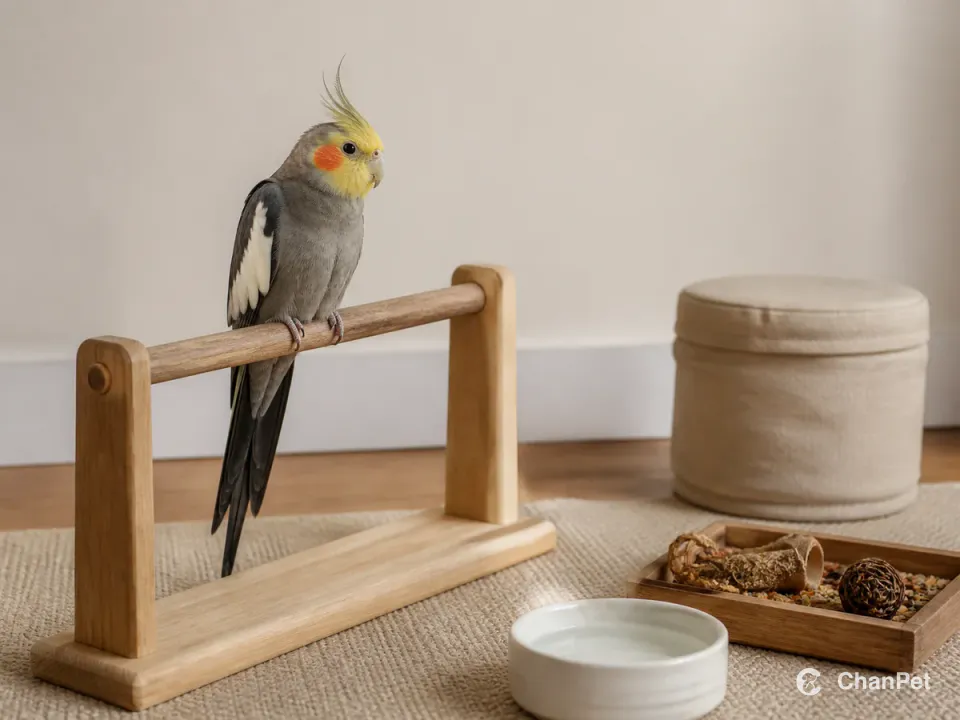
Set up the perch, water and foraging routine the bird uses every day before buying decorative extras.[1][2]
A good budget keeps ordinary care possible
Spend for the routine you can keep
The best low-cost setup is clean, safe and easy to maintain. It leaves money and time for food, veterinary advice and the small replacements that show up over a cockatiel's life.[1][2]
Common questions
Can a cockatiel live on a seed mix to save money?
Sources
Sources used in this article
- [1]CockatielsAssociation of Avian Veterinarians
- [2]Where Avian Nutrition and Health IntersectUniversity of Illinois College of Veterinary Medicine
- [3]BirdsCenters for Disease Control and Prevention