Every day needs your eyes and ears
Start with fresh water, food dishes and a quick look at the cockatiel itself. AAV advises changing drinking water frequently, and UF says even a water bottle needs fresh contents each day. That moment is also when you notice a bird that is quieter, messier or less interested in food than usual.[1][2]
The bird also needs contact and stimulation. AAV says that a single cockatiel benefits from attention from its human flock members. A device can turn on a light or refill a feeder. It cannot respond to the bird, prepare a safe activity room or decide that a change needs veterinary advice.[1]
Weekly care keeps the home usable
Cage liners, bowls, perches and the floor around the cage need regular attention. UF recommends a pullout tray and replaceable paper liner for easier cleanup. Keep spare liner paper and a small cleaning kit ready, so the task fits an ordinary evening instead of becoming a weekend pileup.[2]
Use that reset to check toys and perches. AAV says toys must be sturdy and free of toxic or easily swallowed parts. UF adds that rope perches need checking for soil and fraying. Replace what is worn before it becomes a problem.[1][2]
Food changes and travel need real people
Good food takes more than keeping seed in a bowl. AAV recommends a formulated diet with quality seed and fresh produce, while Illinois veterinary guidance warns that seed-heavy diets can leave pet birds short of key nutrients. Fresh items, dishes and what the bird chooses to eat all need checking.[1][3]
Before a trip, ask one person to do the whole routine in front of you. They should know the bird's usual food, water, cage-door habits and veterinary contact. If no one can make that visit reliably, the trip plan needs another answer.[1][2]
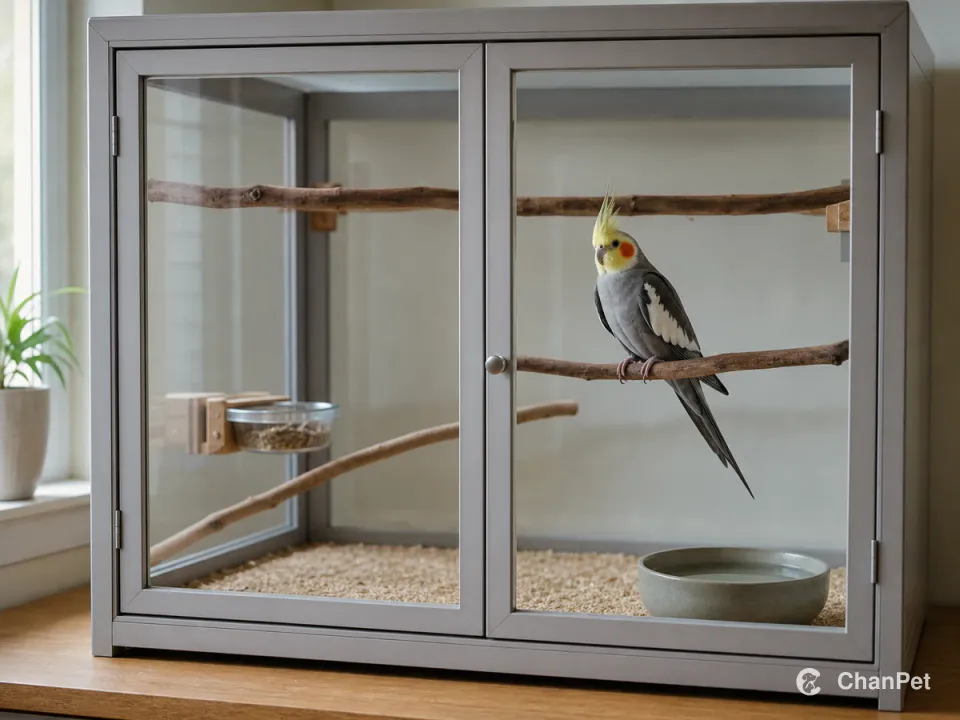
A quiet enclosure still needs someone who notices the bird each day.[1][2]
Small is not the same as hands-off
The useful automation is the kind that supports your routine
A spare water dish, easy-clean tray and organized supplies can save time. They should make it easier to see the bird and care for it well, rather than give the bird fewer moments with you.[1][2]
Common questions
Can an automatic feeder cover a weekend away?
How can I make cage cleaning easier?
Choose a cage with a pullout tray and use a liner you can replace. Keep cleaning supplies near the cage, and include bowl and perch checks in the same regular reset.[2]
Sources
Sources used in this article
- [1]CockatielsAssociation of Avian Veterinarians
- [2]How to care for your pet birdUniversity of Florida College of Veterinary Medicine
- [3]Where Avian Nutrition and Health IntersectUniversity of Illinois College of Veterinary Medicine