The essential parts are not future upgrades
Budget talk often gets stuck on toys, a pond or a one-off purchase. Otter-care material starts with a different list: companions, retreat space, linked land and water, feeding, barriers, hygiene and veterinary records. Those needs work together, so removing one changes the animal's day.[1][2]
This page does not pretend there is a reliable household price tag for an otter. Specialist facility care cannot be broken into a shopping list for a home. A made-up monthly number would hide the real question instead of answering it.[2][3]
A cheaper shortcut changes the animal's welfare
Welfare assessment looks at the whole animal, not only whether it survives or eats. Behaviour, environment, social relationships and health interact. Treating movement space, companions, den choices or enrichment as optional leaves the animal carrying the cost.[3][1]
Health support cannot be improvised at the first crisis either. Specialist care uses records and species knowledge over time. For a cash-strapped household, the safer financial plan is to choose an animal whose ordinary needs match the resources already available.[2][3]
Spend on a match that can last
A small budget does not mean an animal has to go without. It can help you set an honest boundary: space, food, cleaning and health support that you can provide week after week. That makes every cost easier to understand.[3][2]
Keep your interest in otters through conservation and observation. For home companionship, start with a smaller animal whose welfare does not rely on turning specialist management into a personal budget experiment.[2][1]
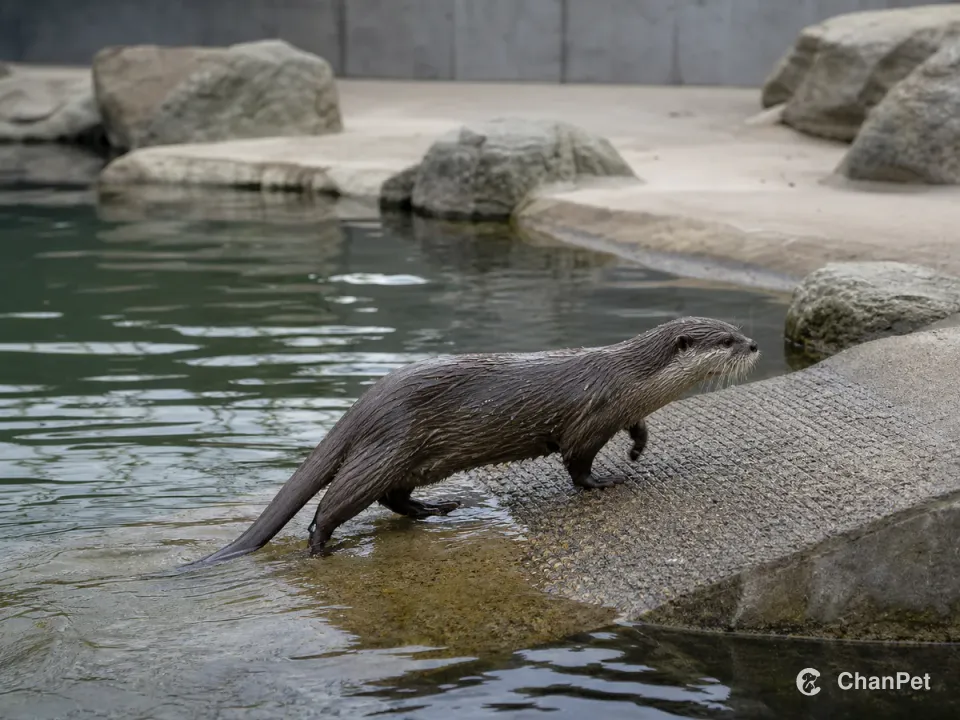
Specialist water care connects a pool, a dry resting area and safe access as one environment.[2][1]
A tight budget should protect the baseline
Saving money must not make the animal absorb the gap
Common questions
Sources
Sources used in this article
- [2]Caring for Asian small-clawed, Cape clawless, Nearctic, and spotted-necked ottersIUCN SSC Otter Specialist Group
- [1]Caring for Selected Otter SpeciesIUCN SSC Otter Specialist Group
- [3]Assessing the Welfare of Captive Asian Small-Clawed OttersIUCN Otter Specialist Group Bulletin