Foraging is part of the day, not a quick feed
Researchers describe wild Asian small-clawed otters as spending a large part of their time foraging. In captive settings, repetitive pacing, begging, calling or aggression can appear when feeding and stimulation are poor. Keepers need to make food, timing and activity part of a continuing enrichment plan.[1][2]
That work cannot wait for an easy day. The animals still expect food, stimulation and contact when the people around them are busy. Specialist teams watch behaviour and adjust feeding and environment. A household cannot turn that judgment into a set-and-forget routine.[1][3]
Land and water both create work
A water area does not do its own housekeeping. Otters move through water, feed on land, rest, mark and use different spaces. Care systems have to manage water, land areas, drinking containers and dens together. Cleaning and disinfection are part of normal management.[2][3]
Group living makes observation more important. Each animal can change its appetite, activity and relationship to others. A clean pool is only one task; keepers also need to spot avoidance, exclusion and repeated behaviour.[2][1]
Automation helps with a task, not with care
Filters, timers and cameras can reduce a few repeated actions. They cannot judge a tense group or create meaningful foraging opportunities. They also create a new problem the moment they fail: a person must respond quickly and know what to do.[2][3]
If your goal is a lighter routine, choose an animal whose everyday needs already match a home schedule. Otter care should not be forced into a convenience project. It needs continuous specialist input.[3][1]
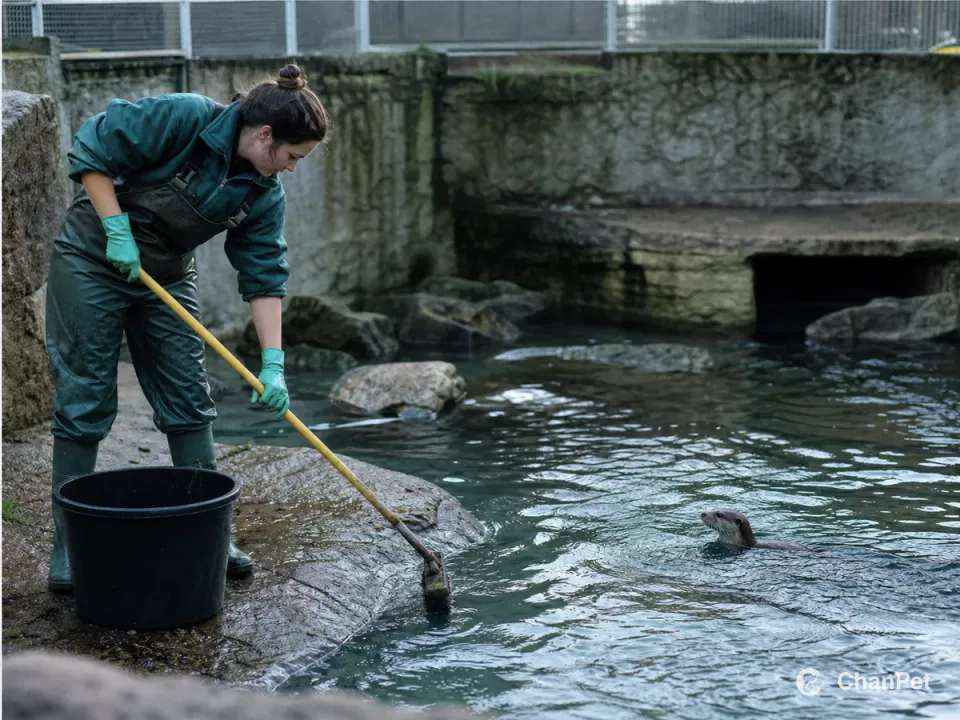
Cleaning one edge of a pool is only one small part of a professional daily routine.[3][2]
A busy person needs a routine with breathing room
Low maintenance and otter needs point in opposite directions
Common questions
Sources
Sources used in this article
- [3]Caring for Asian small-clawed, Cape clawless, Nearctic, and spotted-necked ottersIUCN SSC Otter Specialist Group
- [2]Caring for Selected Otter SpeciesIUCN SSC Otter Specialist Group
- [1]Feeding Strategies for Captive Asian Small-Clawed OttersIUCN Otter Specialist Group Bulletin