Buy the working home first
The western hognose is a ground-dwelling snake that digs into loose soil. Its first purchases should create a secure, usable home: an escape-resistant enclosure, a protected heat source, cover, water and digging substrate.[1]
Texas A&M asks prospective snake keepers to plan for the animal's whole care rather than the initial purchase alone. Choose reliable basics that can stay in service, then add visual extras later.[2]
Protect the feeding routine
Plan for appropriate frozen prey from the beginning. The University of Illinois explains that live rodents can injure a snake, while pre-killed prey gives you a safer and more controllable feeding routine.[3]
A food plan also needs safe storage, a thawing routine and time for cleanup. A pretty enclosure loses its value when feeding turns into a last-minute problem every week.[3][2]
Want a clearer picture of western hognose costs? Use our calculator to separate the enclosure, heating, food and emergency buffer, then refine the range with local quotes.[1][3][2]
Let extras arrive slowly
Fancy backgrounds and matching accessories can wait. The snake gains more from stable cover and loose substrate than from a display built around one shopping trip.[1]
Leave room in the budget for substrate, prey, replacement equipment and veterinary help. Texas A&M frames snake keeping as a long-term responsibility, which makes a monthly buffer more useful than an elaborate launch.[2]
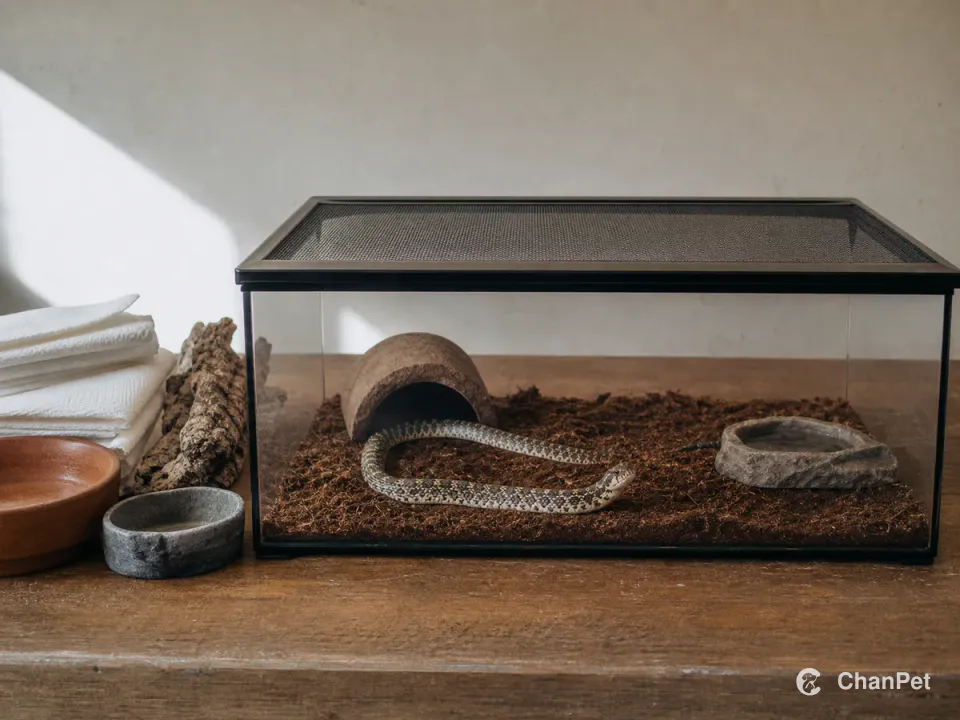
Get the lid, hide, substrate and water dish in place first. Decor and non-essential extras can come later.[1][2]
A modest setup still needs firm priorities
The best saving is a routine that keeps working
Start with the enclosure and food plan the snake depends on. Add character to the display over time. The care routine deserves the budget's first promise.[1][3]
Common questions
Can I save money by feeding live rodents?
The University of Illinois warns that live rodents can injure snakes. Build the budget around suitable frozen prey and a safe thawing routine instead.[3]
Sources
Sources used in this article
- [1]Heterodon nasicus (nasicus)Animal Diversity Web, University of Michigan
- [3]Your Pet Snake's Diet: Dead or Alive?University of Illinois College of Veterinary Medicine
- [2]Snakes as PetsTexas A&M College of Veterinary Medicine & Biomedical Sciences